
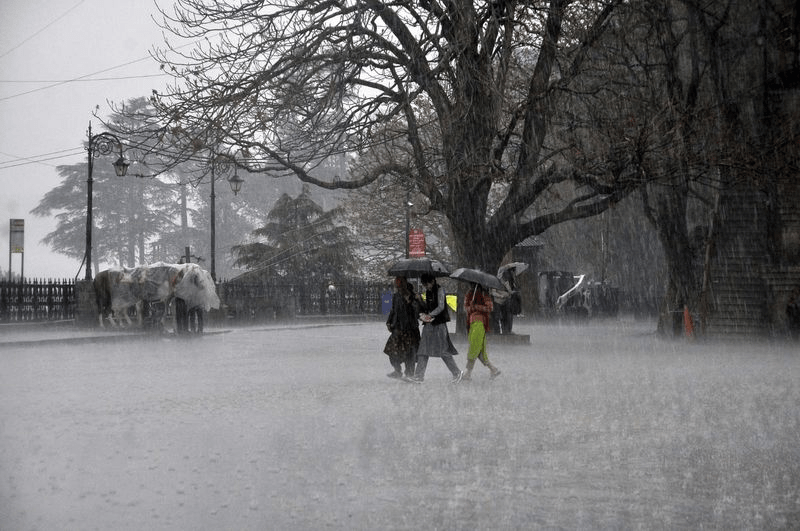
Now the India Meteorological Department has released a major update. The India weather update for May 2026 suggests a wetter-than-usual month ahead. Therefore, rainfall across the country will likely exceed 110 per cent of the average. Meanwhile, the El Nino signal is strengthening before the monsoon season. Thus, farmers and citizens must prepare for a mixed pattern of rain and heat.
Add businessleague.in as a Preferred Source


Also Read |Tamil Nadu Voter List Purge: 97 Lakh Names Deleted in SIR Phase 1
Rainfall Outlook: Why May Will Be Wetter
Now the latest India weather update brings surprising news for the summer. The IMD expects rainfall to be “most likely above normal” this month. Therefore, most regions will see more showers than the typical Long Period Average (LPA).
First, look at the percentages. The department predicts rainfall exceeding 110 per cent of the LPA. Next, they cite evolving oceanic conditions as the primary cause. Thus, the month will feel cooler in many provinces due to frequent precipitation.
Meanwhile, not every corner will get soaked. Parts of the northeast and east-central India might actually see below-normal rain. Therefore, the distribution remains somewhat uneven across the subcontinent.
So what drives this moisture?
First, localized western disturbances are becoming more active. Next, tropical moisture from the surrounding seas is feeding these storms. Thus, the usual “dry heat” of May is turning into “humid rain.”
Finally, this precipitation will help recharge soil moisture levels.
Temperature Patterns: Relief vs. Regional Heat
Now we must analyze the thermometer readings. The India weather update for May shows a divided map. Therefore, your experience depends entirely on your city.
The Relief Zone
First, large parts of India will see normal to below-normal maximum temperatures. This offers a rare break from the brutal summer sun. Next, frequent rain and cloud cover will keep the afternoons bearable. Thus, north and central India might avoid the worst of the peak summer.
Meanwhile, southern peninsular India is not so lucky. Therefore, parts of the south and the northwest will likely record above-normal daytime heat. Thus, residents in these areas must still practice heat safety.
So what about the nights?
First, night temperatures will stay warmer than usual in most regions. Next, this “night heat” can prevent the body from cooling down properly. Thus, the feeling of exhaustion might persist despite the daytime relief.
Finally, a few pockets in central India might record cooler minimum temperatures.
El Nino and the Monsoon Connection
Now the long-term forecast has a major warning. The IMD flagged a strengthening El Nino signal for the coming months. Therefore, this could significantly impact the southwest monsoon season.
First, neutral conditions in the Pacific are currently fading away. Next, climate models show a gradual transition toward El Nino. Thus, we could see a development phase exactly during the main rainy season.
Meanwhile, El Nino is traditionally linked to weaker monsoons in India. Therefore, the high rainfall in May might not translate to a wet July or August. Thus, water management will become a critical issue for the government.
So why does it matter now?
First, El Nino alters global wind patterns. Next, it reduces the moisture flow toward the Indian subcontinent. Therefore, the “pre-monsoon” rain in May is a vital resource to save.
Finally, the department is monitoring these oceanic shifts weekly.
Also Read |Tamil Nadu Voter List Purge: 97 Lakh Names Deleted in SIR Phase 1
Heatwave Alerts: High-Risk Zones Identified
Now despite the rainy forecast, some areas face extreme risk. The India weather update warns of an increase in heatwave days. Therefore, citizens in specific states must stay vigilant.
First, the foothills of the Himalayas are seeing unusual temperature spikes. Next, parts of the east coast are also on high alert. Thus, the humidity and heat combination will be dangerous.
Gujarat and Maharashtra Alert
Meanwhile, Gujarat and Maharashtra are the main focus. Therefore, these states might record more heatwave days than their neighbors. Thus, public health officials are preparing for an influx of heatstroke cases.
So how can you stay safe?
First, limit outdoor activities between 11 AM and 4 PM. Next, stay hydrated with water and electrolytes. Thus, you can avoid the physical stress caused by sudden temperature jumps.
Finally, check the “RealFeel” index rather than just the mercury reading.
Indian Ocean Dipole: The Positive Shift
Now we must consider the “Indian El Nino.” This is known as the Indian Ocean Dipole (IOD). Therefore, it plays a massive role in balancing the Pacific El Nino.
First, IOD conditions are currently neutral. Next, the IMD predicts a “positive phase” to emerge later this year. Thus, this could be the saving grace for the 2026 monsoon.
Meanwhile, a positive IOD usually brings more rain to India. Therefore, it might cancel out the negative effects of the Pacific El Nino. Thus, the rainfall distribution could stay favorable despite the global warnings.
So the battle between these two oceanic giants is on.
First, El Nino tries to dry the land. Next, a positive IOD tries to bring moisture. Therefore, the outcome for the second half of the monsoon remains uncertain.
Finally, this makes the India weather update for June even more critical.
Impact on Agriculture: Rabi and Kharif Seasons
Now the farming sector faces a complicated month. The India weather update highlights both opportunities and threats. Therefore, farmers must adapt their schedules.
The Rabi Harvest
First, lower daytime temperatures are good for late rabi crops. This prevents the grains from drying out too fast. Next, it allows for a more stable harvest. Thus, yield quality could improve in some northern districts.
The Kharif Preparation
Meanwhile, the above-normal rain helps soil moisture. Therefore, it aids in the preparation for the upcoming kharif season. Thus, sowing could start earlier in rain-fed regions.
So what are the risks?
First, excess rain can disrupt the actual harvesting of wheat and mustard. Next, waterlogging increases the risk of fungal infections in standing crops. Therefore, proper drainage is essential for every field.
Finally, localized heat stress in some pockets might still reduce yields.
Also Read |Tamil Nadu Voter List Purge: 97 Lakh Names Deleted in SIR Phase 1
Urban Weather: Rain and Dust Storms in Delhi-NCR
Now let’s look at the national capital. The India weather update for Delhi-NCR has been dramatic recently. Therefore, residents have seen extreme swings in the last 24 hours.
First, the mercury plummeted by 17°C in just one afternoon. Next, heavy rain and dust storms lashed Noida and Ghaziabad. Thus, the urban heat island effect was temporarily broken.
Meanwhile, these storms can cause infrastructure damage. Therefore, commuters should be careful of falling trees or power lines.
So will this continue?
First, May is famous for “Loo” winds and dust storms. Next, the IMD forecast suggests these events will be frequent this year. Thus, the air quality might fluctuate wildly due to the dust.
Finally, the rains will help keep the pollution levels in check for a few days.
Preparing for Climate Shifts: Expert Advice
Now we must act on this data. The India weather update is a tool for planning. Therefore, use this information to safeguard your home and health.
First, check your home’s drainage system. Above-normal rain in May can cause sudden urban flooding. Next, insulate your roof to deal with the warm nights. Thus, you can reduce your air conditioning costs.
Meanwhile, farmers should monitor local KVK alerts. Therefore, they can harvest their crops before the heavy showers hit.
So stay informed.
First, follow the daily IMD bulletins. Next, download a reliable weather app for real-time storm tracking. Thus, you won’t be caught off guard by a sudden “17°C drop.”
Finally, the climate is shifting, but we can adapt.
Common Questions (FAQ)
1. Will it rain more than usual in May 2026? Now yes. The India weather update from IMD predicts rainfall to be above normal. Therefore, expect precipitation to exceed 110% of the long-term average.
2. Is El Nino coming to India? First, neutral conditions are transitioning. Next, El Nino is likely to develop during the monsoon season. Thus, it might affect the rains in the second half of the year.
3. Which states are at risk of heatwaves? Meanwhile, Gujarat, Maharashtra, and the east coast are high-risk zones. Therefore, residents should take extra precautions during hot afternoons.
4. How will the weather affect the rabi crop? So the lower daytime temperatures are actually beneficial for late harvesting. Still, excess rain could cause waterlogging or fungal damage.
5. What is the forecast for night temperatures? First, night temperatures are expected to stay warmer than usual. Next, this applies to most parts of the country. Thus, nights will feel quite humid.
6. What is a positive Indian Ocean Dipole? Finally, it is a climate pattern that usually brings better rain to India. Therefore, it might help offset the dry effects of El Nino.
Also Read |Tamil Nadu Voter List Purge: 97 Lakh Names Deleted in SIR Phase 1
End….
Add businessleague.in as a Preferred Source
🙏 Support Independent Journalism
We keep news free for you.
Most readers support with ₹500 ❤️
or scan QR below

Voluntary contribution. No tax benefits.
DISCLAIMER
We have taken all measures to ensure that the information provided in this article and on our social media platform is credible, verified and sourced from other Big media Houses. For any feedback or complaint, reach out to us at businessleaguein@gmail.com