
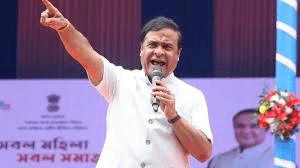
Now diplomatic tensions between India and Bangladesh have resurfaced. The Bangladesh government summoned acting Indian High Commissioner Pawan Badhe Thursday afternoon. Therefore, the Ministry of Foreign Affairs lodged a formal protest regarding recent comments. These remarks came from Assam Chief Minister Himanta Biswa Sarma. Meanwhile, Dhaka urged India to avoid discourse that might hurt long-standing bilateral ties.
Add businessleague.in as a Preferred Source


Also Read |Tamil Nadu Voter List Purge: 97 Lakh Names Deleted in SIR Phase 1
The Summoning: Dhaka Lodge’s Formal Protest
Now the diplomatic channels between New Delhi and Dhaka are buzzing. The Ministry of Foreign Affairs in Bangladesh took a stern step Thursday. Therefore, they summoned the acting Indian High Commissioner, Pawan Badhe, for a meeting.
First, officials conveyed their concerns over recent public discourse. Next, they emphasized the necessity of restraint. Thus, they hope to preserve the cooperative spirit between the two neighbors.
Meanwhile, a report by the Dhaka Tribune highlighted the seriousness of the meeting. Therefore, the Bangladeshi officials formally handed over the protest note.
So what exactly bothered Dhaka?
First, the nature of recent remarks from Indian leadership was the main issue. Next, they believe these comments could inflame public sentiment. Thus, they requested a more sensitive approach to bilateral matters.
Finally, the meeting concluded with a call for better communication.
The Trigger: What Himanta Biswa Sarma Said
Now we must look at the specific words that caused this friction. The controversy began on April 26. Therefore, Assam Chief Minister Himanta Biswa Sarma made a bold statement on social media.
First, Sarma noted that 20 foreign nationals were apprehended in Assam. Next, he stated they were “pushed back to Bangladesh.” Thus, he framed the action as a necessary move for state security.
Meanwhile, his post on X (formerly Twitter) used strong language. He remarked that “rude people don’t understand soft language.” Therefore, he defended the expulsion of “infiltrators” from Assam.
So how did Bangladesh react?
First, the Ministry of Foreign Affairs called such statements “counterproductive.” Next, they argued that publicizing these actions harms the partnership. Thus, they view the rhetoric as a threat to diplomatic stability.
Finally, Dhaka insists that sensitive issues should be handled through private channels.
Bilateral Ties: A Relationship Under Pressure
Now the relationship between India and Bangladesh is deeply intertwined. Therefore, even small remarks can have large consequences.
First, the two nations share a massive land border. Next, they cooperate on security, intelligence, and counter-terrorism. Thus, the foundation is traditionally very robust.
Meanwhile, the bilateral landscape is currently navigating complex challenges. Therefore, the year 2026 has seen periods of strained diplomatic sentiment.
So why the sudden tension?
First, political transitions in Dhaka have brought new dynamics. Next, the new leadership is navigating internal pressures regarding sovereignty. Thus, they are more vocal about protecting their national image.
Finally, both nations remain committed to high-level dialogue. Therefore, they are working to manage these sensitivities.
Also Read |Tamil Nadu Voter List Purge: 97 Lakh Names Deleted in SIR Phase 1
Strategic Recalibration in 2026
Now we are witnessing a “strategic recalibration” of the India-Bangladesh partnership. Therefore, the old rules of engagement are changing.
First, the political transition in Dhaka has shifted the focus. Next, new stakeholders are questioning previous agreements. Thus, New Delhi must adapt to a different diplomatic environment.
Meanwhile, this shift is happening alongside major global changes. Therefore, both countries are looking at their security needs differently.
So what does this recalibration look like?
First, there is a renewed focus on minority security. Next, both sides are reviewing cross-border connectivity projects. Thus, the partnership is becoming more transactional and less ideological.
Finally, the summoning of the envoy is a clear signal of this new, more assertive Dhaka.
Historical Foundation: The 1971 Legacy
Now we cannot forget the roots of this alliance. The relationship originated from the 1971 Liberation War. Therefore, India played a central role in Bangladesh’s independence.
First, the historical and cultural bonds are unbreakable. Next, the shared memory of sacrifice defines the security cooperation. Thus, the core of the alliance remains strong despite the current friction.
Meanwhile, this history is often used to resolve modern disputes. Therefore, diplomats on both sides frequently cite 1971 to calm tensions.
So will the current spat last?
First, historical ties usually outweigh temporary political remarks. Next, the mutual need for regional stability is too high. Thus, experts expect the relationship to stabilize soon.
Finally, the 1971 legacy remains the “safety net” of Indo-Bangla ties.
The Minority Security Concern
Now another layer of complexity has emerged recently. Concerns regarding minority security in Bangladesh are rising. Therefore, this issue often spills over into Indian politics.
First, reports of intermittent violence have worried New Delhi. Next, Indian leaders often use this to justify stricter border controls. Thus, it creates a feedback loop of tension.
Meanwhile, Dhaka insists it is doing everything to protect all citizens. Therefore, they view Indian comments on the matter as “interference.”
So how does this relate to Sarma’s remarks?
First, the deportation of 20 nationals is often linked to this broader security narrative. Next, the language of “infiltrators” touches on sensitive religious and ethnic nerves. Thus, Dhaka is extra cautious about the rhetoric coming from Assam.
Finally, resolving this requires deep, quiet cooperation rather than public posts.
Also Read |Tamil Nadu Voter List Purge: 97 Lakh Names Deleted in SIR Phase 1
Trade and Connectivity Progress
Now it is not all bad news. While diplomacy is tense, trade is booming. Therefore, the economic engine of the relationship is still running perfectly.
First, significant progress continues in cross-border connectivity. Next, new rail and road links are opening up this year. Thus, the physical integration of the two economies is faster than ever.
Meanwhile, trade volumes have reached record highs in 2026. Therefore, businesses on both sides are ignoring the political noise.
So why the disconnect?
First, economic needs are often separate from political rhetoric. Next, both governments understand that prosperity requires cooperation. Thus, they protect the trade route even when the talk is tough.
Finally, these connectivity projects are the “anchor” that keeps the ship steady.
Managing Sensitivities: The Road Ahead
Now what should we expect in the coming weeks? The road ahead requires careful management. Therefore, both nations must exercise restraint.
First, New Delhi is likely to brief state leaders on the sensitivity of bilateral ties. Next, Dhaka will continue to monitor public discourse in India. Thus, a “quiet period” is expected soon.
Meanwhile, high-level dialogue will continue behind closed doors. Therefore, foreign ministers are expected to meet next month.
So the goal is to return to the core tenets of the alliance.
First, they must resolve the deportation issue through official channels. Next, they must ensure that political transitions do not break historical bonds. Thus, the alliance will survive this latest test.
Finally, the summoning of Pawan Badhe should be seen as a “diplomatic nudge” rather than a breakdown.
Common Questions (FAQ)
1. Why did Bangladesh summon the Indian High Commissioner? Now the move was a formal protest. Therefore, Dhaka was unhappy with comments made by Assam CM Himanta Biswa Sarma regarding deportations.
2. What did Himanta Biswa Sarma say? First, he mentioned that 20 foreign nationals were apprehended. Next, he said they were “pushed back” to Bangladesh. Thus, he defended the use of “tough language.”
3. Who is the acting Indian High Commissioner in Dhaka? Meanwhile, the acting envoy is Pawan Badhe. Therefore, he was the one who attended the Ministry of Foreign Affairs on Thursday.
4. How does the 1971 war affect today’s relationship? So it is the foundation of the alliance. First, India helped Bangladesh win independence. Next, this historical bond usually helps resolve modern friction.
5. What is the state of trade between India and Bangladesh? First, trade and connectivity are actually progressing well. Next, businesses are seeing record volumes in 2026. Thus, the economic ties remain very strong.
6. Will this incident hurt the relationship long-term? Finally, most experts say no. Therefore, both nations value regional stability too much. Thus, they will likely use dialogue to manage these sensitivities.
Also Read |Tamil Nadu Voter List Purge: 97 Lakh Names Deleted in SIR Phase 1
End..
Add businessleague.in as a Preferred Source
🙏 Support Independent Journalism
We keep news free for you.
Most readers support with ₹500 ❤️
or scan QR below

Voluntary contribution. No tax benefits.
DISCLAIMER
We have taken all measures to ensure that the information provided in this article and on our social media platform is credible, verified and sourced from other Big media Houses. For any feedback or complaint, reach out to us at businessleaguein@gmail.com