US Supreme Court Strikes Down Trump’s Birthright Citizenship Ban: A Massive Victory and Relief for Millions of Indian Immigrant Families
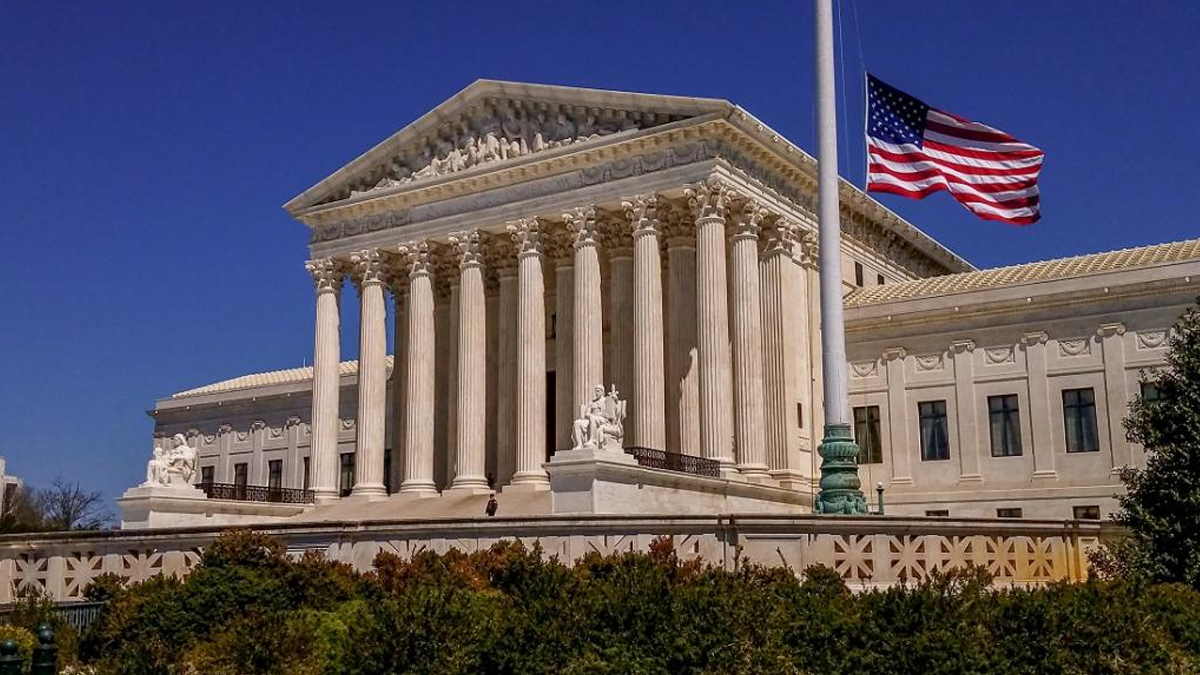
WASHINGTON, D.C. — In a historic constitutional verdict, the United States Supreme Court has struck down President Donald Trump’s executive order that sought to end birthright citizenship. The 6–3 ruling preserves the long-standing legal principle that any child born on American soil is automatically a US citizen, dealing a definitive blow to the administration’s Day One executive mandate.
Add businessleague.in as a Preferred Source


Also Read | Automated Insurance Settlement: Inside the Aarogya Setu 2.0 App Features Architecture
The decision has sent massive waves of relief through the immigrant community, particularly among Indian Americans. Hundreds of thousands of Indian tech professionals, students, and families currently reside in the US under temporary or backlogged legal frameworks, making the preservation of the Fourteenth Amendment a foundational victory for their children’s futures.
The Demographics of the Impact
The Indian diaspora forms the second-largest immigrant demographic in the United States, meaning any radical shift in citizenship laws carries profound consequences for the community.
US Indian Population Landscape (Approximate Metrics):
Total Indian Americans: 5.2 Million
├── Documented Indian Immigrants: 3.2 Million
├── Employment-Based Green Card Backlog: >1.2 Million
└── Undocumented Indian Immigrants: ~725,000 (3rd Largest Nationally)
For the more than 1.2 million individuals trapped in the decades-long employment-based green card backlog, this ruling prevents a catastrophic scenario where children could have been rendered stateless or left without a secure legal identity while their parents waited out processing lines that can span generations.
Also Read | Automated Insurance Settlement: Inside the Aarogya Setu 2.0 App Features Architecture
Breakdown of the Supreme Court Ruling
The legal battle hinged on the interpretation of the Fourteenth Amendment, which was ratified in 1868 following the American Civil War to ensure equal protection and civil rights.
The Majority vs. Dissenting Opinions
Following the release of the verdict, President Trump expressed strong disappointment, labeling the decision “too bad for our Country” and suggesting that Congress could resolve the issue via fast-tracked legislative maneuvers. However, because the Supreme Court based its final decision on deep constitutional grounds, the ruling cannot be altered by standard congressional bills. It would require a full constitutional amendment—an exceedingly rare political feat—to overturn.
Community and Congressional Reactions
Prominent advocacy groups and lawmakers quickly stepped forward to celebrate the legal victory, emphasizing that the decision validates the deep contributions made by the South Asian workforce to American innovation.
Statement from Congressman Raja Krishnamoorthi: “The Supreme Court’s decision makes clear that those constitutional rights cannot be rewritten by executive order because the Constitution, not the president, governs the rights of the American people. Since its ratification… the Fourteenth Amendment has enshrined the principles of equal citizenship.”
Chinten Patel, the executive director of Indian American Impact, noted that Indian families were among those most directly threatened by the executive overreach, given how frequently children are born in the US long before their high-skilled parents ever secure a pathway to permanent residency. Similarly, Khanderao Kand, President of the Foundation for India and Indian Diaspora Studies (FIIDS), reiterated that birthright citizenship has long been a core cornerstone of realizing the American Dream, allowing millions of contributing families to finally view their futures with long-term stability.
Also Read | Automated Insurance Settlement: Inside the Aarogya Setu 2.0 App Features Architecture
FAQ
Does this ruling apply to children of undocumented Indian immigrants?
Yes. The Supreme Court’s 6–3 ruling ensures that birthright citizenship remains fully intact for all children born on American soil, completely irrespective of their parents’ legal status. This includes families on high-skilled H-1B and L-1 visas, F-1 international students, temporary tourists, and undocumented individuals.
Why is this specific court decision considered such a major relief for H-1B visa holders?
Because of strict per-country caps on green cards, over a million Indian professionals are stuck in an employment-based backlog that can take decades to clear. This ruling ensures that children born to these professionals while they wait are guaranteed automatic citizenship and permanent lifetime residency rights from birth.
Can the executive branch or Congress pass a new law to undo this decision?
No. Because the Supreme Court ruled that birthright citizenship is an explicit right protected by the Fourteenth Amendment of the US Constitution, it cannot be overridden by an executive order or a standard piece of legislation from Congress. Altering this policy would require a formal Constitutional Amendment, which requires approval from two-thirds of both houses of Congress and three-fourths of the US states.
Also Read | Automated Insurance Settlement: Inside the Aarogya Setu 2.0 App Features Architecture
Add businessleague.in as a Preferred Source
🙏 Support Independent Journalism
We keep news free for you.
Most readers support with ₹500 ❤️
or scan QR below

Voluntary contribution. No tax benefits.
DISCLAIMER
We have taken all measures to ensure that the information provided in this article and on our social media platform is credible, verified and sourced from other Big media Houses. For any feedback or complaint, reach out to us at businessleaguein@gmail.com