Now the latest economic data suggests that the Indian economy is maintaining a steady course despite burgeoning geopolitical pressures. The India retail inflation March 2026 figures, released by the government this Monday, show a modest rise to 3.40% from the 3.21% recorded in February. First, this year-on-year rate, based on the All India Consumer Price Index (CPI), remains comfortably below the critical 4% threshold. Therefore, while price pressures are mounting, they are currently deemed manageable by most economists. Meanwhile, the data paints a mixed picture for households, as rising energy costs begin to percolate through the supply chain.
Add businessleague.in as a Preferred Source


Also Read |Tamil Nadu Voter List Purge: 97 Lakh Names Deleted in SIR Phase 1
CPI Breakdown: Decoding the 3.40% Headline Figure
Now we must analyze the specific drivers behind the provisional March numbers. First, the All India Consumer Price Index (CPI) stood at 3.40%, showing a slight acceleration from the previous month. Therefore, the India retail inflation March 2026 trend indicates a gradual build-up of price momentum.
Next, this provisional figure suggests that while the economy is not overheating, it is no longer in the “cooling” phase seen in early 2025. Thus, the government is keeping a close watch on the monthly trajectory.
[Image showing a line graph of India’s CPI from Jan 2025 to March 2026]
Meanwhile, the 3.40% mark is still well within the Reserve Bank of India’s (RBI) comfort zone. Therefore, the immediate threat of a drastic interest rate hike remains low. So the “headline” remains stable for now, but the underlying components tell a more complex story.
The West Asia Crisis: Impact on Energy and Input Costs
So how are global conflicts affecting your local grocery bill? First, Radhika Rao of DBS Bank noted that March signaled the “first round” of price pressures from the West Asia crisis. Therefore, the India retail inflation March 2026 data reflects a selective pass-through of higher input costs to consumers.
Next, energy prices are expected to gradually percolate through the economy over the coming months. Thus, the full impact of the Strait of Hormuz blockade has not yet been felt at the retail level.
Meanwhile, the lag in replacement supplies means that April and May could see higher numbers. Therefore, the current stability might be the “calm before the storm” for fuel-related expenses. So the “energy shock” is a dormant variable in the 2026 fiscal roadmap.
Food Inflation: Rising Costs vs. Vegetable Price Drops
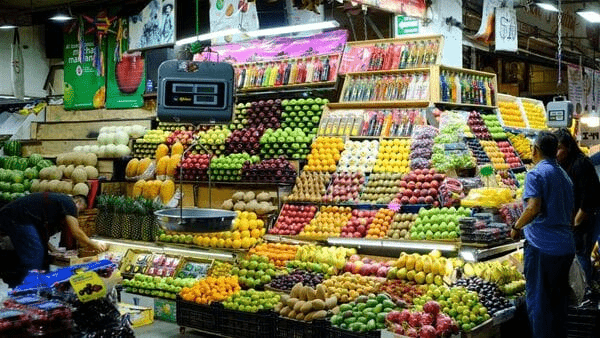
Now let’s look at the “kitchen table” impact. First, the Consumer Food Price Index (CFPI) recorded a mild increase to 3.87% in March. Therefore, food costs are rising faster than the general headline inflation.
Next, there is a significant “silver lining” in the data: a sharp fall in vegetable prices. Thus, items like onions and potatoes recorded steep declines, offering immediate relief to household budgets.
Food Item Inflation Check:
-
Onions/Potatoes: Steep declines (Negative inflation).
-
Pulses (Arhar Dal): Recorded negative inflation compared to last year.
-
Tomatoes/Cauliflower: Remained expensive with high inflation.
-
Coconut: Witnessed a price surge in March.
Meanwhile, garlic and peas have also become cheaper compared to 2025. Therefore, the India retail inflation March 2026 food basket is a game of “winners and losers” for the average consumer.
Also Read |Tamil Nadu Voter List Purge: 97 Lakh Names Deleted in SIR Phase 1
Rural vs. Urban Divide: Analyzing the Inflation Gap
So why are villages feeling more heat than cities? First, inflation in rural areas was higher at 3.63%, while urban inflation was significantly lower at 3.11%. Therefore, the India retail inflation March 2026 data highlights a persistent regional disparity.
Next, food inflation also follows this trend, with rural food costs rising at 3.96% compared to 3.71% in urban centers. Thus, the “last-mile” logistics in villages are likely being hit harder by rising transport costs.
Meanwhile, rural areas also saw higher housing inflation at 2.54%. Therefore, the “cost of living” increase is being felt most acutely by India’s rural population. So the gap reflects the varying degrees of supply chain efficiency across the country.
Core Inflation and the RBI’s Next Move
Now we must consider the “Core” of the matter—inflation excluding food and fuel. First, core inflation remained below the 4% mark in March. Therefore, the India retail inflation March 2026 data suggests that underlying demand-side pressure is still quite weak.
Next, this “soft” core inflation reduces the immediate need for the RBI to adopt a hawkish stance. Thus, interest rates are likely to remain on hold in the near term.
Meanwhile, Radhika Rao expects higher oil prices to manifest more materially in the Wholesale Price Index (WPI) first. Therefore, the central bank has a “buffer period” before it needs to react to the West Asia crisis. So for now, the monetary policy remains “neutral to watchful.”
Jewelry and Precious Metals: Why Gold Stays Expensive
So why are luxury items still hitting record highs? First, prices for silver, gold, diamond, and platinum jewelry continued to see strong increases in March. Therefore, the India retail inflation March 2026 data shows that “precious metals” are the biggest outliers in the CPI basket.
Next, although silver prices eased slightly from February, they remain up double-digits on a year-to-date basis. Thus, weddings and investments are becoming significantly more expensive.
Meanwhile, the high demand for safe-haven assets during the US-Iran war is keeping these prices “boiled up.” Therefore, consumers looking to buy gold are finding little relief in the current data. So the “bullion boom” is a major contributor to the non-food inflation spike.
Also Read |Tamil Nadu Voter List Purge: 97 Lakh Names Deleted in SIR Phase 1
Housing and Services: The Soft Spots in the Data
Now for some good news regarding the roof over your head. First, housing inflation stayed remarkably low at 2.11% in March. Therefore, rent and related costs are not currently a major driver of the India retail inflation March 2026 surge.
Next, urban housing inflation was even lower at 1.95%. Thus, the residential market in cities is not seeing the aggressive price hikes that food and energy are experiencing.
Housing Inflation Snapshot:
-
Overall: 2.11% (Provisional).
-
Urban: 1.95% (Lower pressure).
-
Rural: 2.54% (Slightly higher).
Meanwhile, this “softness” in housing acts as a vital anchor for the overall CPI. Therefore, as long as housing stays below 3%, the headline inflation is unlikely to breach the 5% danger mark.
Radhika Rao’s Outlook: What to Expect in Q2 2026
So what is the forecast for the next three months? First, Radhika Rao expect the impact of higher energy prices to “percolate” as replacement supplies arrive. Therefore, the India retail inflation March 2026 numbers are just the beginning of a potential upward curve.
Next, there is a monitored risk of a direct fuel price increase in the coming weeks. Thus, the April data could see a much larger jump if the government adjusts retail oil prices.
Meanwhile, food prices are expected to continue normalizing if the monsoon forecast stays favorable. Therefore, the “tug-of-war” between falling food costs and rising energy costs will define Q2 2026. So the balanced but mixed picture is likely to persist through the summer.
Common Questions Answered
What was the India retail inflation rate for March 2026? Now it stood at 3.40% (Provisional), which is a slight increase from 3.21% in February. Therefore, inflation remains under the manageable 4% mark.
Why is food inflation rising while some vegetables are cheaper? First, because items like tomatoes and cauliflower have high inflation, while onions and potatoes have seen sharp drops. Thus, the “food basket” is uneven.
How does the West Asia crisis affect India’s CPI? Next, it is driving up energy and input costs. Therefore, the India retail inflation March 2026 data shows the first round of these “percolating” price pressures.
Is rural inflation higher than urban inflation? So yes. Rural inflation was 3.63%, while urban was 3.11%. Thus, villages are experiencing higher price pressures than cities this year.
Will the RBI increase interest rates soon? Finally, because core inflation remains below 4%, economists do not expect a “hawkish” stance in the near term. So interest rates are likely to stay steady.
What happened to jewelry prices in March? Actually, gold, silver, and diamond jewelry remained very expensive, recording high year-on-year increases. Therefore, luxury items are a major inflation driver.
Also Read |Tamil Nadu Voter List Purge: 97 Lakh Names Deleted in SIR Phase 1
End…
Add businessleague.in as a Preferred Source
🙏 Support Independent Journalism
We keep news free for you.
Most readers support with ₹500 ❤️
or scan QR below

Voluntary contribution. No tax benefits.
DISCLAIMER
We have taken all measures to ensure that the information provided in this article and on our social media platform is credible, verified and sourced from other Big media Houses. For any feedback or complaint, reach out to us at businessleaguein@gmail.com