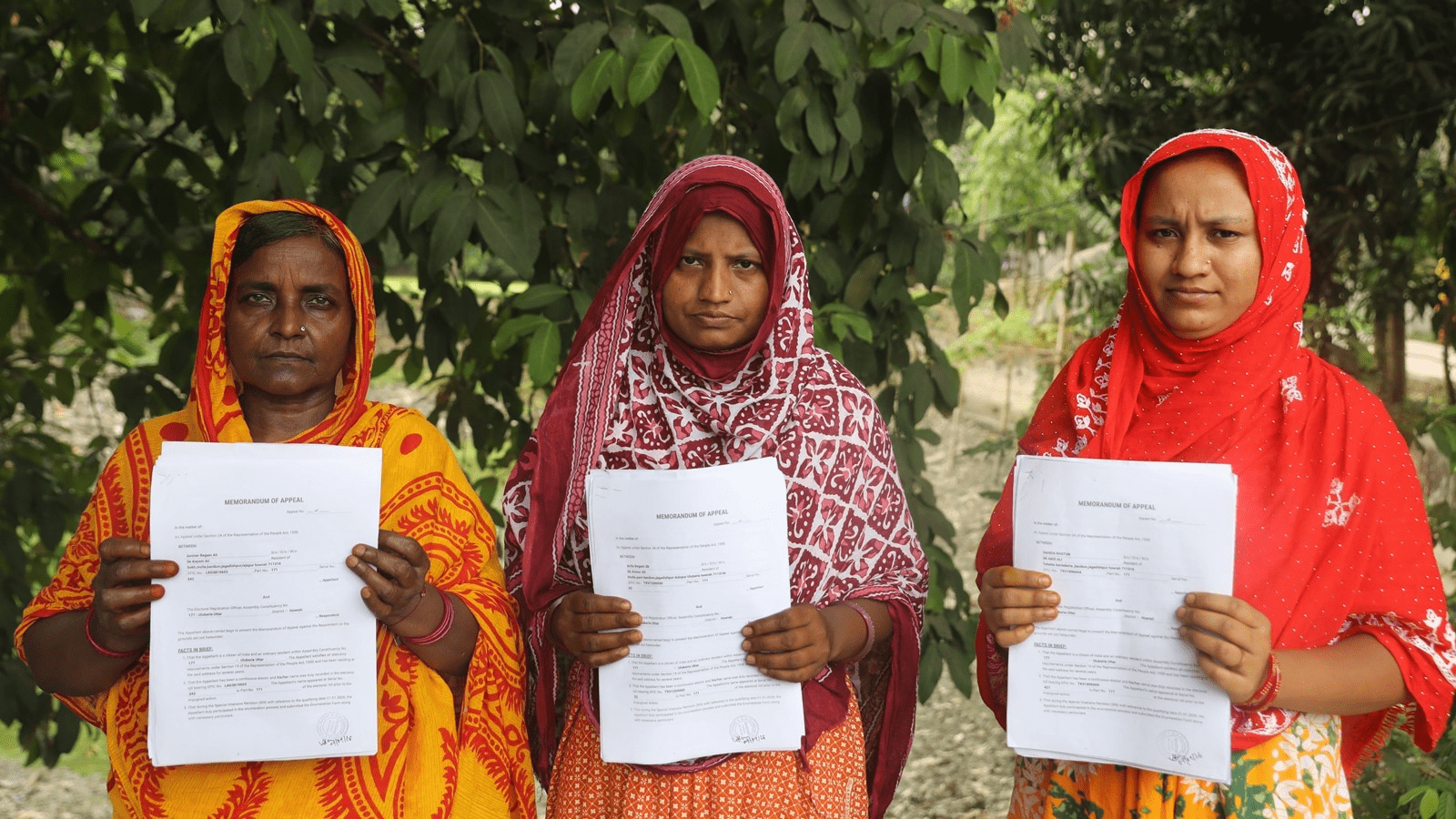
Now the democratic fabric of West Bengal is facing a technical crisis. The Election Commission of India (ECI) has deleted 27.10 lakh voters citing a new, algorithmically-driven criterion: “logical discrepancy.” Therefore, lakhs of citizens with valid passports, birth certificates, and linkages to the historic 2002 rolls find themselves excluded. Specifically, an investigation by The Indian Express has tracked down voters who meet all legal requirements but remain victims of a centrally-controlled software.
Add businessleague.in as a Preferred Source


Meanwhile, the Supreme Court has intervened, providing a final window for these voters to be cleared by judicial tribunals by late April.
But for those already deleted, the burden of proof has become an exhausting bureaucratic nightmare.
Also Read |Tamil Nadu Voter List Purge: 97 Lakh Names Deleted in SIR Phase 1
What is the “Logical Discrepancy” Algorithm?
Now we must understand the machine logic behind these deletions. The ECI identified discrepancies based on a centrally-controlled algorithm. Therefore, the “logical discrepancy” criterion has become the gatekeeper of the Bengal voter list.
The Algorithm’s Flags
First, the software flags mismatches between current rolls and the 2002 rolls. Then, it identifies “illogical” age gaps—such as a parent being less than 15 years or more than 50 years older than their child. Thus, even clerical errors in birth dates can lead to a total loss of voting rights.
Next, the algorithm narrowed down 1.36 crore names in total. Therefore, the scale of this “sanitization” exercise is massive and unprecedented in Indian electoral history.
Unprecedented and Illogical: Former CECs Speak Out
Now the legal and ethical basis of these criteria is being questioned by experts. Former Chief Election Commissioners (CECs) have described the process as a puncture to the idea of inclusion. Therefore, the “no voter left behind” motto is under threat.
Lack of Redressal
First, former EC Ashok Lavasa noted that while de-duplication software existed before, it always allowed for timely redressal. Then, in the current Bengal SIR, electors were not given an adequate opportunity to appeal. Thus, the process amounts to a “bureaucratic inefficiency” that strips away constitutional rights.
Next, ex-CEC O P Rawat called the wrongly identified discrepancies “very serious.” Therefore, the algorithm’s lack of transparency is a central concern for the 2026 polls.
The Progeny Rule: When Large Families Lead to Deletion
Now one of the most controversial criteria is the “progeny cap.” The algorithm flags any person mapped as a parent by six or more electors. Therefore, large families are being systematically targeted for verification and deletion.
The Siblings Dilemma
First, consider the case of Manuyara Bibi from Bishnupur. She is one of six siblings, yet she was flagged for hearing because six people named her father as a parent. Then, even after providing the 2002 rolls and Aadhaar cards, many like her find their names gone.
Next, Asadul Sheikh and his sister Jamila were deleted despite having 11 other siblings who remain on the list. Therefore, the algorithm appears to delete names arbitrarily within the same family tree.
Also Read |Tamil Nadu Voter List Purge: 97 Lakh Names Deleted in SIR Phase 1
Case Study: Sukla Hazra and the 50-Year Age Gap
Now Sukla Hazra’s case illustrates how clerical errors become “logical discrepancies.” A 55-year-old resident of Behala, Hazra has been on the rolls since 2002 and holds a valid passport.
The Birth Date Error
First, she applied for a name correction five years ago. Then, while the ECI fixed her name, they accidentally changed her birth year from 1970 to 1994. Thus, the algorithm flagged her father as being 50+ years older than her.
Next, despite providing her wedding invitation from 1993 and a valid passport, she remains deleted. Therefore, the very errors committed by the ECI are being used as “logic” to remove legitimate voters.
So the burden of fixing the department’s mistakes has fallen entirely on the citizen.
The Name Mismatch Trap: Spelling Errors vs. Voter Rights
Now minor spelling variations have become fatal for voter eligibility. Many citizens who updated their cards to match passports or pension orders were flagged for “name mismatches.”
Md Mossior Rahaman’s Struggle
First, Rahaman, a retired physics professor, changed his name from “Rahaman Gayen” to “Rahaman” to match his passport. Then, despite submitting his government pension order and HS certificate, he was deleted after adjudication. Thus, “mapping” to the 2002 list is no longer a guarantee of safety.
Next, Sajeda Bibi faced a similar fate for changing her surname from “Jamadar” to “Bibi” officially. Therefore, the “logical discrepancy” algorithm ignores legal affidavits and official name-change documents.
Supreme Court Deadlines: April 21 and April 27
Now the Supreme Court has stepped in to prevent a total disenfranchisement. They have directed the ECI to issue supplementary lists based on tribunal clearances. Therefore, there is a race against time for the deleted 27.10 lakh voters.
Final Window for Inclusion
First, those polling on April 23 must be cleared by April 21. Then, those in the second phase (April 29) have until April 27. Thus, the judicial tribunals are the last line of defense for these citizens.
Next, many voters report that they have appealed online but have received no updates. Therefore, the “adjudication” remains a black box for the public.
Also Read |Tamil Nadu Voter List Purge: 97 Lakh Names Deleted in SIR Phase 1
Impact on Minority Communities and Migrant Workers
Now the data suggests that certain groups are disproportionately affected. Migrant workers, like Hidaytulla Sk, who works as a painter in Mumbai, had to travel back to Bengal just to save his vote.
The Conversion Question
First, Sainaj Begum (formerly Kalpana Manna) was deleted due to a “name mismatch” following her legal conversion to Islam. Then, she was asked to prove her link to her father despite having the 2002 rolls. Thus, she fears the deletions may have a discriminatory subtext.
Next, many migrant workers risk losing their jobs in other states to attend tribunal hearings. Therefore, the “logical discrepancy” criterion has created a massive socio-economic burden on the poor.
Investigative Findings: Documented Citizens Denied
Now The Indian Express has confirmed that the ECI’s own pre-conditions are being ignored. The ECI stated that mapping to the 2002 roll was a key requirement for retention.
Valid Documents Ignored
-
Passports: Valid until 2028 but ignored during hearings.
-
Birth Certificates: Provided but discarded due to “algorithm flags.”
-
Land Records: Documents dating back 100 years were submitted by some but failed to stop deletions.
First, the ECI official stated that judicial officers oversaw all adjudication cases. Then, they claimed the commission had no say in the judgments. Thus, the blame is being shifted between the algorithm, the EROs, and the judicial tribunals.
Common Questions Answered
What is a “logical discrepancy” in the Bengal voter list? Now it is an algorithm-driven flag for errors like improbable age gaps between parents and children or mismatches between current and 2002 voter rolls.
How many voters were deleted in West Bengal? First, 27.10 lakh voters were removed after the adjudication process. Then, a total of 1.36 crore names were originally flagged.
Can I still get my name back on the list for 2026? Next, yes. If your constituency polls on April 29, you must get cleared by a tribunal by April 27. Therefore, you must check the supplementary list.
Why was the 2002 roll used as a benchmark? So 2002 was the year of the last Intensive Revision in Bengal. Thus, the ECI considers it the most reliable historical record for voter mapping.
What happens if the tribunal clears my name after the deadline? Finally, you will likely be unable to vote in the current 2026 phases. Therefore, the Supreme Court’s deadlines are absolute.
Also Read |Tamil Nadu Voter List Purge: 97 Lakh Names Deleted in SIR Phase 1
End….
Add businessleague.in as a Preferred Source
🙏 Support Independent Journalism
We keep news free for you.
Most readers support with ₹500 ❤️
or scan QR below

Voluntary contribution. No tax benefits.
DISCLAIMER
We have taken all measures to ensure that the information provided in this article and on our social media platform is credible, verified and sourced from other Big media Houses. For any feedback or complaint, reach out to us at businessleaguein@gmail.com