


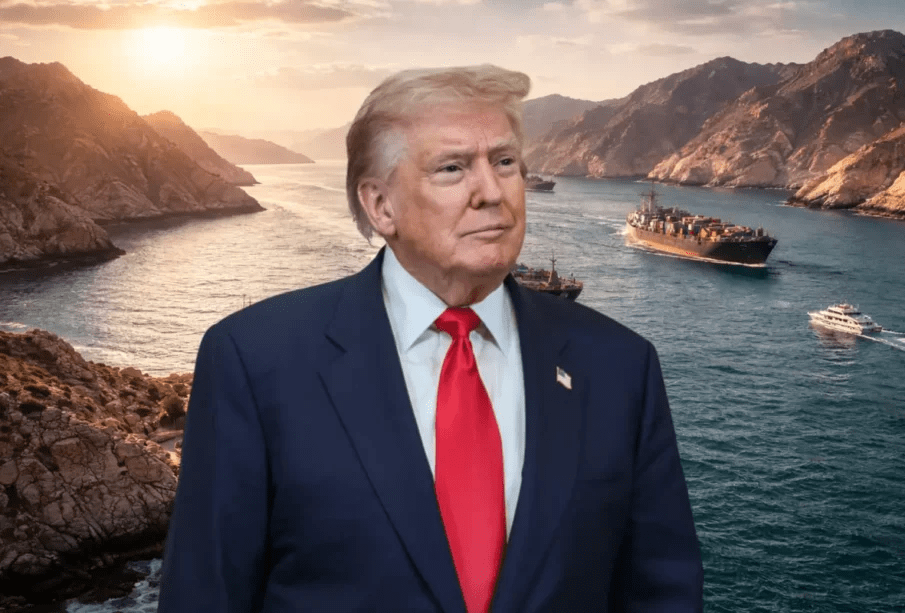
Now the American military strategy in the Persian Gulf has entered a new diplomatic phase. President Donald Trump announced on Wednesday, May 6, 2026, that he is pausing “Project Freedom.” This initiative, designed to escort stranded merchant ships through the Strait of Hormuz, will halt temporarily to allow negotiators to finalize a settlement with Iran. Therefore, while naval escorts have stopped, the US President clarified that the intensive blockade of Iranian ports remains in full effect.
Add businessleague.in as a Preferred Source


Also Read |Tamil Nadu Voter List Purge: 97 Lakh Names Deleted in SIR Phase 1
Project Freedom Paused: Trump’s Truth Social Announcement
Now the news of the pause came directly from the Commander-in-Chief. In a series of posts on Truth Social, President Trump stated that “Great Progress” has been made toward a final agreement. Therefore, the decision to pause naval escorts is a tactical move to prevent accidental escalations during the final hours of talks.
First, Trump noted that the pause is intended to see if the agreement can be signed. Next, he highlighted the “tremendous Military Success” the US has achieved during the campaign. Thus, the administration views this pause from a position of strength rather than retreat.
So the world is watching to see if this window leads to a lasting peace. Meanwhile, the President warned that the pause is only for a “short period.” Therefore, the military remains ready to resume the project if the agreement fails.
The Role of Pakistan: Why the US Agreed to a Short Break
Now the diplomatic influence of regional players has become apparent. Trump specifically cited a request from Pakistan as a key reason for the operational pause. Therefore, Islamabad is acting as a critical intermediary in the West Asian standoff.
First, Pakistan and other nations have expressed concerns over the escalating violence in the Gulf. Next, they have urged Washington to provide “diplomatic space” to avoid a wider regional war. Thus, the US is acknowledging the interests of its allies in the South Asian region.
So this international pressure has successfully altered the immediate military timeline. Meanwhile, other countries continue to lobby for a total reopening of the Strait. Therefore, Pakistan’s role in this settlement could be a defining moment for its 2026 diplomacy.
‘Op Epic Fury’ Ends: Marco Rubio on the Conflict’s New Stage
Now the Secretary of State has officially signaled the end of the first major military phase. Marco Rubio confirmed that “Operation Epic Fury”—the initial campaign against Iran—is over. Therefore, the US is shifting from active combat to a posture of “armed observation.”
First, Rubio echoed military leaders who said that the conflict is not yet fully resolved. Next, he emphasized that US forces are ready to resume operations if ordered. Thus, the “combat stage” has been replaced by a “negotiation stage.”
So the onus is now on Tehran to meet Washington’s demands. Meanwhile, Rubio insisted that reopening the Strait of Hormuz is a non-negotiable condition for peace. Therefore, the threat of renewed force remains the primary leverage for the US.
Also Read |Tamil Nadu Voter List Purge: 97 Lakh Names Deleted in SIR Phase 1
The Blockade Stays: Why Sanctions and Sea Patrols Persist
Now it is vital to distinguish between the pause in escorts and the continuation of the blockade. President Trump was explicit: the blockade remains in “full force and effect.” Therefore, no Iranian goods or oil can legally leave their ports during this period.
First, the blockade is designed to maintain maximum economic pressure. Next, it serves as a guarantee that Iran stays at the negotiating table. Thus, the US is not offering any “sanctions relief” as part of this short-term pause.
So the financial strangulation of Tehran continues unabated. Meanwhile, the US Navy maintains a massive presence around Iranian waters. Therefore, “Project Freedom” may be on hold, but the siege of Iran is not.
Beijing Negotiations: Iran Seeks Chinese Support
Now the diplomatic center of gravity has shifted toward the East. Iranian Foreign Minister Abbas Araghchi has arrived in Beijing for meetings with Wang Yi. Therefore, Iran is looking to China to act as a counterweight to US demands.
First, Secretary Rubio expressed hope that China would pressure Iran to reopen the Strait. Next, he argued that China’s export-driven economy is suffering more than the US from the closure. Thus, Washington is trying to align Beijing with its own goals.
So the outcome of these talks in China could decide the fate of the agreement. Meanwhile, the US maintains that it is a “favor to the world” to keep the trade routes open. Therefore, the Beijing meetings are the most watched diplomatic event of the week.
Global Impact: Stranded Ships and Energy Chokepoints
Now the humanitarian and economic toll of the standoff is becoming clear. Hundreds of commercial ships remain stranded in the Gulf. Therefore, “Project Freedom” was initially framed as a necessary rescue mission for global trade.
First, Rubio noted that many countries want to help but lack the naval assets to do so. Next, he argued that only the US has the power to project authority in this part of the world. Thus, the responsibility for global energy security falls squarely on American shoulders.
So the pause in escorts means these ships must wait a bit longer for safe passage. Meanwhile, the “chokehold” on the Strait continues to disrupt supply chains worldwide. Therefore, the success of the Iran deal is the only hope for these stranded vessels.
Also Read |Tamil Nadu Voter List Purge: 97 Lakh Names Deleted in SIR Phase 1
Threats at Sea: Revolutionary Guard Warnings and UAE Attacks
Now the situation on the water remains extremely volatile despite the pause. Iran’s Revolutionary Guards have warned of a “firm response” if ships deviate from approved routes. Therefore, the danger to civilian mariners has not disappeared.
First, the UAE reported intercepting Iranian missiles and drones for a second day. Next, Tehran has “categorically” denied these launches, blaming a third party or misinformation. Thus, the “shadow war” in the Gulf continues beneath the surface of official talks.
So the ceasefire is incredibly fragile and could break at any moment. Meanwhile, the US military stays on high alert for any sudden Iranian moves. Therefore, the “pause” is a high-stakes gamble in an environment filled with distrust.
FAQ: Project Freedom and the US-Iran Settlement
1. What is ‘Project Freedom’? Now it is the US military operation to escort stranded merchant ships safely through the Strait of Hormuz during the war.
2. Why did Trump pause the operation on May 6? First, he cited a request from Pakistan. Next, he stated that great progress has been made toward a final agreement with Iran.
3. Is the US blockade of Iran over? So no. President Trump explicitly stated that the blockade remains in full force and effect during the pause.
4. What is the status of ‘Operation Epic Fury’? Next, Secretary of State Marco Rubio confirmed that this specific military stage has concluded.
5. Why is China involved in the negotiations? Now Iran’s FM is in Beijing to seek support. Meanwhile, the US believes China has a vested interest in reopening the Strait for its exports.
6. Has the Strait of Hormuz reopened? Finally, no. It remains a chokepoint, and its reopening is a key condition for any final peace agreement.
Also Read |Tamil Nadu Voter List Purge: 97 Lakh Names Deleted in SIR Phase 1
End…
Add businessleague.in as a Preferred Source

