India’s largest man-made fabric (MMF) hub is facing a “perfect storm.” The rhythmic clatter of power looms in Surat is growing quieter as factory owners struggle to balance a war-induced energy crisis with a massive seasonal migration of workers.
Add businessleague.in as a Preferred Source


Also Read |Tamil Nadu Voter List Purge: 97 Lakh Names Deleted in SIR Phase 1
The LPG Factor: Why This Year is Different
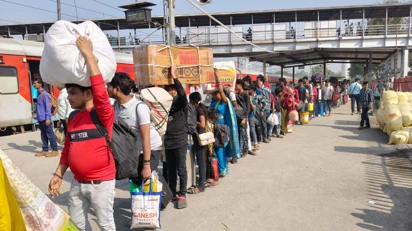
Usually, workers return to UP, Bihar, and Odisha in March for the Holi festival and the rabi harvest. However, SGTPA President Jitu Vakharia notes that the LPG shortage has added a 10% “panic factor” to the exodus.
-
The Hardship: Migrants living with families cannot cook at home.
-
The Black Market: Gas cylinders, when available, are being sold at nearly double the price on the black market, making city living unaffordable for daily-wage earners.
Cluster Impact: Sachin GIDC and Pandesara
In the Sachin GIDC area, which houses over 2,200 factories, the situation is dire. Mahendra Ramoliya, a major unit owner, reports that production has already been slashed by half. In Pandesara, mill owners like Kamal Tulsiyan point out that once a worker leaves, they rarely return for at least 60 to 90 days, meaning the labor crunch will likely last until June 2026.
The “Free Food” Retention Strategy
To prevent a total collapse, some owners have turned to unconventional methods:
-
In-Factory Canteens: Providing free or subsidized meals to keep workers from needing to cook at home.
-
Family Support: Some mill owners are even providing food grains to the families of workers to incentivize them to stay despite the lack of cooking gas.
Also Read |Tamil Nadu Voter List Purge: 97 Lakh Names Deleted in SIR Phase 1
Reality Check
The two-day shutdown is a defensive move to prevent “cost overruns.” With exports blocked in the Gulf and domestic demand weakening due to war-related inflation, producing at 100% capacity would lead to a massive inventory pile-up that the industry cannot afford to finance. The “Satisfactory” AQI recently seen in north India is ironically mirrored here by “Blue Skies” over Surat’s industrial chimneys—not because of green energy, but because the boilers are cold.
The Loopholes
The SGTPA claims the shutdown is to “maintain stability.” In fact, this is a “Liquidity Loophole”—by shutting for two days, mills save significantly on power bills and variable wages, allowing them to survive the month without taking high-interest working capital loans. Still, the “Migrant Loophole” remains; as long as the government cannot stabilize LPG prices, no amount of “free food” will stop a worker from choosing the food security of their ancestral village over an expensive, gas-less city apartment.
Also Read |Tamil Nadu Voter List Purge: 97 Lakh Names Deleted in SIR Phase 1
What This Means for You
If you are a consumer or business owner, prepare for a “Textile Price Spike.”
-
Saree & Apparel Prices: Expect a 15–20% increase in the price of synthetic sarees and dress materials by May 2026 as the production shortfall hits the retail market.
-
Logistics: If you are an exporter, realize that the “Strait of Hormuz” blockade is the primary reason your Surat-made goods are stuck. Check for alternative rail-links to Central Asia that bypass the Gulf.
-
Job Market: For textile engineers and designers, the hiring market in Surat will likely remain “Frozen” until the energy crisis in West Asia shows signs of de-escalation.
What’s Next
Expect a formal representation to the Ministry of Petroleum by the SGTPA on Monday, March 23, requesting priority LPG allocation for industrial clusters. Then, look for Indian Railways to run “Special Labour Trains” in late May to facilitate the return of the workforce. Finally, expect the Surat Municipal Corporation to monitor the “black marketing” of gas cylinders more aggressively to stabilize the migrant population.
Also Read |Tamil Nadu Voter List Purge: 97 Lakh Names Deleted in SIR Phase 1
End…..
Add businessleague.in as a Preferred Source
🙏 Support Independent Journalism
We keep news free for you.
Most readers support with ₹500 ❤️
or scan QR below

Voluntary contribution. No tax benefits.
DISCLAIMER
We have taken all measures to ensure that the information provided in this article and on our social media platform is credible, verified and sourced from other Big media Houses. For any feedback or complaint, reach out to us at businessleaguein@gmail.com