
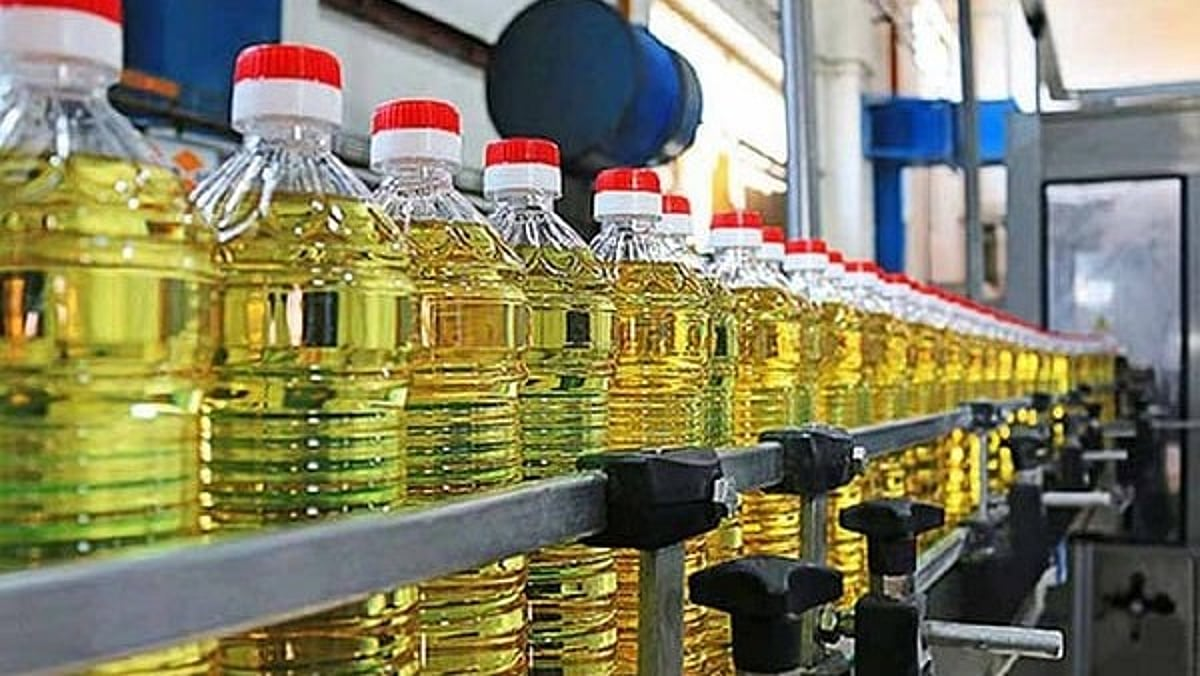
The Department of Consumer Affairs overhauls the Legal Metrology framework, requiring multi-pack manufacturers to dual-declare net volumes and net weights on all retail labels.
Add businessleague.in as a Preferred Source


The Department of Consumer Affairs has introduced a major regulatory overhaul within India’s fast-moving consumer goods (FMCG) sector, establishing mandatory standard pack sizes for edible oils and blended cooking fats. Executed via a comprehensive amendment to the Legal Metrology (Packaged Commodities) Rules of 2011, the intervention aims to completely eliminate the confusing mix of non-standard package volumes that currently populate grocery store shelves across the country.
The Ministry of Consumer Affairs, Food & Public Distribution confirmed that the updated Standard Operating Procedure (SoP) follows intense round-table consultations with leading national refining associations, which represent roughly 90% of the domestic processing sector. By replacing fractional quantities with a uniform sizing matrix, the government is making it easier for retail consumers to cross-compare per-unit prices across competing brands and make transparent purchasing decisions.
Also Read | Viral Trump Lookalike Buffalo Rescue: Saved From Eid Sacrifice
The Permitted Sizing Architecture
The revised packaging matrix applies strictly to primary categories, including Palm Oil, Soybean Oil, Sunflower Oil, Mustard/Rapeseed Oil, Groundnut Oil, Sesame Oil, Rice Bran Oil, Cottonseed Oil, and Corn Oil. Refiners are legally restricted from packaging these products in arbitrary quantities, and must align all commercial outputs with the following authorized parameters:
-
Small-Tier Convenience Packs: 200 ml/g and 500 ml/g
-
Standard Kitchen Formats: 1 liter/kg, 2 liters/kg, 3 liters/kg, 4 liters/kg, and 5 liters/kg
-
Bulk Commercial Containers: 15 liters/kg and 20 liters/kg
The Low-Income Safety Net: To protect the interests of low-income consumers and rural households reliant on daily wage dynamics, the department has explicitly exempted all sachet packages below 200 ml or 200 grams from the standardization rules. Minor, niche cooking alternatives like avocado, walnut, or hazelnut oils are also excluded from the sizing restrictions.
Enforcing the Dual-Declaration Framework
A key component of the new mandate addresses a common market trick: capitalizing on density variations. Because the physical volume of cooking fat contracts and expands based on seasonal temperatures, a single liter of oil typically weighs between 910 and 930 grams. Brands previously exploited this variance by displaying single-unit metrics that made direct price comparisons difficult.
Creating a Level Playing Field for the Industry
The government emphasized that the uniform sizing rules apply equally to domestic agricultural refiners and international import syndicates. Existing verification rules governing net weight margins and allowable packaging errors remain securely tied to the verified baseline rules of the Legal Metrology framework.
| Regulatory Vector Component | Pre-Existing Market Condition | New Legal Metrology Mandate |
| Package Sizing Variables | Proliferation of irregular packs (e.g., 875ml, 915ml) that masked price-per-unit inflation. | Strict alignment with nine verified volume‑weight categories. |
| Labeling Disclosures | Single-metric presentation (either volume or weight only). | Mandatory dual-declaration showing both fluid volume and equivalent mass. |
| Scope of Application | Fragmented oversight across regional boundaries. | Universal enforcement hitting all domestic mills and inbound imported shipments. |
| Low-Volume Retailing | Variable sizing across micro-pouch segments. | Total exemption for ultra-small budget packs below 200 ml/g. |
Beyond protecting consumers from subtle packaging reductions, the Department of Consumer Affairs noted that the framework will streamline logistics across the wider consumer goods sector. Introducing uniform dimensions will simplify supply chain operations, make automated warehouse stacking easier, reduce compliance friction across state borders, and encourage transparent competition based entirely on real product value rather than clever packaging design.
FAQ Section
What are the new standard pack sizes for edible oils in India?
The permitted standard pack sizes under the updated Legal Metrology rules are: 200 ml/g, 500 ml/g, 1 liter/kg, 2 liters/kg, 3 liters/kg, 4 liters/kg, 5 liters/kg, 15 liters/kg, and 20 liters/kg.
Why is the government forcing cooking oil companies to standardize their packs?
The intervention addresses the confusing variety of package sizes in the market. Many brands deployed odd quantities—such as 875 ml or 915 ml bottles—which made it highly difficult for everyday shoppers to accurately compare prices across different brands.
When do the new edible oil packaging rules take effect?
The Department of Consumer Affairs has provided a three-month transition period for manufacturers, packers, and importers to completely align their production lines and labeling formats with the new rules.
Also Read | Viral Trump Lookalike Buffalo Rescue: Saved From Eid Sacrifice
End….
Add businessleague.in as a Preferred Source
🙏 Support Independent Journalism
We keep news free for you.
Most readers support with ₹500 ❤️
or scan QR below

Voluntary contribution. No tax benefits.
DISCLAIMER
We have taken all measures to ensure that the information provided in this article and on our social media platform is credible, verified and sourced from other Big media Houses. For any feedback or complaint, reach out to us at businessleaguein@gmail.com