


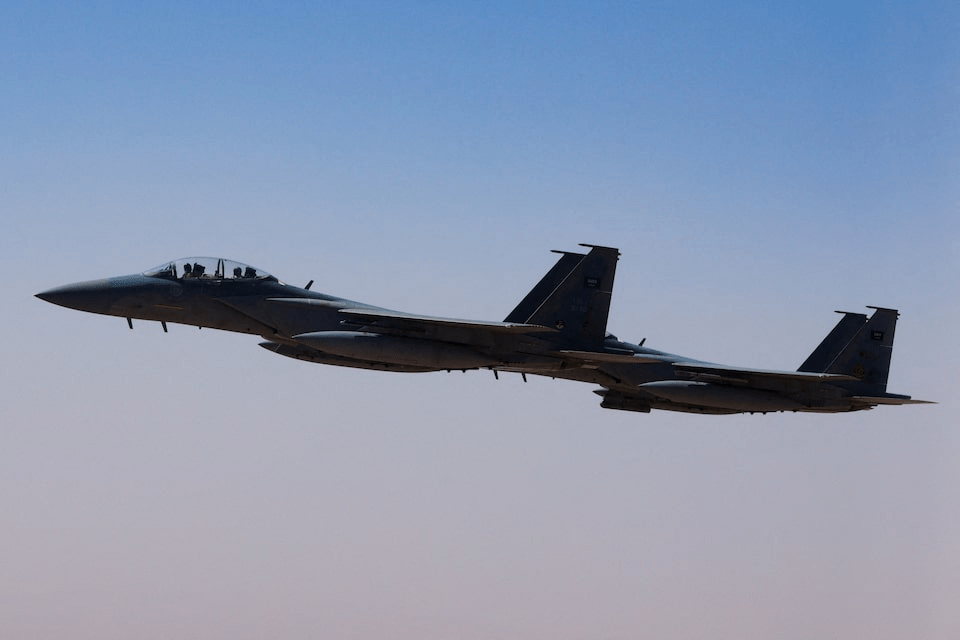
Now the shadows of the West Asia conflict are revealing a startling new dimension of regional warfare. Saudi Arabia’s Air Force reportedly carried out a series of unpublicized strikes on Iran in late March 2026, marking the first known instance of the Kingdom directly targeting Iranian soil. Therefore, this development points to a significantly more assertive posture by Riyadh in its response to regional threats. Meanwhile, while both Riyadh and Tehran have officially avoided direct confirmation, Western and Iranian officials have detailed a high-stakes “tit-for-tat” escalation that brought the two giants to the brink of open war. Following these secret strikes, a complex diplomatic channel helped secure an informal de-escalation just before the broader April 7 ceasefire.
Add businessleague.in as a Preferred Source


Also Read |Tamil Nadu Voter List Purge: 97 Lakh Names Deleted in SIR Phase 1
Tit-for-Tat: The Mechanics of Saudi Arabia’s Retaliation
Now the decision to strike Iranian targets was born out of a perceived mechanical necessity for deterrence. According to Reuters, citing Western officials, the strikes were assessed as “tit-for-tat” responses to previous attacks on Saudi territory. Therefore, Riyadh sought to prove that Iranian-backed aggression would no longer be met with mere defensive measures.
First, the exact targets of the Saudi operation remain classified and could not be independently confirmed. Next, the strikes took place during the height of the broader US-Israel-Iran conflict, a period of extreme regional volatility. Thus, the Kingdom moved from a defensive “shield” posture to an offensive “sword” strategy to safeguard its national interests.
So while the Saudi foreign ministry has not addressed the strikes directly, the silence from Tehran is equally telling. Meanwhile, the escalation serves as a reminder of how quickly regional conflicts can expand beyond publicly acknowledged boundaries. Therefore, the late-March window is now being viewed as the most dangerous period in Saudi-Iran relations this decade.
Diplomatic Backchannels: How Riyadh Informed Tehran Post-Strike
Now what makes this covert war move unique is the high level of communication that followed the kinetic action. According to Iranian and Western officials, Riyadh actually informed Tehran about the strikes after they occurred. Therefore, the goal was not to start an all-out war but to signal a clear boundary for future engagement.
First, this notification led to an intensified period of diplomatic exchanges between the two capitals. Next, Saudi Arabia issued stark warnings of further retaliation if the drone and missile attacks on its soil did not cease. Thus, the direct strikes acted as a “diplomatic lever” to force Tehran toward an understanding.
So the two countries utilized the Iranian ambassador in Riyadh to manage the fallout. Meanwhile, this secret dialogue eventually led to an informal agreement to reduce tensions just days before the broader April 7 ceasefire. Therefore, the kinetic strikes were paradoxically the catalyst for the current de-escalation.
The March 19 Warning: Prince Faisal’s Strategic Precursor
Now the groundwork for the strikes was laid during a public briefing on March 19. Saudi Foreign Minister Prince Faisal bin Farhan stated that the Kingdom “reserved the right to take military actions if deemed necessary.” Therefore, the subsequent strikes in late March were the physical manifestation of this stated policy.
First, just three days after this warning, Riyadh took the drastic step of expelling Iran’s military attaché. Next, four other Iranian embassy staff members were declared personae non gratae. Thus, the diplomatic break was a clear precursor to the military action that followed within the week.
So the transition from diplomatic protest to military retaliation was executed with clinical speed. Meanwhile, the expulsion of military personnel suggested that Riyadh believed the attacks on its soil were being coordinated directly from the embassy. Therefore, the March 19-22 period is now seen as the final “red flag” before the strikes were launched.
Also Read |Tamil Nadu Voter List Purge: 97 Lakh Names Deleted in SIR Phase 1
Drone Data: Analyzing the Sharp Drop in Missile Intensity
Now the impact of Saudi Arabia’s assertive posture is visible in the data compiled by defense ministries. Between March 25 and March 31—the week of the strikes—more than 105 drone and missile attacks were recorded against the Kingdom. Therefore, the intensity of the conflict had reached a boiling point before the de-escalation took root.
Missile and Drone Intensity (2026):
-
March 25-31: 105+ strikes (Peak conflict week).
-
April 1-6: ~25 strikes (Post-retaliation cooldown).
-
April 7-8: 47 combined projectiles (Brief flare-up during ceasefire start).
First, the dramatic drop in attacks by early April suggests that Riyadh’s “deterrent strikes” were effective. Next, Western sources assessed that late-period projectiles likely originated from Iraq rather than Iran. Thus, it appears Tehran reduced its direct involvement to safeguard its own interests.
The Iraq Connection: Protesting Attacks from Neighboring Soil
Now the complexity of the conflict is further muddied by the role of third-party territories. On April 12, Saudi Arabia summoned Iraq’s ambassador to lodge a formal protest. Therefore, Riyadh is holding Baghdad accountable for projectiles that are being fired at the Kingdom from Iraqi soil.
First, the Saudi defense ministry reports that 31 drones and 16 missiles were fired at the Kingdom during the first two days of the ceasefire. Next, these attacks prompted urgent deliberations in Riyadh about launching a second wave of retaliation against both Iran and Iraq. Thus, the “northern front” remains a significant threat to Saudi security.
So while the direct conflict with Iran has cooled, the “allied group” operations in Iraq continue to pose a challenge. Meanwhile, the communication channels between Riyadh and Tehran remain open specifically to manage these third-party proxies. Therefore, the Iraq connection is the primary obstacle to a lasting regional peace.
Pakistan’s Role: Fighter Jet Deployment During Heightened Alert
Now an interesting regional detail has emerged regarding the security of the Arabian Peninsula. During the period of heightened alert in late March and early April, Pakistan reportedly deployed fighter jets to the region. Therefore, the defense of the Kingdom has become a multi-national effort involving traditional allies.
First, the presence of Pakistani jets provided an additional layer of air superiority during the “tit-for-tat” strikes. Next, this deployment underscores the deep military ties between Riyadh and Islamabad. Thus, the Saudi retaliation was backed by a regional coalition designed to prevent a wider Iranian counter-offensive.
So the heightened alert period saw some of the most intense aerial coordination in the history of the Gulf. Meanwhile, the disclosure of this deployment highlights how regional powers are aligning to manage the West Asia crisis. Therefore, Pakistan’s involvement is a testament to the high stakes of the 2026 conflict.
Also Read |Tamil Nadu Voter List Purge: 97 Lakh Names Deleted in SIR Phase 1
The UAE Parallel: A Coordinated Shift in Gulf Defense Posture
Now the Saudi strikes do not appear to be an isolated event. Reports from The Wall Street Journal suggest that the United Arab Emirates (UAE) also carried out covert strikes on Iran during the same period. Therefore, there is a clear and coordinated shift in how Gulf nations are responding to threats.
First, the “String of Pearls” of Gulf defense is moving away from purely passive systems like Patriot missiles. Next, both Riyadh and Abu Dhabi are now willing to strike the source of the attacks directly. Thus, the “covert war” of late March represents a new doctrine of preemptive and retaliatory action.
So the disclosure of these strikes will likely change the calculus for Tehran in future escalations. Meanwhile, the informal de-escalation remains fragile as long as the broader US-Israel-Iran war continues. Therefore, the “secret war” of 2026 has set a new precedent for military engagement in the Middle East.
FAQ: Understanding the 2026 Saudi-Iran Covert War
1. Did Saudi Arabia officially confirm the strikes on Iran? Now, no. While Reuters reported the strikes based on Western and Iranian officials, a senior Saudi foreign ministry official did not directly address the claims.
2. What triggered the Saudi retaliation? First, the strikes were a “tit-for-tat” response to over 100 drone and missile attacks on Saudi territory during the last week of March.
3. How did the two countries de-escalate? So Riyadh informed Tehran about the strikes, leading to intensified diplomatic exchanges and an understanding to reduce tensions just before the April 7 ceasefire.
4. Why was the Iraqi ambassador summoned by Riyadh? Next, Saudi Arabia protested against drone and missile attacks that were assessed to have originated from Iraqi territory rather than Iran.
5. What role did Pakistan play in this conflict? Now, reports indicate that Pakistan deployed fighter jets during the heightened alert period to assist in the defense of the Kingdom.
6. Is the UAE also involved in direct strikes on Iran? Finally, yes. Reports suggest the UAE also carried out covert strikes on Iran, signaling a broader regional shift toward more assertive defense policies.
Also Read |Tamil Nadu Voter List Purge: 97 Lakh Names Deleted in SIR Phase 1
End…
Add businessleague.in as a Preferred Source

