


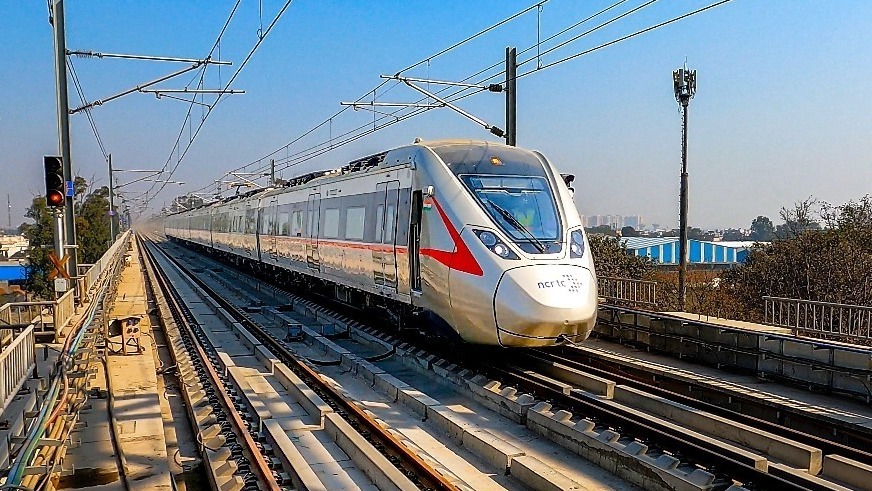
Stretching from Meerut straight into the Himalayan foothills, the high-speed expansion aims to slash travel times to under three hours while building a powerful new industrial spine across Uttar Pradesh and Uttarakhand.
NEW DELHI — In a major development for regional infrastructure in North India, the Central Government has granted in-principle approval to extend the Delhi-Meerut Regional Rapid Transit System (RRTS) all the way to Haridwar and Rishikesh. The ambitious 150-kilometer high-speed corridor will integrate two of the nation’s most prominent pilgrimage and tourism hubs into India’s fastest regional rail network, Namo Bharat.
Add businessleague.in as a Preferred Source


Also Read | Automated Insurance Settlement: Inside the Aarogya Setu 2.0 App Features Architecture
The initiative gained momentum following a series of high-level discussions between Uttarakhand Chief Minister Pushkar Singh Dhami, Prime Minister Narendra Modi, and Union Housing and Urban Affairs Minister Manohar Lal Khattar. With the initial green light secured, the state governments of Uttar Pradesh and Uttarakhand, alongside the National Capital Region Transport Corporation (NCRTC), have launched a joint coordination effort to map out the execution details.
1. Mapping the New Himalayan Corridor
The proposed transit line will act as a direct continuation from the northern terminus of the operational Delhi-Meerut corridor at Modipuram. The network footprint will be balanced almost equally between the two participating states, tracking close to the existing NH-58 highway alignment.
Also Read | Automated Insurance Settlement: Inside the Aarogya Setu 2.0 App Features Architecture
🗺️ Regional Layout Breakdown:
📍 Uttar Pradesh Stretch  ➔ ~72 Kilometers (Modipuram to Purkazi border)
📍 Uttarakhand Stretch    ➔ ~78 Kilometers (Purkazi border to Rishikesh)
🚄 Peak Operational Speed ➔ 160 kmph design limit
Proposed Station Alignment and Regional Touchpoints
| Route Segment | Key Transit Stations Covered | Intermodal Connectivity & Future Links |
| Western Uttar Pradesh Spine | Modipuram, Daurala, Khatauli, Muzaffarnagar, and Purkazi. | Core Interchanges: Passengers will be able to transfer directly to incoming routes heading toward Anand Vihar, Sarai Kale Khan, and the upcoming Ghaziabad-Noida International Airport RRTS line. |
| Uttarakhand Gateway | Roorkee, Haridwar, and terminating near Laxman Jhula in Rishikesh. | Transit Shifts: Commuters from the hill towns can entirely bypass highway bottlenecks to reach the heart of Delhi-NCR. |
2. Slashing Travel Times and Driving Regional Growth
Currently, navigating the road traffic between Delhi and Rishikesh takes anywhere from five to six hours. By utilizing Namo Bharat’s 160 kmph operational speed, the entire commute is projected to drop to 2.5 to 3 hours, effectively cutting travel times in half.
While the sudden accessibility is expected to trigger a significant surge in weekend tourism and hospitality investments in Haridwar and Rishikesh, business analysts stress that the real value lies in its industrial integration.
Economic Transformations Along the Route
-
Logistics & Manufacturing: Industrial hubs like Muzaffarnagar and nearby export centers like Moradabad will gain smoother supply chains, cutting down transit hours for goods moving between production workshops, regional warehouses, and buyers based in Delhi.
-
Educational Real Estate: Roorkee, anchored by IIT Roorkee, is anticipated to see sharp increases in rental housing demands and student accommodations as daily commuting from western UP towns becomes feasible.
-
Wider Infrastructure Upgrades: In tandem with the rail line, Uttarakhand has already requested ₹750 crore from the Centre to transition local power grids underground, specifically reinforcing the Kumbh Mela region.
The Path to the First Brick: What Happens Next?
Before heavy engineering can commence on the multi-thousand-crore project, the transit corporation must clear strict planning milestones.
Also Read | Automated Insurance Settlement: Inside the Aarogya Setu 2.0 App Features Architecture
📋 Project Insight: While a definitive completion calendar will only emerge after the formal submission of the Detailed Project Report, experts look at the baseline cost of the smaller 82-km Delhi-Meerut leg (approx. ₹30,274 crore) to estimate that this expansion will represent one of the largest infrastructure investments in the region to date, radically reshaping the economic future of the Ganga growth corridor.
Also Read | Automated Insurance Settlement: Inside the Aarogya Setu 2.0 App Features Architecture
Add businessleague.in as a Preferred Source

