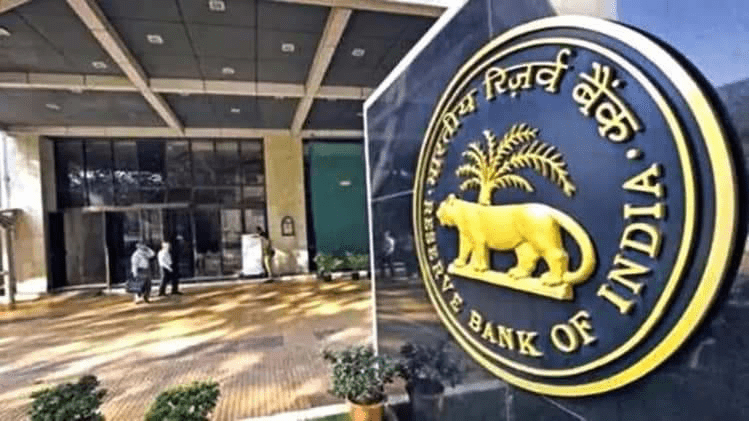
Now the Indian Rupee has found its footing at 92.66 against the US Dollar, but the “emergency” measures used to get there are sending shockwaves through the global financial community. The RBI Rupee stabilization impact 2026 is being felt far beyond the currency desks in Mumbai. First, the Reserve Bank of India (RBI) implemented one of its most aggressive crackdowns on speculation in a decade, forcing banks to close positions and capping daily trades. Therefore, while the currency recovered by 2 per cent, foreign investors have responded by pulling nearly $1 billion out of Indian bonds. Meanwhile, analysts warn that these sudden policy shifts could erode a decade of work spent opening India’s markets to the world.
Add businessleague.in as a Preferred Source


Also Read |Tamil Nadu Voter List Purge: 97 Lakh Names Deleted in SIR Phase 1
The $50 Billion Blow: Why Local Banks are Hurting
Now we must examine the immediate collateral damage of the RBI’s intervention. First, the central bank forced lenders to drastically cut their bets against the rupee. Therefore, banks were compelled to close out their “short” positions at unfavorable rates.
Next, Jefferies estimates that this sudden liquidation could lead to losses of up to ₹50 billion ($539 million) for the banking sector. Thus, the stability of the currency has come at the direct expense of bank balance sheets.
Meanwhile, these institutions were caught off guard by the speed of the regulatory shift. Therefore, the RBI Rupee stabilization impact 2026 is already being felt in the quarterly earnings forecasts of India’s top lenders. So the “win” for the rupee is a “loss” for the financial industry’s immediate liquidity.
Curbing the NDF Market: RBI’s Strategy Against Speculators
So how exactly did the RBI stop the slide? The target was the “offshore” market. First, the central bank focused on Non-Deliverable Forwards (NDFs) in hubs like London and Singapore. Therefore, it effectively restricted the ability of global traders to bet on the rupee’s future value without holding the physical currency.
Next, the RBI capped daily positions at $100 million per bank. Thus, the massive speculative volume that was driving the rupee to record lows was choked off overnight.
Meanwhile, the RBI’s aim was to decouple the rupee from the global volatility caused by the West Asia war. Therefore, the RBI Rupee stabilization impact 2026 was successful in halting the “excessive speculation.” So the central bank has regained control over the exchange rate, but it has done so by erecting walls around the market.
The $1 Billion Exit: Bond Investors Signal Discomfort
Now the most worrying sign for the Indian economy is the flight of foreign capital. First, global investors have sold off nearly $1 billion in Indian bonds following the currency curbs. Therefore, the “risk premium” for Indian assets has suddenly increased.
Next, bond investors rely on the ability to hedge their currency risk cheaply and predictably. Thus, the RBI’s move to “break the link” with offshore markets has made these investors extremely nervous.
[Image showing a bar chart of foreign portfolio investment (FPI) outflows in April 2026]
Meanwhile, India only recently gained inclusion in major global bond indices in 2024. Therefore, the RBI Rupee stabilization impact 2026 threatens to undo the progress made in attracting long-term institutional capital. So the “hot money” is leaving, and the “stable money” is asking questions.
Also Read |Tamil Nadu Voter List Purge: 97 Lakh Names Deleted in SIR Phase 1
Hedging Costs at Multi-Year Highs: A Vicious Loop?
So what makes it so expensive to invest in India right now? The cost of protection has skyrocketed. First, currency hedging costs have jumped to their highest levels in years. Therefore, if a global fund manager wants to protect their investment from a rupee crash, they must pay a massive premium.
Next, the gap between onshore and offshore prices is widening, creating friction in every transaction. Thus, the very cost of doing business in India has increased.
Meanwhile, Soumya Kanti Ghosh of SBI warned that this could create a “vicious loop.” Therefore, rising costs lead to reduced investor interest, which in turn necessitates more intervention. So the RBI Rupee stabilization impact 2026 has created a bottleneck for capital entry.
Breaking the Link: Comparing 2026 to the 2013 Taper Tantrum
Now we must put this into historical perspective. In 2013, India suffered through the “taper tantrum,” where investors fled emerging markets in panic. First, after that crisis, the RBI worked for a decade to open up the market and create a predictable regime. Therefore, the latest move is seen by some as a “step back” into a more controlled era.
Next, BofA analysts have warned that the current steps “essentially break the link” that the RBI had spent ten years cultivating. Thus, the trust of the global community is being tested.
Meanwhile, the inclusion in global bond indices was supposed to be the crowning achievement of these reforms. Therefore, the RBI Rupee stabilization impact 2026 feels like a reversal of a long-term trend toward liberalization. So the “closed door” policy is back in the spotlight.
Global Precedents: Lessons from China and Malaysia
So has this been done before? Actually, yes, but the results were mixed. First, China cracked down on its currency market between 2015 and 2017 to stop capital flight. Therefore, they stabilized the Yuan but saw a massive drop in international market activity.
Next, Malaysia implemented similar curbs in 2016, which successfully defended the Ringgit but “scared away” many global fund managers for years. Thus, the RBI is following a path that has historically led to lower market liquidity.
Meanwhile, India is trying to avoid the same fate by calling these measures “temporary.” Therefore, the RBI Rupee stabilization impact 2026 is a high-stakes gamble on the speed of a global recovery. So the central bank is hoping that investors have short memories.
Also Read |Tamil Nadu Voter List Purge: 97 Lakh Names Deleted in SIR Phase 1
Sanjay Malhotra’s Promise: Temporary Measures for a Global Rupee
Now the leadership at the central bank is attempting to calm the waters. First, RBI Governor Sanjay Malhotra has stated that the central bank remains committed to making the rupee a “global currency.” Therefore, he insists that these restrictions will not stay forever.
Next, he argued that the measures were necessary to prevent a disorderly fall of the INR during the West Asia crisis. Thus, it was a “crisis management” move rather than a policy shift.
Meanwhile, the RBI believes that once global tensions ease, the curbs can be removed without lasting damage. Therefore, the RBI Rupee stabilization impact 2026 is being framed as a “pause” in the reform journey. So the official stance is one of pragmatic defense rather than long-term isolation.
The Predictability Crisis: What Global Fund Managers Want
So what will it take for the investors to return? The answer is simple: predictability. First, fund managers have expressed that they can deal with a weak currency, but they cannot deal with “discretionary” policy changes. Therefore, the sudden nature of the NDF curbs is the real problem.
Next, investors need to know that the “rules of the game” won’t change overnight during a crisis. Thus, the transparency of the RBI’s communication is now under the microscope.
Meanwhile, one global manager noted that a “reliable and predictable” system is the bedrock of foreign investment. Therefore, the RBI Rupee stabilization impact 2026 has left a “question mark” over India’s future roadmap. So the central bank must now spend the rest of the year rebuilding the trust it sacrificed to save the rupee.
Common Questions Answered
What was the RBI Rupee stabilization impact 2026? Now the primary impact was a 2% recovery in the Rupee to 92.66. However, it also led to nearly $1 billion in bond outflows and ₹50 billion in bank losses.
What did the RBI actually do to the currency market? First, it limited daily bank positions and restricted Non-Deliverable Forwards (NDFs) in offshore markets. Thus, it stopped speculators from betting against the INR.
Why are global investors nervous? Next, because the policy change was sudden and “discretionary.” Therefore, they fear that India is becoming less predictable and moving away from market reforms.
Is it more expensive to invest in India now? So yes. Hedging costs—the price to protect investments from currency risk—have jumped to their highest levels in years.
Is this a permanent change in RBI policy? Finally, Governor Sanjay Malhotra says the measures are “temporary” and the bank remains committed to a globalized rupee. Thus, they hope to remove curbs soon.
What is an NDF? Actually, it stands for Non-Deliverable Forward. It’s a contract used by offshore investors to bet on a currency’s future value without physically trading it. Therefore, the RBI targeted this to stop speculation.
Also Read |Tamil Nadu Voter List Purge: 97 Lakh Names Deleted in SIR Phase 1
End…
Add businessleague.in as a Preferred Source
🙏 Support Independent Journalism
We keep news free for you.
Most readers support with ₹500 ❤️
or scan QR below

Voluntary contribution. No tax benefits.
DISCLAIMER
We have taken all measures to ensure that the information provided in this article and on our social media platform is credible, verified and sourced from other Big media Houses. For any feedback or complaint, reach out to us at businessleaguein@gmail.com