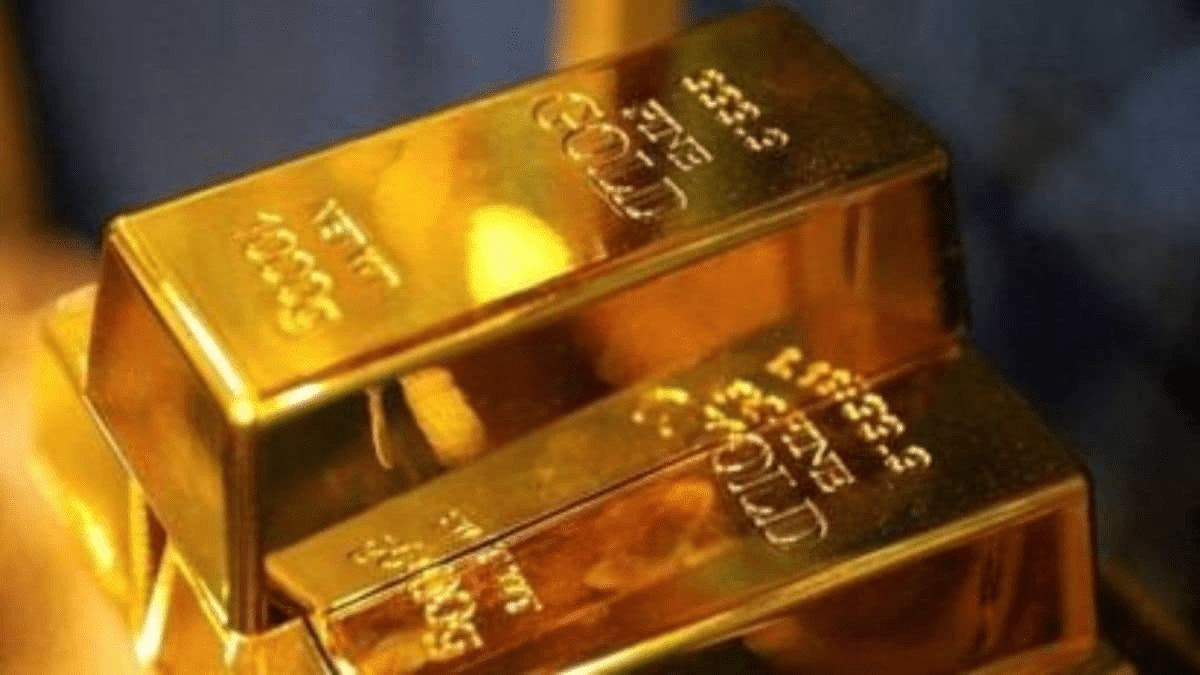
Now the global financial markets are reacting to a volatile weekend of failed diplomacy and renewed military tension. The gold rate today 13 April 2026 is facing significant sell-off pressure as the escalation in the US-Iran war has sent crude oil prices skyrocketing. First, the collapse of ceasefire talks in Islamabad has left the precious yellow metal vulnerable in the early morning session. Therefore, MCX gold opened with a noticeable downside gap, touching an intraday low of ₹1,51,457 per 10 gm shortly after the opening bell. Meanwhile, international COMEX prices are oscillating around $4,740 per ounce, reflecting a cautious shift in investor sentiment toward “black gold.”
Add businessleague.in as a Preferred Source


Also Read |Tamil Nadu Voter List Purge: 97 Lakh Names Deleted in SIR Phase 1
Islamabad Talk Failure: Why the Ceasefire Collapsed
Now we must examine the diplomatic setback that has rattled the markets. First, the highly anticipated ceasefire talks in Islamabad over the weekend ended without a resolution. Therefore, the fragile peace that investors were hoping for has officially vanished.
Next, market experts believe this failure likely prolongs the conflict, adding a layer of permanent risk to regional stability. Thus, the gold rate today 13 April 2026 reflects a “risk-off” sentiment as London markets prepare to enter the fray.
[Image showing a diplomatic table with ‘Ceasefire Talks’ documents and a shattered gavel]
Meanwhile, Paras Gupta of Union Bancaire Privée noted that the real test for bullion will come later on Monday. Therefore, the early morning dip is just the beginning of a high-stakes trading day. So the ” Islamabad fallout” remains the primary headline for commodity desks.
The Black Gold Factor: How Rising Oil Drags Gold Down
So why is “black gold” causing a decline in the yellow metal? First, the escalation of the US-Iran war has led to a massive surge in crude oil prices this Monday. Therefore, energy costs are becoming the dominant inflationary driver in the global economy.
Next, SEBI-registered expert Anuj Gupta explains that the rise in oil is putting immediate pressure on gold and silver. Thus, investors are reallocating capital to cover the rising costs of energy and related sectors.
Meanwhile, the inverse relationship in this specific crisis is due to the potential for a liquidity squeeze. Therefore, the gold rate today 13 April 2026 is being sacrificed as traders move to manage their exposure in the energy markets. So the “black gold surge” is currently a barrier to gold’s safe-haven status.
Strait of Hormuz Blockade: Fueling Inflationary Fears
Now the geopolitical situation has turned toward a classic naval confrontation. First, the US government has announced a blockade of the Strait of Hormuz. Therefore, one of the world’s most critical maritime chokepoints is now effectively closed to Iranian traffic.
Next, this move is expected to further fuel crude oil prices, potentially leading to a global energy shortage. Thus, the inflationary challenges for the 2026 economy have reached a critical level.
Strait of Hormuz Impact:
-
Oil Flow: Significant portion of global supply at risk.
-
Costs: Skyrocketing freight and insurance premiums.
-
Gold Response: Downward pressure as investors prepare for Fed intervention.
Meanwhile, the blockade ensures that “oil volatility” remains the centerpiece of the trading week. Therefore, the gold rate today 13 April 2026 is struggling to find a floor amidst the shifting sands of maritime warfare.
Also Read |Tamil Nadu Voter List Purge: 97 Lakh Names Deleted in SIR Phase 1
MCX Gold Strategy: Key Levels to Watch for Indian Investors
So where should Indian investors look for a buying opportunity? First, the MCX gold rate today is holding above a key support band of ₹1,48,000 to ₹1,46,000. Therefore, this region remains a critical demand zone for long-term holders.
Next, Ponmudi R of Enrich Money warns that a breakdown below this region could extend the decline significantly. Thus, the ₹1,40,000 to ₹1,36,000 range would be the next target for a correction.
Meanwhile, the current intraday low of ₹1,51,457 shows that downside pressure is active. Therefore, the gold rate today 13 April 2026 requires a “wait and watch” approach for new entries. So keep a close eye on the ₹1.51 lakh mark to see if it holds until the afternoon session.
COMEX Support Zones: Analysis of Global Demand
Now let’s look at the global benchmark on the COMEX exchange. First, prices are currently oscillating around $4,740 per ounce, roughly 1% lower than Friday’s close. Therefore, the global bullion market is in a state of uniform retreat.
Next, Daniel Hynes of ANZ suggests that gold could threaten last week’s low of $4,650. Thus, the $4,650–$4,600 band is the “line in the sand” for global commodity strategists.
[Image showing a globe with gold bars and price tags in USD and EUR]
Meanwhile, if these levels hold, the upside momentum could gradually rebuild. Therefore, the gold rate today 13 April 2026 is essentially testing its near-term “demand zone” in real-time. So the international response to the London and New York opens will be decisive.
The Fed Factor: Hawkish Policy in Response to War
So what is the central bank’s role in this crisis? First, soaring crude oil prices usually force the US Fed to adopt a “hawkish” stance to address inflation. Therefore, the prospect of higher interest rates is making gold—a non-yielding asset—less attractive to investors.
Next, the blockade of the Strait of Hormuz only adds to the Fed’s inflationary headache. Thus, the market is pricing in a more aggressive policy path than was expected on Friday.
Meanwhile, higher rates typically strengthen the dollar, which further depresses the gold price. Therefore, the gold rate today 13 April 2026 is caught in a pincer movement between war-driven oil prices and central bank policy. So the “Fed factor” remains a major drag on bullion recovery.
Also Read |Tamil Nadu Voter List Purge: 97 Lakh Names Deleted in SIR Phase 1
Historical Context: 11% Drop Since the War’s Start
Now we should look at the broader performance of gold since the end of February. First, bullion has fallen nearly 11% since the US-Iran conflict began. Therefore, the traditional “safe-haven” narrative hasn’t fully played out as expected in the early months.
Next, much of this decline was due to a massive liquidity squeeze where investors sold gold to cover losses in other crashing asset classes. Thus, gold acted as the “ATM of the world” during the initial panic.
[Image showing a timeline of the US-Iran war with gold price dips marked]
Meanwhile, the metal has recently clawed back some of those losses as economic growth fears return. Therefore, the gold rate today 13 April 2026 dip is a fresh test in an ongoing bear-to-bull struggle. So the 11% drop provides a significant psychological context for today’s levels.
Liquidity Squeeze vs. Economic Growth Slowdown
So is there any light at the end of the tunnel for gold bugs? First, while higher inflation usually drags gold down via the Fed, a slowing global economy does the opposite. Therefore, investors are starting to focus on the risk of “stagflation” (stagnant growth + high inflation).
Next, Daniel Hynes believes this shift should eventually support bullion despite the early Monday decline. Thus, gold is caught between being a “liquidity source” and a “safe haven.”
Meanwhile, the real test will be whether gold can hold above the $4,600 mark. Therefore, the gold rate today 13 April 2026 is the frontline of a complex macroeconomic battle. So as growth slows, gold’s “demand zone” may become more resilient.
Common Questions Answered
What is the gold rate today 13 April 2026? Now the MCX gold rate opened at ₹1,51,547 per 10 gm, while COMEX gold is oscillating around $4,740 per ounce. Therefore, the yellow metal is down about 1% today.
Why is gold falling despite the US-Iran war? First, because crude oil prices are skyrocketing. Thus, investors are selling gold to cover energy costs, and the Fed is expected to be more hawkish to fight oil-driven inflation.
What is the ‘Strait of Hormuz blockade’ impact? Next, it has fueled a massive surge in crude oil prices. Therefore, it is putting pressure on bullion while making global energy supplies extremely fragile.
What are the key support levels for MCX gold? So the key support band is ₹1,48,000 to ₹1,46,000. Therefore, a breakdown below this could see gold heading toward ₹1.36 lakh.
How much has gold fallen since the war began? Finally, bullion has dropped nearly 11% since the conflict started in late February. So the current dip is part of a larger volatile trend.
Is it a good time to buy gold? Actually, analysts suggest watching the support zone of $4,650–$4,600 on COMEX. Therefore, if these levels hold, it could indicate a rebuilding of upside momentum.
Also Read |Tamil Nadu Voter List Purge: 97 Lakh Names Deleted in SIR Phase 1
End….
Add businessleague.in as a Preferred Source
🙏 Support Independent Journalism
We keep news free for you.
Most readers support with ₹500 ❤️
or scan QR below

Voluntary contribution. No tax benefits.
DISCLAIMER
We have taken all measures to ensure that the information provided in this article and on our social media platform is credible, verified and sourced from other Big media Houses. For any feedback or complaint, reach out to us at businessleaguein@gmail.com