
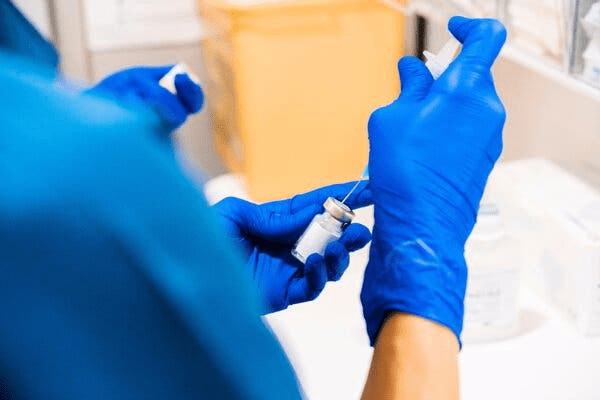
Now the global pharmaceutical landscape is grappling with a sophisticated black market that exploits the waste of life-saving treatments. In an official response to the Keytruda counterfeit leak 2026, MSD (the international subsidiary of Merck & Co) has clarified its position regarding the reuse of its medicinal packaging. First, the company stated that the responsibility for used vials and boxes rests solely with individual healthcare facilities. Therefore, once a product passes through the legitimate supply chain to an end user, the manufacturer loses all “visibility” into its disposal. Meanwhile, an investigation by Delhi Police has exposed a deep-rooted nexus within hospital oncology departments.
Add businessleague.in as a Preferred Source


Also Read |Tamil Nadu Voter List Purge: 97 Lakh Names Deleted in SIR Phase 1
Supply Chain Visibility: The Post-Delivery Blind Spot
Now we must analyze the limits of a pharmaceutical company’s oversight. First, MSD explained that its visibility ends the moment a distributor delivers the drug to a healthcare facility. Therefore, the Keytruda counterfeit leak 2026 thrives in the “after-use” phase where company control vanishes.
Next, the company emphasizes that its legitimate supply chain is secure up to the point of intended use. Thus, the transition from a life-saving medicine to a discarded vial becomes a dangerous loophole.
Meanwhile, the lack of oversight into how oncology departments handle used packaging remains a primary concern. Therefore, the company argues that it cannot be held responsible for what happens to the waste generated by its products. So the burden of security shifts to the hospital’s internal management.
Forensic Findings: MSD’s Analysis of Seized Samples
So what exactly was found in the fake vials? First, the Delhi Police requested MSD to test the allegedly counterfeit Keytruda seized during recent raids. Therefore, the company utilized its specialized Forensic Services Laboratory to conduct a chemical and structural analysis.
Next, the results were provided back to law enforcement to strengthen the criminal case against the accused. Thus, MSD’s role is currently limited to that of a “technical advisor” in the ongoing investigation.
Meanwhile, the company routinely cooperates with regulatory authorities to confirm product authenticity. Therefore, the Keytruda counterfeit leak 2026 probe relies heavily on this forensic confirmation. So the evidence gathered so far points to a systemic failure in packaging destruction.
The Disposal Dilemma: Who Controls Medical Waste?
Now let’s look at the legal framework governing medical waste. First, MSD explicitly stated that “disposal of used medicinal packaging is governed by local regulations.” Therefore, healthcare facilities are mandated by law to destroy vials to prevent them from entering the black market.
Next, institutional procedures are supposed to ensure that used vials are crushed or chemically neutralized. Thus, the existence of a counterfeit market suggests these protocols are being bypassed for profit.
Biomedical Waste Protocols:
-
Vials: Must be disinfected and mutilated (broken).
-
Packaging: Shredding or marking to prevent reuse.
-
Oversight: Hospital infection control and waste committees.
Meanwhile, the seizure of authentic-looking vials indicates that staff are stealing the empty packaging instead of destroying it. Therefore, the Keytruda counterfeit leak 2026 is as much a waste management crisis as it is a criminal one.
Also Read |Tamil Nadu Voter List Purge: 97 Lakh Names Deleted in SIR Phase 1
Tracking Deficit: Why Vials Aren’t Monitored Post-Use
So why isn’t there a system to track each individual unit? First, MSD admitted it does not currently have a “tracking system” that ensures each vial from a specific batch is used only once. Therefore, once the seal is broken and the drug administered, the unit “falls off the grid.”
Next, implementing such a system would require a massive technological overhaul of hospital administrative software. Thus, the company relies on the integrity of the end user (the hospital) to perform the final disposal.
Meanwhile, investigative journalists have questioned why QR codes or RFID tags aren’t used to mark a vial as “depleted.” Therefore, the Keytruda counterfeit leak 2026 highlights a technological gap that counterfeiters are more than happy to fill. So the industry remains vulnerable until “cradle-to-grave” tracking is mandated.
Nexus in Oncology: How Counterfeits Enter the System
Now the investigation has moved inside the walls of major city hospitals. First, Delhi Police discovered that the accused individuals were often employees working within oncology departments. Therefore, they had direct access to both genuine used packaging and the vulnerable patients who needed the drug.
Next, these workers reportedly collected empty vials, refilled them with non-medicinal substances, and sold them back into the market. Thus, the “legitimate” appearance of the vial deceived both doctors and patients.
Meanwhile, the price of Keytruda—reaching several lakhs per dose—makes this a high-profit, low-risk crime for corrupt staff. Therefore, the Keytruda counterfeit leak 2026 is a chilling reminder of how trust can be weaponized in a clinical setting. So the call for “hospital accountability” is growing louder.
Regulatory Framework: Local Laws vs. Institutional Procedures
So who is supposed to catch this? First, the responsibility appropriately rests with the “competent authorities” such as the Drug Controller General of India (DCGI). Therefore, MSD argues that its role is purely supportive once a crime has been committed.
Next, hospitals are required to maintain a strict inventory of all scheduled drugs and their corresponding waste. Thus, the regulatory failure occurs when audits are either not conducted or are falsified by the nexus.
Regulatory Stakeholders:
-
Hospitals: Responsible for 100% waste destruction.
-
Police: Responsible for investigating the criminal nexus.
-
Pharma Companies: Responsible for product authenticity data.
Meanwhile, the company continues to provide technical information to help confirm product authenticity when requested. Therefore, the Keytruda counterfeit leak 2026 serves as a test case for the effectiveness of our current pharmaceutical laws.
Also Read |Tamil Nadu Voter List Purge: 97 Lakh Names Deleted in SIR Phase 1
Public Safety: Identifying Genuine Keytruda in 2026
Now, how can patients protect themselves from these fakes? First, always source oncology drugs through a verified hospital pharmacy or an authorized distributor. Therefore, avoid buying from “independent agents” who offer the drug at a significant discount.
Next, check for signs of tampering on the vial cap and label. Thus, any scratch marks or misaligned labels should be reported immediately.
[Image showing a close-up of a tamper-evident seal on a medicinal vial]
Meanwhile, MSD encourages patients to verify batch numbers through their official channels if they have concerns. Therefore, staying informed is the first line of defense against the Keytruda counterfeit leak 2026. So the “if the price is too good to be true” rule remains paramount in cancer care.
The Road Ahead: Demanding Accountability in Pharma Waste
So what is the long-term solution? First, there is a rising demand for pharma companies to implement “Smart Packaging” that deactivates or changes color once opened. Therefore, the industry may be forced to innovate its way out of this crisis.
Next, hospitals must be held legally accountable for “waste leakage.” Thus, if an empty vial from a hospital is found in a criminal’s hands, the institution should face severe penalties.
Meanwhile, MSD maintains that its role is to support authorities “if and when they request assistance.” Therefore, the Keytruda counterfeit leak 2026 has set the stage for a major policy debate on drug traceability. So the end of this racket requires a unified front between manufacturers, hospitals, and the law.
Common Questions Answered
Who is responsible for the Keytruda counterfeit leak 2026? Now Merck (MSD) states that individual healthcare facilities are responsible for the disposal and destruction of used vials and packaging. Therefore, the leakage happens at the hospital level.
Does Merck have a tracking system for used vials? First, no. The company admitted it does not currently have a system to ensure each vial is used once and disposed of correctly after it leaves the supply chain.
How did the counterfeiters get the genuine vials? Next, investigations suggest a nexus with staff in oncology departments who steal empty vials instead of destroying them as per biomedical waste norms.
What is MSD doing about the seized batches? So they are testing samples at their Forensic Services Laboratory and providing technical data to help the Delhi Police confirm authenticity.
How can I tell if my Keytruda is fake? Finally, only purchase from authorized distributors. Check for tamper-evident seals and report any “logical discrepancies” in the packaging to the manufacturer.
Are hospitals being investigated? Actually, yes. The Delhi Police have arrested several persons working within hospital departments, and the role of institutional oversight is currently under the scanner.
Also Read |Tamil Nadu Voter List Purge: 97 Lakh Names Deleted in SIR Phase 1
End….
Add businessleague.in as a Preferred Source
🙏 Support Independent Journalism
We keep news free for you.
Most readers support with ₹500 ❤️
or scan QR below

Voluntary contribution. No tax benefits.
DISCLAIMER
We have taken all measures to ensure that the information provided in this article and on our social media platform is credible, verified and sourced from other Big media Houses. For any feedback or complaint, reach out to us at businessleaguein@gmail.com