


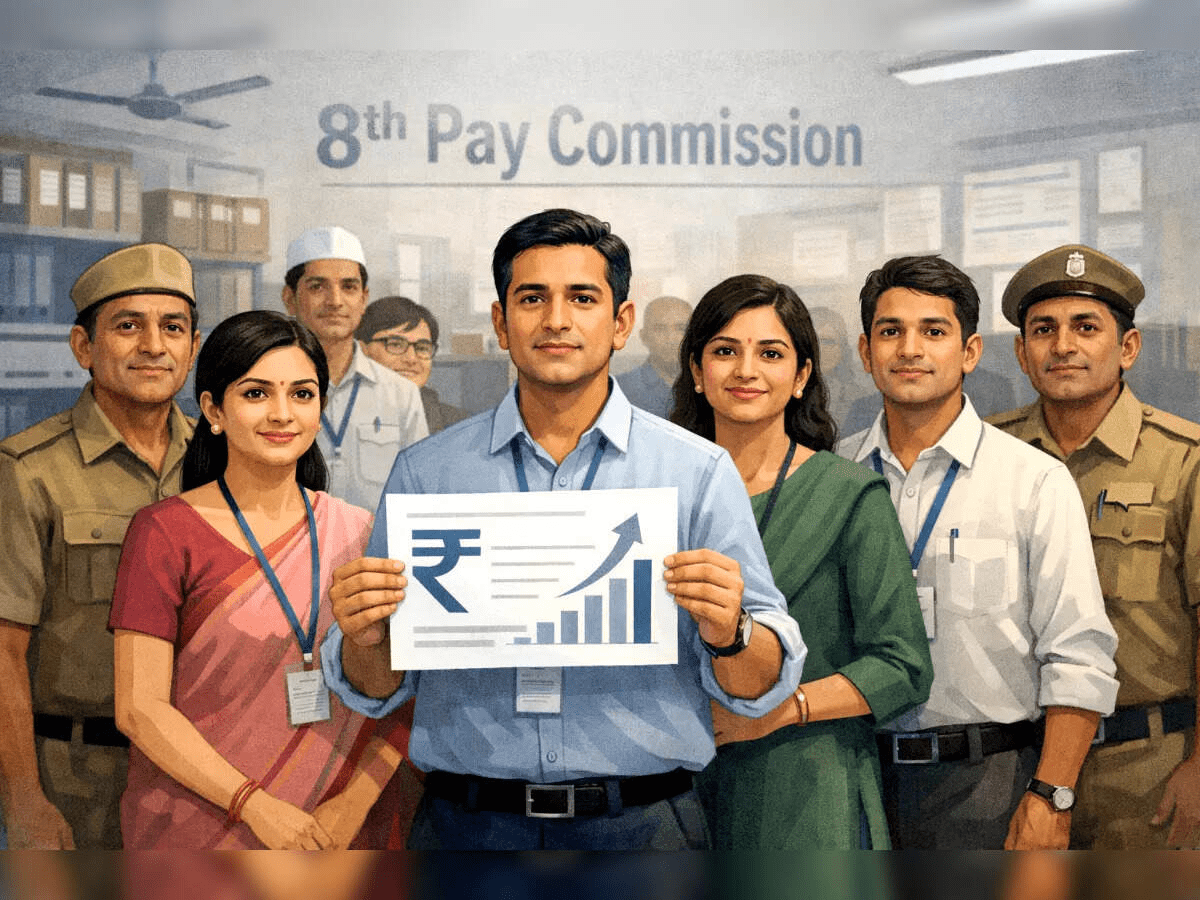
Now the battle for a significant salary revision has officially entered its most intense phase. As of Saturday, April 25, 2026, multiple employee bodies and teacher unions have submitted aggressive recommendations to the 8th Central Pay Commission. Therefore, the 8th Pay Commission salary hike demands 2026 represent a massive push for a four-fold increase in minimum wages and a fundamental shift in pension policy. Specifically, the proposals range from a minimum basic pay of ₹50,000 to an ambitious ₹72,000, aimed at aligning government compensation with the current high cost of living and India’s per capita income growth.
Add businessleague.in as a Preferred Source


Meanwhile, the 8th Pay Commission has set a crucial deadline of April 30, 2026, for all stakeholders to submit their final memorandums.
But for the millions of central government employees and pensioners, the real question is whether the government will balance these “dignified living” demands with fiscal prudence.
Also Read |Tamil Nadu Voter List Purge: 97 Lakh Names Deleted in SIR Phase 1
The BPMS Demand: A Four-Fold Jump to ₹72,000 Minimum Pay
Now we must examine the most aggressive proposal on the table. The Bharatiya Pratiraksha Mazdoor Sangh (BPMS), representing civilian defense employees, has proposed a minimum basic pay of ₹72,000 per month. Therefore, the 8th Pay Commission salary hike demands 2026 seek to quadruple the current entry-level pay of ₹18,000.
A Balanced Midpoint?
First, the union argues that this figure is a “balanced midpoint” between economic justification and fiscal reality. Then, they have cited MoSPI data showing that India’s Per Capita Net National Income has risen by 86.76% since the last commission. Thus, they believe the current wage structure is lagging behind national growth. Next, the BPMS has also suggested a maximum salary of ₹10 lakh for top-tier Level 18 positions. Therefore, their proposal is aimed at maintaining pay parity across all levels of the government hierarchy.
Teacher Unions: PSNM’s Call for ₹50,000 Minimum and 7% Increments
Now the teaching community has added its own set of detailed demands. The Pragatisheel Shikshak Nyaya Manch (PSNM) has submitted a memorandum seeking a minimum basic pay of ₹50,000–₹60,000 for Level 1 employees.
Meaningful Income Growth
First, the teachers’ body has demanded that annual increments be doubled to 6-7%, up from the current 3%. Then, they argue that the standard 3% increment is inadequate to counter rising inflation in 2026. Thus, a higher increment rate would ensure “real” income growth over a ten-year career span. Next, they have proposed merging Dearness Allowance (DA) with the basic pay once it reaches the 50% mark. Therefore, the PSNM’s strategy is to ensure that basic pay remains dynamic and reflective of the actual economic environment.
Fitment Factor Explained: The Multiplier for Your New Basic Pay
Now the most technical aspect of the 8th Pay Commission salary hike demands 2026 is the fitment factor. This is the multiplier applied to the current basic pay to determine the new base salary.
The Proposed Multipliers:
-
7th CPC (Current): 2.57
-
Moderate Demand: 3.0
-
Aggressive Demand: 3.83 to 4.0 (BPMS/PSNM)
First, a fitment factor of 3.83 would mean an employee currently earning ₹50,000 would see their basic pay jump to over ₹1.91 lakh. Then, this multiplier is designed to “neutralize” the impact of inflation and DA merger. Thus, the fitment factor is the primary engine of the salary hike. Next, unions are pushing for a standardized multiplier to ensure transparency and uniform application across all 18 levels of the pay matrix. Therefore, the final decision on this factor will be the single most important number in the 8th CPC report.
Also Read |Tamil Nadu Voter List Purge: 97 Lakh Names Deleted in SIR Phase 1
Restoring the Old Pension Scheme (OPS): A Non-Negotiable Demand
Now, beyond the immediate pay, the question of post-retirement security has taken center stage. Almost every employee union has made the restoration of the Old Pension Scheme (OPS) a “non-negotiable” demand for 2026.
Pension Security vs. Market Volatility
First, employees want to replace the current National Pension System (NPS) and the Unified Pension Scheme (UPS). Then, they argue that OPS, which provides a guaranteed pension of 50% of the last drawn pay, is the only way to ensure dignity in old age. Thus, the unions believe that social justice must outweigh the government’s fiscal concerns regarding the pension bill. Next, the demand includes a call for “One Rank One Pension” (OROP) for civilian employees as well. Therefore, the 8th Pay Commission faces a massive challenge in addressing this ideologically charged debate.
Structural Reforms: Merging DA and Revising the ‘Family Unit’
Now we must look at the structural changes being proposed to the salary calculation methodology. The BPMS has suggested a radical change in how the “family unit” is calculated.
Accounting for Financial Responsibility
First, the current system calculates wages based on a family unit of three members. Then, unions have proposed expanding this to five members to account for elderly parents and dependents. Thus, the minimum wage calculation would naturally increase to reflect the real-world financial burden on employees. Next, there is a strong demand to calculate DA to two decimal points for higher precision. Therefore, these structural reforms are intended to create a more “humane” and rational framework for government compensation.
Enhanced Allowances: HRA, Transport, and Digital Support
Now the 8th Pay Commission salary hike demands 2026 also include a major overhaul of the allowance structure. As the cost of housing and commuting has soared, the current caps are seen as obsolete.
Proposed Allowance Upgrades:
-
HRA: 12% (Z-class), 24% (Y-class), and 36% (X-class) cities.
-
Transport Allowance: Minimum of ₹9,000 plus DA-linked revisions.
-
Children Education Allowance: Increase to ₹7,000 per month per child.
-
Digital Support Allowance: A new proposed ₹2,000 per month for broadband and AI tools.
First, the HRA hike is essential for employees living in metro cities where rents have far outpaced the 30% cap. Then, the introduction of a “Digital Support Allowance” reflects the post-pandemic reality of hybrid work and technical requirements. Thus, the unions are pushing for a “modernized” allowance list. Next, the demand for a ₹7,000 education allowance aims to provide quality schooling for children of Level 1 and Level 2 staff. Therefore, these allowances are designed to protect the employee’s take-home pay from being consumed by basic necessities.
Also Read |Tamil Nadu Voter List Purge: 97 Lakh Names Deleted in SIR Phase 1
Career Progression: Faster Promotions and Gratuity Limits
Now we must address the long-term career outlook. Many employees feel that the current Modified Assured Career Progression (MACP) scheme is too slow and provides stagnant growth.
Accelerating Growth
First, unions have proposed MACP reviews at 6, 12, 18, and 24 years, instead of the current 10, 20, and 30-year intervals. Then, they have demanded that the gratuity limit be doubled from ₹25 lakh to ₹50 lakh. Thus, a mid-career employee would reach a higher pay scale much faster than under the 7th CPC. Next, teachers’ bodies have sought faster promotions from TGT to PGT within 6–7 years. Therefore, the goal is to keep morale high and ensure that stagnation does not lead to a talent drain toward the private sector.
Economic Rationale: Linking Wages to Per Capita Income Growth
Now the unions have grounded their “aggressive” demands in hard economic data. They are no longer just asking for a hike; they are arguing for a “share in national prosperity.”
National Income Alignment
First, the BPMS cited that the nation’s Per Capita Net National Income rose from ₹1.03 lakh in 2016 to ₹1.92 lakh in 2025. Then, they argued that government wages must be linked to this growth to remain “rational and transparent.” Thus, the ₹72,000 minimum pay is not a random number but a calculation based on these economic indicators. Next, they believe this linkage will prevent the “sticker shock” of massive hikes every ten years by making the process more formulaic. Therefore, the 8th Pay Commission salary hike demands 2026 are a push for a more modern, data-driven wage policy.
Common Questions Answered
What is the minimum basic pay demanded for the 8th Pay Commission? Now demands vary between ₹50,000 (by teacher bodies) and ₹72,000 (by defense unions). The final decision will depend on the government’s fiscal capacity.
When will the 8th Pay Commission be implemented? First, the commission was formally constituted on November 3, 2025. Then, the recommendations are expected to take effect retroactively from January 1, 2026.
Will the Old Pension Scheme (OPS) be restored? Next, it is a primary demand from almost all unions. Thus, the commission is currently assessing the feasibility of replacing the NPS/UPS with the OPS.
What is the expected fitment factor for the 8th CPC? So unions are demanding a fitment factor of 3.83 to 4.0. Therefore, if accepted, this would lead to a massive jump in basic salary compared to the 2.57 used in the 7th CPC.
Is there a deadline for submitting suggestions to the commission? Finally, the official deadline for submitting memorandums via the 8cpc.gov.in portal is April 30, 2026. Thus, stakeholders have only a few days left to finalize their input.
Also Read |Tamil Nadu Voter List Purge: 97 Lakh Names Deleted in SIR Phase 1
End…
Add businessleague.in as a Preferred Source

