


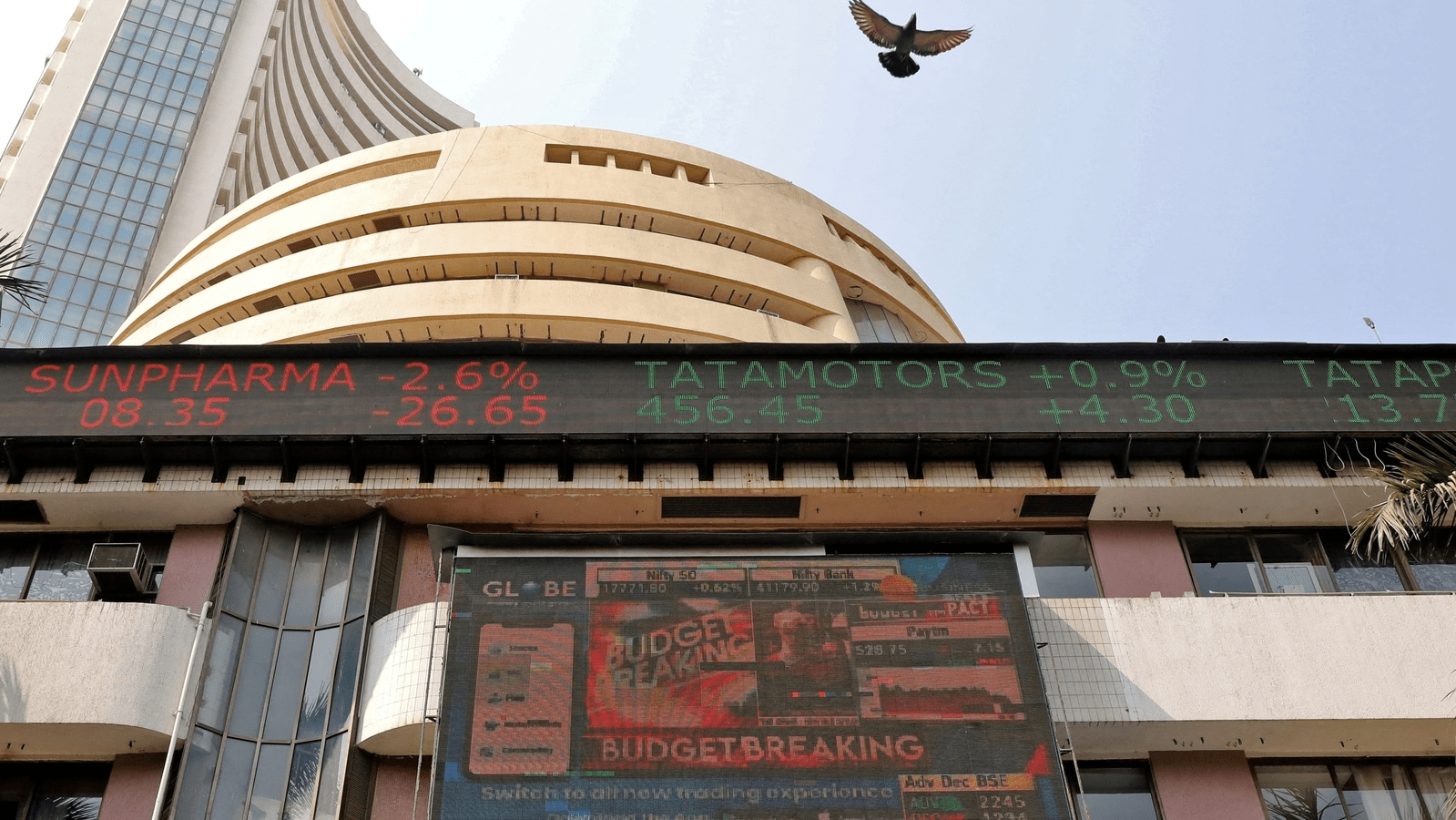
Now the optimism on Dalal Street has been replaced by sharp selling pressure. On Friday afternoon, the Indian equity markets witnessed a significant rout, as the Sensex 982 points lower market crash dominated the trading day. The BSE Sensex finished the day down 1.38% at 76,594.11, while the Nifty 50 shed 1.21% to settle at 23,879.50. Therefore, the volatile global environment has finally caught up with domestic indices, leaving investors grappling with a steep erosion of wealth in a single session.
Add businessleague.in as a Preferred Source


Meanwhile, the psychological support level of 24,000 for the Nifty has been breached.
But for those looking at the charts, the question remains: what specifically triggered this sudden exodus of capital from the Indian markets?
Also Read |Tamil Nadu Voter List Purge: 97 Lakh Names Deleted in SIR Phase 1
Crude Oil Above $100: The Energy Shock Spooking India
Now we must examine the most potent trigger for today’s decline. Crude oil prices have surged past the $100 mark following renewed tensions in West Asia. Therefore, the Sensex 982 points lower market crash is directly tied to India’s status as a major oil importer.
The Domino Effect of Oil
First, expensive oil creates an immediate inflationary pressure on the domestic economy. Then, it leads to a wider trade deficit, which in turn puts immense pressure on the value of the Indian Rupee. Thus, the rising cost of production for Indian companies begins to eat into their profit margins. Next, investors worry that the central bank might be forced to keep interest rates high to combat this imported inflation. Therefore, the “energy tax” on the economy is a primary reason why sentiment turned bearish so rapidly today.
The Strait of Hormuz: Why Shipping Routes Matter for Your Portfolio
Now traders are looking beyond the price of oil and toward the logistics of it. The Strait of Hormuz is a critical global shipping route for oil supplies, and any threat to its accessibility keeps the market nervous.
Maritime Brinkmanship
First, a significant portion of the world’s petroleum liquids consumption flows through this narrow waterway daily. Then, reports of geopolitical tensions nearby have raised fears of a prolonged supply chain disruption. Thus, the market is pricing in a “war premium” that could keep energy prices elevated for weeks. Next, any physical disruption in the strait would trigger a much larger global shock. Therefore, Dalal Street is tracking naval headlines just as closely as earnings reports this afternoon.
IT Sector Meltdown: Weak Guidance from Industry Giants
Now, while oil provided the external shock, the internal drag came from the Information Technology (IT) sector. IT shares were the biggest losers on Friday, significantly pulling down the benchmark indices.
Guidance Worries
First, Infosys led the pack of losers with a 6.10% drop to ₹1,164.90. Then, TCS fell 5.03% to ₹2,394.90, and HCLTech slipped 4.03%. Thus, the sector is reeling from weak revenue guidance and cautious commentary regarding demand in the US and Europe. Next, since IT stocks carry the heaviest weightage in the Nifty and Sensex, their collective decline amplified the broader market fall. Therefore, the “tech selloff” proved that even the most resilient Indian sectors are not immune to a global slowdown in spending.
Also Read |Tamil Nadu Voter List Purge: 97 Lakh Names Deleted in SIR Phase 1
Foreign Investors Turn Cautious: The FPI Exit Strategy
Now another key pressure point is the renewed selling by Foreign Portfolio Investors (FPIs). When global uncertainty rises, overseas money typically seeks “safer” assets in developed markets.
Flight to Safety
First, the rising geopolitical risk in West Asia has prompted FPIs to reduce their exposure to emerging markets like India. Then, the expectation of a stronger US Dollar makes Indian equities less attractive in the short term. Thus, large-cap stocks that have high foreign ownership are usually the first to be hit. Next, this outflow of capital creates a vacuum that domestic institutional investors (DIIs) struggle to fill during a panic. Therefore, the FPI exit is a critical component of why the Nifty was unable to hold the 24,000 level.
Impact on Heavyweights: Reliance and ICICI Bank Performance
Now, when the indices crash by nearly 1.4%, it is rarely a one-sector story. Broader weakness was visible across consumer and industrial heavyweights.
Index Draggers:
-
Reliance Industries: Fell 1.12%, adding significant downward pressure to the Nifty.
-
ICICI Bank: Slipped 1.14%, leading the decline in the banking pack.
-
Tech Mahindra: Dropped 4.72% as part of the broader IT carnage.
First, even “safe” banking stocks saw profit booking as investors moved to cash. Then, the industrial names suffered due to the fear of rising energy and logistics costs. Thus, the selloff was broad-based, affecting almost every major sector on the board. Next, the lack of buying at lower levels suggests that the market has not yet found a definitive bottom. Therefore, the heavyweights are currently offering little in the way of a “safety net” for retail investors.
Macro Headwinds: Inflation and the Trade Deficit
Now the Sensex 982 points lower market crash is also a reaction to changing macroeconomic fundamentals. The surge in oil doesn’t just hurt company profits; it changes the entire fiscal outlook for the country.
Fiscal Pressure
First, a wider trade deficit puts the Rupee at risk of further depreciation. Then, this makes imports of other critical components more expensive, creating a second wave of inflation. Thus, the “macro stability” that India enjoyed in early 2026 is being tested by external shocks. Next, investors are worried that the fiscal math for the upcoming quarter will have to be revised downward. Therefore, the market is currently “de-rating” the Indian growth story in light of these persistent global risks.
Also Read |Tamil Nadu Voter List Purge: 97 Lakh Names Deleted in SIR Phase 1
What Next for Investors? Support Levels and Stabilization Signs
Now, where do we go from here? Markets are likely to remain sensitive to three immediate triggers: crude oil prices, foreign fund flows, and West Asia headlines.
Stabilization Markers
First, the Nifty 50 will need to reclaim and hold the 23,900-24,000 zone to restore confidence. Then, if crude oil cools below $95, we could see a relief rally led by oil marketing and paint companies. Thus, the “next move” is largely dependent on factors outside of India’s control. Next, volatility is expected to remain the dominant theme on Dalal Street for the next several sessions. Therefore, investors are being advised to avoid “catching the falling knife” and wait for a period of consolidation before making fresh entries.
Comparison with Global Markets: Is India an Outlier?
Now it is important to note that India is not alone in this pain. The sharp decline in the Sensex follows a volatile week across all major global markets.
Global Contagion
First, Wall Street and European indices have also seen significant pullbacks due to the same geopolitical risks. Then, other emerging markets in Asia are facing similar currency and capital flow pressures. Thus, the Indian crash is part of a global “risk-off” move by institutional traders. Next, because India was trading at a premium compared to other markets, the correction here has felt more “steep.” Therefore, the selloff is an alignment with global market realities rather than a localized Indian crisis.
Common Questions Answered
Why did the stock market crash today? Now it was due to a combination of crude oil surging past $100, heavy selling in IT stocks after weak guidance, and foreign investors moving money out of emerging markets.
Which were the worst-performing stocks today? First, the IT sector led the decline. Then, Infosys fell over 6%, followed by TCS and Tech Mahindra which both shed around 5%.
What is the significance of Nifty falling below 24,000? Next, 24,000 was a major psychological support level. Therefore, falling below it suggests that the short-term bias of the market has turned negative.
How does crude oil affect the Sensex? So India imports most of its oil. Thus, when prices rise, it increases inflation and reduces corporate profits, causing investors to sell stocks.
What should retail investors do now? Finally, experts suggest being cautious. Wait for the markets to stabilize and for crude oil prices to cool before making any major investment decisions.
Also Read |Tamil Nadu Voter List Purge: 97 Lakh Names Deleted in SIR Phase 1
End….
Add businessleague.in as a Preferred Source

