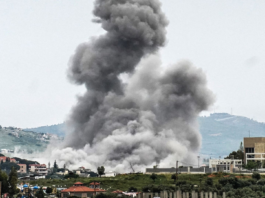
Now the global energy market is breathing a jagged sigh of relief. A Pakistan-brokered two-week ceasefire between the US and Iran sent crude prices tumbling Wednesday. First, benchmark Brent crude shed 16 per cent to trade near $93 per barrel. This follows a chaotic March where prices surged by over 50 per cent. Therefore, the US-Iran ceasefire oil market 2026 reaction reflects immediate hope. But experts warn that the crisis is far from over. Beneath the surface, the system remains under extreme strain.
Add businessleague.in as a Preferred Source


Also Read |Tamil Nadu Voter List Purge: 97 Lakh Names Deleted in SIR Phase 1
The Fragile Peace: Why $93 Isn’t Enough
Now the current ceasefire is a welcome pause in the worst energy crisis ever seen. But the market is not writing off the risks just yet. First, oil prices are still 30 per cent higher than pre-war levels. Therefore, traders remain skeptical of a lasting peace.
Next, many experts call this arrangement “fragile.” Former foreign secretary Nirupama Rao suggests this is “repositioning” rather than resolution. Thus, the war has simply entered a phase of coercion and negotiation.
Meanwhile, American foreign policy has been marked by sudden flip-flops recently. Therefore, investors fear this temporary window could close at any moment. So the “fear premium” stays embedded in every barrel of oil.
Strait of Hormuz: The Lingering Chokepoint
So what is the biggest obstacle to free trade? The Strait of Hormuz remains the primary concern. First, one-fifth of global oil and LNG passes through this narrow mouth. Therefore, its safety is non-negotiable for global stability.
Now Iran’s Foreign Minister Seyed Abbas Araghchi added a caveat to the reopening. He stated that safe passage requires “coordination with Iran’s Armed Forces.” Thus, the waterway is not truly “free” in the traditional sense.
Meanwhile, technical limitations still hinder massive vessel movements. Therefore, shipping lines are hesitant to send tankers back into the Persian Gulf. Thus, the chokepoint remains a psychological barrier for the entire industry.
India’s Double Whammy: Supply vs. Price
Now India is among the hardest-hit nations in this conflict. First, the country imports 88 per cent of its crude oil needs. Therefore, any price surge bumps up the national import bill by billions.
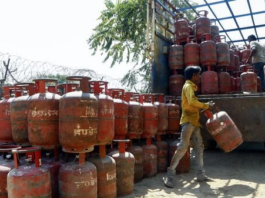
Next, India relies on the Strait of Hormuz for 90 per cent of its LPG. Thus, the blockade forced the government to ration gas for certain industries. This ensured that households still had cooking fuel.
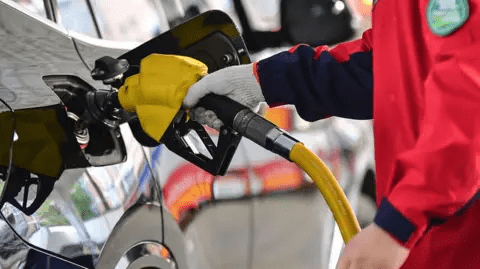
Meanwhile, the government slashed excise duties to protect citizens from high pump prices. But oil marketing companies are absorbing heavy losses. Therefore, the domestic financial strain is growing every day the war continues.
Also Read |Tamil Nadu Voter List Purge: 97 Lakh Names Deleted in SIR Phase 1
The Russian Pivot: Washington’s Temporary Waiver
So how did India keep its lights on during the blockade? The answer lies in a massive shift toward Russian crude. First, imports from Russia jumped by 80 per cent in March. Therefore, Moscow now provides 45 per cent of India’s total oil.
Next, Washington issued a temporary “waiver” for Russian oil purchases. This was a strategic move by Donald Trump to prevent a global price explosion. Thus, India could buy oil even from sanctioned tankers.
Meanwhile, this waiver was recently extended to all countries. Therefore, Washington is prioritizing price stability over sanctions during the election year. So Russian oil is currently the world’s most important safety valve.
Stranded Assets: The 180 Million Barrel Problem
Now a massive backlog of energy is sitting in the Persian Gulf. First, an estimated 180 million barrels of fuel are currently on board stranded ships. Therefore, the ceasefire could trigger a sudden wave of supply.
Next, over 1 million tonnes of LNG are also waiting for safe passage. Thus, the short-term supply situation should improve over the coming days.
But clearing the backlog is only the first step. Meanwhile, shipowners are still terrified of re-entering the region. Therefore, it might take weeks just to move the existing cargo. Thus, the “reflex pullback” in prices may be short-lived.
Production Scars: Why Refineries Can’t Restart Fast
So why can’t we return to pre-war production immediately? The damage to infrastructure is severe. First, the conflict led to the shut-in of 7.5 million barrels per day (bpd). Therefore, global supply is significantly tighter than last year.
Next, the EIA predicts that shut-ins will actually rise to 9.1 million bpd this month. Thus, the damage is still compounding.
Meanwhile, restarting oil fields and LNG units takes months. Some facilities may have suffered permanent damage. Therefore, the US-Iran ceasefire oil market 2026 outlook remains constrained by physical reality. Thus, full recovery is likely a late-2026 event.
Also Read |Tamil Nadu Voter List Purge: 97 Lakh Names Deleted in SIR Phase 1
The Shipping Crisis: Freight Rates and Risk
Now the maritime industry is facing a crisis of confidence. First, the blockade pushed freight rates to record highs. Therefore, even if the water is open, moving oil is incredibly expensive.
Next, persuading charters to return to the Gulf is a hard sell. Many fear their crews could become trapped if the ceasefire fails. Thus, tanker availability remains at an all-time low.
Meanwhile, international brokerages like CLSA warn of a tighter supply-demand equation. Therefore, even a “peaceful” Gulf will face higher costs. So the logistics of energy have fundamentally changed for the next few quarters.
Future Forecast: Higher for Longer Prices
So what is the final verdict for the rest of 2026? Most analysts agree on a “higher for longer” price scenario. First, energy security is now the top priority for every nation. Therefore, countries will start aggressive re-stocking of strategic inventories.
Next, the risk of permanent loss in some oil wells is real. Thus, the global supply cushion is thinner than before.
Meanwhile, the current ceasefire only provides a two-week window for diplomacy. Therefore, any failure in the Islamabad talks will send prices back over $100. So while $93 is better than $150, the era of cheap energy is gone.
Common Questions Answered
Why did oil prices fall today? Now Brent crude dropped because of the US-Iran ceasefire. Therefore, the market reacted to the hope of reopening the Strait of Hormuz.
Is the energy crisis over? First, no. Experts warn that supply chains are still broken. Thus, prices will remain above pre-war levels for months.
How is India getting its oil now? Next, India has pivoted to Russia. Moscow now supplies over 45% of India’s oil under a special US waiver.
What is the “Higher for Longer” theory? So this means that even with peace, oil prices will stay elevated. Therefore, production delays and high demand will keep costs up.
Why is the Strait of Hormuz so important? Finally, it carries 20% of the world’s oil and LNG. Thus, its closure is a catastrophic event for the global economy.
Can Gulf production restart immediately? Actually, no. Infrastructure damage and technical issues mean it will take months or years to reach full capacity.
Also Read |Tamil Nadu Voter List Purge: 97 Lakh Names Deleted in SIR Phase 1
End….
Add businessleague.in as a Preferred Source
🙏 Support Independent Journalism
We keep news free for you.
Most readers support with ₹500 ❤️
or scan QR below

Voluntary contribution. No tax benefits.
DISCLAIMER
We have taken all measures to ensure that the information provided in this article and on our social media platform is credible, verified and sourced from other Big media Houses. For any feedback or complaint, reach out to us at businessleaguein@gmail.com