


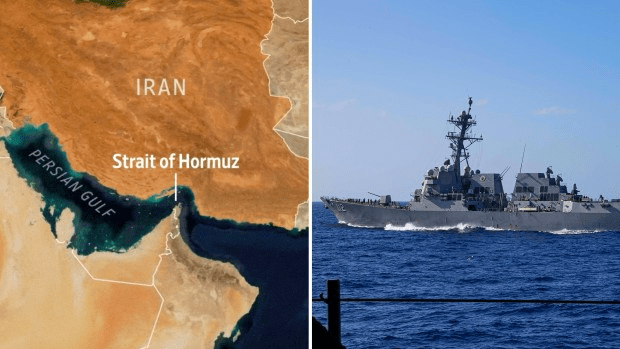
Now the maritime standoff in West Asia has escalated into a direct physical confrontation between US naval forces and international shipping. In a significant development this Wednesday, the US blockade Iran ports April 2026 forced the first high-profile retreat of a sanctioned vessel. First, the Chinese-owned tanker Rich Starry turned back toward the Strait of Hormuz after attempting to exit the Gulf and breach the blockade. Therefore, the enforcement strategy announced by President Donald Trump following the failure of the Islamabad talks has proven to be an immediate barrier to trade. Meanwhile, US Central Command (CENTCOM) confirmed that no vessels have successfully bypassed the blockade since its implementation on Monday.
Add businessleague.in as a Preferred Source


Also Read |Tamil Nadu Voter List Purge: 97 Lakh Names Deleted in SIR Phase 1
Islamabad Fallout: The Failed Peace Talks That Triggered the Blockade
Now we must analyze the diplomatic vacuum that led to this naval siege. First, the weekend peace talks in Islamabad between the US and Iran ended without a deal on Sunday. Therefore, President Donald Trump immediately announced a total maritime blockade of all Iranian ports to commence on April 13.
Next, US Vice President JD Vance noted that while Iran moved closer to the US position, they “didn’t move far enough” regarding the reopening of the Strait. Thus, the US blockade Iran ports April 2026 is a direct response to a failed negotiation.
Meanwhile, the Iranian delegation is reportedly split between competing political and military factions. Therefore, the lack of a unified mandate in Tehran has made a diplomatic solution impossible for now. So the theater of conflict has moved from the conference room to the open sea.
The Rich Starry U-Turn: A Failed Test of US Resolve
So how did the “first test” of the blockade play out? First, the sanctioned tanker Rich Starry departed from the UAE on April 13, attempting to transit the Strait of Hormuz. Therefore, it was closely watched by AIS tracking services as a potential “blockade runner.”
Next, data from Pole Star Global showed the ship abruptly turning north and heading back toward the Strait instead of continuing into the Arabian Sea. Thus, the US blockade Iran ports April 2026 has successfully turned away its first major target.
Vessel Data:
-
Cargo: 250,000 barrels of methanol.
-
Owner: Shanghai Xuanrun Shipping Co (Sanctioned).
-
Behavior: Abrupt course reversal after US Navy warnings.
Meanwhile, the ship had been falsely flying the Malawi flag to evade detection. Therefore, the high-tech tracking capabilities of the US Navy have rendered such “ghost ship” tactics ineffective in the current theater.
CENTCOM Enforcement: ‘Impartial’ Blockade of All Nations
Now we must look at the official rules of engagement. First, US Central Command has stated that the blockade will be enforced “impartially” against vessels of all nations. Therefore, the US blockade Iran ports April 2026 makes no exceptions for Chinese or Russian-linked vessels calling at Iranian ports.
Next, CENTCOM noted that six vessels complied with directions to turn around within the first 24 hours alone. Thus, the US Navy is currently maintaining a “100% success rate” in preventing unauthorized exits.
Meanwhile, the blockade does not have a defined geographic boundary. Therefore, the US can interdict vessels almost anywhere in international waters if they are bound for or departing from Iran. So the “freedom of navigation” remains only for ships transiting to non-Iranian ports like those in Iraq or Kuwait.
Also Read |Tamil Nadu Voter List Purge: 97 Lakh Names Deleted in SIR Phase 1
Chabahar Interdiction: US Destroyers Stop Breakout Attempts
So where is the physical pressure being applied? First, a US official confirmed that a destroyer stopped two oil tankers attempting to leave the Iranian port of Chabahar on Tuesday. Therefore, the US blockade Iran ports April 2026 is active on both sides of the Strait.
Next, these interdictions are supported by audio recordings shared in maritime circles, purportedly showing US Navy warnings to “not breach the blockade.” Thus, the threat of force is being communicated directly to bridge-to-bridge Channel 16.
Incident Snapshot:
-
Location: Gulf of Oman (outside Chabahar).
-
Assets: US Navy Destroyers.
-
Outcome: Vessels interdicted and forced to return to Iranian waters.
Meanwhile, Iran is reportedly considering a temporary pause in shipments to avoid further seizures. Therefore, the blockade is effectively creating a “storage crisis” on the Iranian mainland.
VLCC Alicia and Iraq: The Fragile Flow of Non-Iranian Crude
Now let’s look at the “allowed” traffic in the region. First, the Very Large Crude Carrier (VLCC) Alicia—also a US-sanctioned vessel—was seen entering the Gulf via the Strait on Wednesday. Therefore, the US blockade Iran ports April 2026 is not a total closure of the waterway.
Next, the Alicia is heading to Iraq to load a cargo of Basra crude. Thus, as long as a ship is not calling at an Iranian port, it is permitted to pass through the Strait.
Meanwhile, the Malta-flagged VLCC Agios Fanourios I also successfully entered the Gulf on a second attempt. Therefore, the US is trying to maintain a “surgical” blockade that hits Iran’s economy while sparing its allies. So the distinction between “Iranian” and “Non-Iranian” ports is the most critical factor for shippers today.
War Risk Insurance: The Systemic Collapse of Maritime Finance
So what is the “hidden” cost of this blockade? First, the system of war risk insurance has effectively collapsed for the Middle East Gulf. Therefore, the US blockade Iran ports April 2026 has made it nearly impossible for shipowners to secure affordable coverage.
Next, additional war risk premiums (AWRP) are currently at roughly 0.85% of a vessel’s total value. Thus, for a modern VLCC, a single transit could cost an extra $1 million in insurance alone.
Financial Impact:
-
AWRP: 0.85% of hull value per transit.
-
Charter Disputes: Massive delays causing legal battles over demurrage.
-
State Schemes: Shippers are now relying on selective, state-backed insurance.
Meanwhile, many shipowners are simply shunning the region entirely. Therefore, even if the US Navy allows a ship to pass, the “insurance barrier” acts as a secondary blockade.
Also Read |Tamil Nadu Voter List Purge: 97 Lakh Names Deleted in SIR Phase 1
Geopolitical Boundaries: Why This Blockade is Different
Now we must consider the legal and strategic nuances. First, unlike previous “sanctions regimes,” this is an active naval blockade with no defined geographic boundary. Therefore, the US blockade Iran ports April 2026 represents a return to “total maritime warfare” tactics.
Next, Iran has claimed the blockade breaches the UN Convention on the Law of the Sea. Thus, the legal battle in the UN is likely to escalate as more ships are interdicted.
Meanwhile, the US Treasury Department has announced it will not renew the 30-day sanctions waiver for Iranian oil exports, set to expire on April 19. Therefore, the “legal window” for Iran to export oil is closing permanently. So the naval blockade is the physical enforcement of a total economic isolation policy.
The IEA Warning: Greatest Global Energy Security Challenge
Finally, what is the global fallout? First, the International Energy Agency (IEA) has characterized this as the “largest supply disruption in history.” Therefore, the US blockade Iran ports April 2026 is the primary driver of the current $120+ per barrel oil price.
Next, oil production from the GCC states—Kuwait, Saudi Arabia, and the UAE—has dropped by a reported 10 million barrels per day since the war began. Thus, the world is facing a systemic energy shock.
Global Supply Shock:
-
Oil Volume: 20% of seaborne crude currently disrupted.
-
LNG Impact: QatarEnergy has declared force majeure on all exports.
-
Water Security: Damage to desalination plants has raised fears of water shortages in Qatar and Bahrain.
Meanwhile, the systemic collapse of the GCC economic model is a looming reality. Therefore, the “Strait crisis” is no longer just a Middle East problem, but a decisive factor for the global economy in 2026.
Common Questions Answered
What is the status of the US blockade on Iranian ports as of April 15, 2026?
Now, the blockade is fully in force. CENTCOM reports that no vessels have successfully breached the blockade, and several, including the Rich Starry, have been forced to turn back
Who is the owner of the Rich Starry tanker?
First, it is owned by Shanghai Xuanrun Shipping Co. Therefore, both the vessel and the company are under US sanctions for dealing with Iran.
Are all ships blocked from entering the Strait of Hormuz?
Next, no. The US Navy is only blockading ships bound for or departing from Iranian ports. Thus, ships going to Iraq or Kuwait, like the VLCC Alicia, are allowed to pass.
Why did the blockade start?
So it was triggered by the failure of the Islamabad peace talks on April 12. Therefore, President Trump ordered the naval blockade to increase pressure on the Iranian regime.
Has any oil successfully left Iran since the blockade began?
Finally, according to CENTCOM, zero vessels have breached the blockade since April 13. So Iran’s seaborne exports are currently at a total standstill.
What is the impact on global oil prices?
Actually, the blockade has helped push Brent Crude past $120 per barrel. Therefore, the IEA has called this the greatest energy security challenge in history.
Also Read |Tamil Nadu Voter List Purge: 97 Lakh Names Deleted in SIR Phase 1
End….
Add businessleague.in as a Preferred Source

