


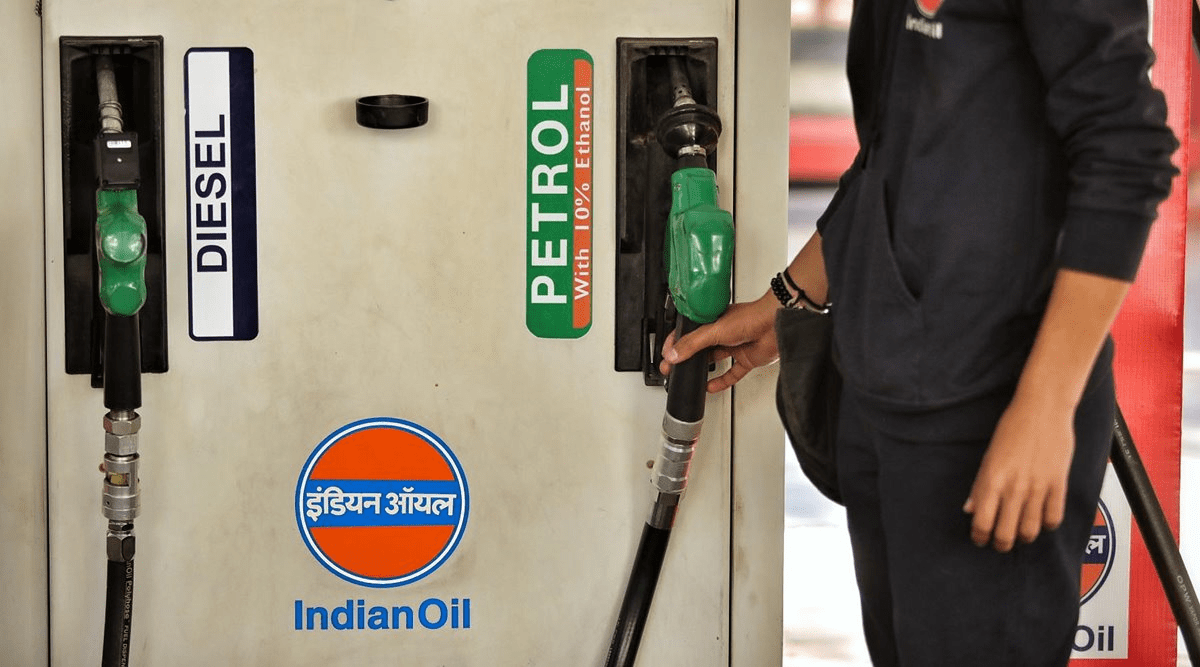
Now the Indian consumer is enjoying a temporary calm before a potential fiscal storm. While domestic fuel rates have remained stable today, April 23, 2026, a significant petrol diesel price hike after elections appears increasingly likely. Specifically, reports citing Kotak Institutional Equities suggest that fuel prices across the country could surge between ₹25 and ₹28 per litre once the ongoing assembly polls conclude. Therefore, the “relief” currently provided by Oil Marketing Companies (OMCs) is being viewed as a strategic pause amidst a worsening global energy crisis.
Add businessleague.in as a Preferred Source


Meanwhile, Brent crude has flirted with the $120 per barrel mark—the highest in four years—as the conflict in Iran destabilizes the world’s most critical shipping lanes.
But for the common man, the real impact will only be felt after the counting of votes on May 4.
Also Read |Tamil Nadu Voter List Purge: 97 Lakh Names Deleted in SIR Phase 1
Kotak Institutional Equities: The ₹28/Litre Warning
Now we must look at the data driving these alarming projections. Kotak Institutional Equities has released a report indicating that the gap between international costs and domestic retail prices is wider than ever. Therefore, a massive petrol diesel price hike after elections is a mathematical necessity for the health of oil companies.
The Price Gap
First, OMCs have not raised prices for weeks despite crude oil dramatically rising. Then, the report suggests that to break even, companies need a hike of at least ₹25 per litre. Thus, the current retail price is being “subsidized” by the companies’ balance sheets. Next, the anticipated increase is expected to be implemented in a phased manner or a single sharp correction post-May 4. Therefore, consumers are being advised to brace for a significant change in their monthly transport budgets.
Strait of Hormuz: Why 20% of Global Oil is at Risk
Now the root cause of this volatility lies in the Persian Gulf. The ongoing conflict in Iran has led to serious disruptions in the Straits of Hormuz. Therefore, the global oil supply is currently in a state of high-alert crisis.
The World’s Oil Artery
First, approximately 20% of the world’s crude oil passes through this narrow waterway. Then, the Pentagon recently warned US lawmakers that clearing the Strait of mines could take up to six months. Thus, any total closure would be catastrophic for energy-importing nations like India. Next, the disruption has already led to much tighter supplies and higher insurance premiums for tankers. Therefore, the “security premium” is being added directly to the cost of every barrel India imports.
The $120 Oil Peak: A Four-Year High Explained
Now the price of Brent crude has reflected the geopolitical tension with alarming speed. In the past month alone, prices surged to approximately $120 per barrel. Therefore, the petrol diesel price hike after elections is a delayed reaction to this massive spike.
Current Trading Levels
First, while oil has retreated to approximately $100 per barrel this week, the average cost for the current quarter remains high. Then, the Indian crude basket has become significantly more expensive as safe-haven demand increases. Thus, the temporary “dip” to $100 is not enough to offset the losses already incurred by OMCs. Next, analysts predict that if the Hormuz blockade continues, $140 per barrel is a distinct possibility. Therefore, the long-term outlook for fuel prices remains overwhelmingly bullish.
Also Read |Tamil Nadu Voter List Purge: 97 Lakh Names Deleted in SIR Phase 1
Election Timeline: Why Prices are Frozen Until May 4
Now there is a clear correlation between the polling dates and the price freeze. Polling for 234 seats in Tamil Nadu is concluding today, while West Bengal continues its multi-phase battle. Therefore, a price hike during this period would be politically sensitive.
The May 4 Deadline
First, the Election Commission of India (ECI) is overseeing a massive democratic exercise involving nearly 4,000 candidates across states. Then, historically, fuel prices in India have often remained static during major election cycles. Thus, the “relief” is perceived by many as a tactical move to avoid voter backlash. Next, the counting of votes is scheduled for May 4, 2026. Therefore, that date is widely viewed by market experts as the unofficial “end” of the fuel price freeze.
City-Wise Rates: Mumbai, Delhi, Chennai, and Kolkata
Now let’s look at where the prices stand as of April 23, 2026. While the petrol diesel price hike after elections looms, the current rates in major metros are as follows:
Live Fuel Rates (April 23, 2026):
| City | Petrol (Per Litre) | Diesel (Per Litre) |
| Mumbai | ₹104.21 | ₹92.15 |
| New Delhi | ₹94.72 | ₹87.62 |
| Chennai | ₹100.75 | ₹92.34 |
| Kolkata | ₹103.94 | ₹90.76 |
First, Mumbai continues to have the highest rates due to local VAT and surcharges. Then, New Delhi remains the most affordable metro for fuel. Thus, if a ₹28 hike is applied, Mumbai could see petrol prices soaring toward ₹132 per litre. Next, Chennai is voting today with petrol at ₹100.75. Therefore, the contrast between the current “frozen” price and the post-poll reality will be stark.
Impact on Inflation: The Ripple Effect of Fuel Hikes
Now a ₹25–28 hike is not just about the cost of a commute. Fuel is a primary input for logistics and agriculture. Therefore, the petrol diesel price hike after elections will likely trigger a second wave of headline inflation.
Cost of Living Surge
First, transport costs for essential goods like vegetables and milk will increase almost immediately. Then, the cost of running diesel generators for industries will spike. Thus, the Reserve Bank of India (RBI) may be forced to reconsider interest rate cuts in the next quarter. Next, the manufacturing sector is already complaining about high input costs due to the Strait of Hormuz crisis. Therefore, the fuel hike could act as a “multiplier” for the cost of living in 2026.
Also Read |Tamil Nadu Voter List Purge: 97 Lakh Names Deleted in SIR Phase 1
OMC Under-Recoveries: The Pressure on Oil Companies
Now we must understand why the hike is inevitable. Oil Marketing Companies like IOCL, BPCL, and HPCL are suffering “under-recoveries” on every litre sold.
Financial Sustainability
First, OMCs are buying crude at international market rates but selling at “frozen” domestic rates. Then, the daily loss is reportedly running into hundreds of crores. Thus, the companies cannot sustain these losses indefinitely without government intervention or a price hike. Next, the dividend-paying capacity of these state-run firms is also at risk. Therefore, the Ministry of Petroleum is expected to allow a “catch-up” hike as soon as the MCC (Model Code of Conduct) is lifted.
Strategic Reserves: Can India Cushion the Blow?
Now India does have a “safety net” in the form of Strategic Petroleum Reserves (SPR). However, these are intended for extreme supply disruptions rather than price stabilization.
Emergency Only
First, India’s reserves can provide cover for roughly 9.5 days of national demand. Then, while the government could release some oil to ease the supply crunch, it won’t necessarily lower retail prices. Thus, the SPR is a shield against “no oil,” but not against “expensive oil.” Next, the government is looking at alternative suppliers to bypass the Strait of Hormuz where possible. Therefore, while the supply is secure for now, the price remains at the mercy of the global market.
Common Questions Answered
Is the petrol price going to increase by ₹25 today?
Now no. Prices are currently stable as of April 23. The projected hike of ₹25–28 is expected after the assembly elections conclude.
Why are fuel prices expected to rise?
First, because of the Iran conflict and the Strait of Hormuz blockade. Then, because international crude oil has hit a four-year high of $120/barrel.
When will the fuel price hike happen?
Next, market experts and Kotak Equities suggest the revision will occur after the counting of votes on May 4, 2026.
Which city has the most expensive petrol right now?
So among the four major metros, Mumbai has the highest petrol price at ₹104.21 per litre.
How much of the world’s oil passes through the Strait of Hormuz?
Finally, approximately 20% of the world’s crude oil passes through this chokepoint. Thus, any disruption has an immediate global impact.
Also Read |Tamil Nadu Voter List Purge: 97 Lakh Names Deleted in SIR Phase 1
End….
Add businessleague.in as a Preferred Source

