Internal memos leak detailing intense staff pushback inside the newly formed Applied AI Engineering division as management promises a return to stable, collaborative corporate environments.
Add businessleague.in as a Preferred Source


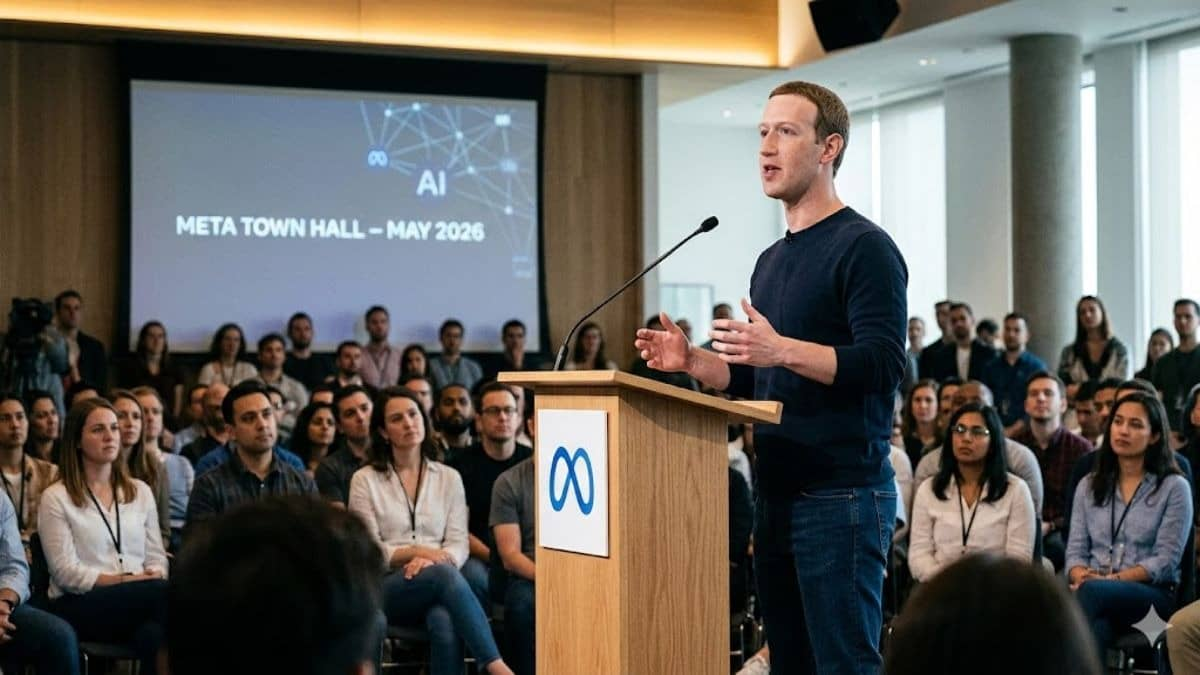
The aggressive structural changes shaking the foundations of Silicon Valley’s largest social media network have hit a mandatory pause. In a highly transparent internal memo distributed to global teams on Friday, June 12, 2026, the social media giant addressed the severe operational strain caused by recent structural overhauls. The statement clarifies the roadmap for the Meta layoffs Mark Zuckerberg 2026 matrix, with the Chief Executive confirming that further company-wide job cuts are officially off the table for the remainder of the calendar year.
The unusual corporate admission follows months of intense internal frustration that peaked during a massive restructuring loop in May. During that window, the company cut approximately 10% of its global workforce—roughly 8,000 employees—while simultaneously forcing 7,000 experienced software developers and product specialists into newly formed, low-latitude artificial intelligence training units.
Zuckerberg acknowledged that the scale and speed of these transitions created severe internal disruptions, promising that leadership will prioritize workplace stability going forward.
Also Read | Viral Trump Lookalike Buffalo Rescue: Saved From Eid Sacrifice
Inside “The Gulag”: Slicing Through the Applied AI Friction
The sharpest internal complaints driving this executive pivot emerged from a newly assembled infrastructure group known as Applied AI (AAI) Engineering.
Formed to support the development of frontier language models and Meta Superintelligence Labs, the division absorbed thousands of senior engineers who were given an absolute ultimatum: accept the transfer or immediately leave the company.
Inside the unit, conditions quickly became a primary target of internal criticism. Workers found themselves stripped of creative coding autonomy, reassigned instead to tedious, assembly-line tasks like generating basic coding puzzles to train automated systems.
Compounding the problem was a highly aggressive flat management structure, where individual contributor-to-manager spans ballooned to an unsustainable 50-to-1 ratio, leaving teams feeling isolated, disconnected, and stripped of career growth support.
The Restructuring Balance Sheet: Corporate Re-alignment
Zuckerberg’s message highlights that while a leaner, AI-native framework is essential to compete against OpenAI and Google, the execution of the human resources pipeline requires immediate adjustments.
| Monitored HR Policy Layer | May 2026 Execution Status | Updated June Realignment Directives | Core Impact on Engineering Teams |
| Workforce Volume Cap | 8,000 staff cut globally (10%). | Zero broad-scale downsizes for the rest of 2026. | Relieves deep-seated panic regarding near-term job security. |
| Internal Talent Re-routing | Rigid, mandatory placements into AAI training cells. | Active transfer-back pathways for misplaced talent. | Restores autonomy, letting senior engineers return to core development. |
| Managerial Control Ratios | Extreme 50-to-1 flat spans across specific labs. | Strict scale-backs to normal operational oversight. | Restores guidance channels and proper career progression tracking. |
| Corporate Culture Allocations | Minimal budgets for group activities or travel. | Increased funds for offsites, events, and a July hackathon. | Rebuilds trust and communication across separate divisions. |
Note: Affected workers who left the company during the initial May wave received severance packages providing 16 weeks of base compensation plus an additional two weeks of pay per year of service, backed by 18 months of continuing health coverage.
The executive memo explicitly connects these operational errors to the breakneck speed of the current global technology shift.
Zuckerberg noted that the rapid rise of generative technology creates unique structural challenges, warning staff that the organization will almost certainly make more errors as it changes its operating model.
To help repair broken cross-team relationships and restore its famous internal developer energy, the corporation is funding an extensive array of team-building offsites alongside a massive, company-wide hackathon scheduled for July.
Also Read | Viral Trump Lookalike Buffalo Rescue: Saved From Eid Sacrifice
Rebuilding Internal Trust in a Fragmented Tech Sector
From a broader corporate perspective, Meta’s internal friction reflects a massive trend rewriting employment standards across the global technology sector.
While global labor markets remain volatile, recent economic reports from the subcontinental technology sector reveal that AI has not caused widespread job losses in major hubs like Bengaluru or Hyderabad. Instead, it is transforming daily workflows, boosting individual productivity, and driving heavy demand for versatile engineering profiles.
By freezing downsizing plans, opening up paths for employees to move out of tedious training roles, and lowering overstretched management spans, Meta aims to heal its internal culture.
This strategic shift helps the social media pioneer protect its core engineering talent, ensuring its teams have the stability and focus needed to build the next generation of global digital infrastructure.
FAQ Section
Did Mark Zuckerberg officially cancel all Meta layoffs for 2026?
Yes. In an internal memo sent to employees, CEO Mark Zuckerberg stated that Meta does not anticipate any additional company-wide layoffs for the remainder of 2026. While he noted that leadership cannot over-promise due to changing global factors, the statement aims to bring stability back to the workforce.
What internal mistakes did leadership acknowledge regarding its AI strategy?
Zuckerberg admitted that the company committed significant organizational errors during its May restructuring, which cut 10% of the workforce and moved 7,000 employees into AI-focused teams. The main issues included forcing senior engineers into repetitive data-labeling tasks and stretching management spans to an extreme 50-to-1 ratio.
How does Meta plan to support employees who are unhappy in their new AI roles?
The corporate HR department is establishing dedicated transfer-back pathways to help employees find new internal roles. If an engineer was poorly matched to their new AI training team, management will work to reassign them to traditional software development and product infrastructure groups.
Also Read | Viral Trump Lookalike Buffalo Rescue: Saved From Eid Sacrifice
End…
Add businessleague.in as a Preferred Source
🙏 Support Independent Journalism
We keep news free for you.
Most readers support with ₹500 ❤️
or scan QR below

Voluntary contribution. No tax benefits.
DISCLAIMER
We have taken all measures to ensure that the information provided in this article and on our social media platform is credible, verified and sourced from other Big media Houses. For any feedback or complaint, reach out to us at businessleaguein@gmail.com