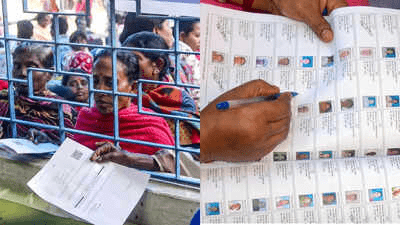
Now the highest court in the land has delivered a sobering verdict for millions of disenfranchised citizens in West Bengal. In a high-stakes hearing this Monday, the Supreme Court Bengal voter deletion 2026 ruling officially refused to grant interim voting rights to lakhs of individuals removed from the electoral rolls. First, the bench warned that allowing unverified voters to cast ballots would “overburden” the appellate tribunals and risk the integrity of the upcoming election. Therefore, as the state prepares for a two-phase vote on April 23 and 29, the fate of nearly 90.66 lakh removed voters hangs in a precarious legal balance. Meanwhile, the court is searching for a “via media” to protect rights without crashing the system.
Add businessleague.in as a Preferred Source


Also Read |Tamil Nadu Voter List Purge: 97 Lakh Names Deleted in SIR Phase 1
34 Lakh Appeals: The Administrative Nightmare of Bengal 2026
Now we must analyze the sheer mathematical impossibility facing the state’s judiciary. First, the court was informed that exactly 34,35,174 appeals have been filed against name deletions. Therefore, even if every judicial officer worked around the clock, deciding these cases before April 23 remains a fantasy.
Next, petitioners argued that leaving these citizens without a remedy is a violation of the basic structure of democracy. Thus, the Supreme Court Bengal voter deletion 2026 case has turned into a battle of “logistics vs. liberty.”
[Image showing a mountain of legal files representing the 34 lakh appeals]
Meanwhile, 90.66 lakh names were removed in total during the Special Intensive Revision (SIR). Therefore, the scale of this “purge” is unprecedented in modern Indian electoral history. So the court is forced to deal with a volume of litigation that could potentially stall the entire democratic machinery.
Why the Court Refused Interim Relief: The Systemic Risk
So why didn’t the Chief Justice just allow them to vote? First, the bench expressed grave concerns about “overburdening” the appellate tribunal judges. Therefore, creating a situation where the judiciary is forced to make rushed decisions could lead to even more errors.
Next, the Chief Justice pointed out that there are conflicting pleas—one asking for voting rights and another asking to stop the appeals entirely. Thus, the court is being pulled in two opposite directions.
Meanwhile, the court warned that granting blanket interim relief would undermine the verification process itself. Therefore, the Supreme Court Bengal voter deletion 2026 ruling prioritizes “procedural integrity” over immediate inclusion. So the “security” of the electoral roll is being placed ahead of the “participation” of the excluded for this specific phase.
Kalyan Banerjee’s Plea: Seeking a Remedy for ‘Genuine’ Voters
Now let’s look at the arguments from the petitioners’ side. Senior advocate Kalyan Banerjee told the bench that the “people of Bengal are only looking towards this court.” First, he argued that 34 lakh individuals are “genuine voters” who simply want to exercise their constitutional right.
Next, he urged the court to issue a “supplementary voter list” to enable these people to participate. Thus, he proposed a technical workaround that would bypass the need for a full judicial hearing for every individual.
Meanwhile, the court remained skeptical of this suggestion. Therefore, the Supreme Court Bengal voter deletion 2026 hearing highlighted the gap between “legal desire” and “administrative reality.” So while the intent to help is there, the mechanism to do so safely is missing.
Also Read |Tamil Nadu Voter List Purge: 97 Lakh Names Deleted in SIR Phase 1
The Adjudication Timeline: April 9 as a Soft Deadline
So who can actually vote on April 23? The bench offered some clarity on the cutoff dates. First, judicial officers carried out a significant amount of adjudication until April 9. Therefore, those whose names were cleared in that window will be added to the list.
Next, the court assured petitioners that “if their names are there, they will be voting.” Thus, the only voters being left out are those whose appeals remain “pending” or unaddressed.
Adjudication Key Dates:
-
April 9: Cutoff for many judicial officer-led adjudications.
-
April 11: Date when the 34 lakh appeal figure was finalized for court.
-
April 23: First phase of polling in West Bengal.
Meanwhile, any “spillover” in certain constituencies will be addressed through late additions if a decision is reached before the second phase. Therefore, the Supreme Court Bengal voter deletion 2026 ruling provides a narrow, but official, window of hope.
Striking a Middle Ground: The ‘Via Media’ Proposal
Now the court is attempting to find a “middle ground.” First, the bench stated, “We will try to create a via media between your right and the need for verification.” Therefore, they are not completely closing the door on the 34 lakh appellants.
Next, they suggested that verification cannot be ignored because it ensures that “ghost voters” or duplicates don’t compromise the results. Thus, the court is acting as a “gatekeeper” for the purity of the polls.
[Image showing a balance scale with ‘Voter Rights’ and ‘Verification’ on either side]
Meanwhile, the “via media” might involve fast-tracking a subset of appeals in highly contested or vulnerable areas. Therefore, the Supreme Court Bengal voter deletion 2026 strategy is to provide as much relief as possible without “overwhelming” the judges. So the solution will be “surgical” rather than “universal.”
Justice Joymalya Bagchi on Existing Correction Rules
So what does the law say about corrections? Justice Joymalya Bagchi pointed out that existing electoral rules already provide for corrections. First, once an appeal is decided, the Electoral Registration Officers (EROs) are legally required to amend the rolls accordingly.
Next, he noted that the system is built to self-correct, even if the timeline is tight. Thus, he argued that a “new” interim order might not be necessary if the existing rules are followed diligently.
Current Legal Mechanism:
-
Appellate Decision: Once a judge clears a name.
-
ERO Mandate: Immediate amendment to the roll.
-
Supplementary List: Issuance of a late-addition sheet for polling stations.
Meanwhile, the petitioners argued that the EROs are often slow to act on these judicial orders. Therefore, the Supreme Court Bengal voter deletion 2026 debate is now focusing on the “last-mile” execution of judicial decisions.
Also Read |Tamil Nadu Voter List Purge: 97 Lakh Names Deleted in SIR Phase 1
The Election Commission’s Warning: Legal Frameworks vs. Revisions
Now we must consider the perspective of the poll body. The Election Commission (EC) maintained that the “finalisation” of electoral rolls for an election follows a very different framework from a standard “revision.” First, once an election is notified, the room for last-minute changes is legally limited.
Next, the EC warned that massive changes to the roll just days before the vote could lead to administrative collapse at the booth level. Thus, they are backing the “no interim relief” stance.
Meanwhile, the poll body is also managing the deployment of central forces for these phases. Therefore, the Supreme Court Bengal voter deletion 2026 ruling reflects the EC’s “logistical anxiety.” So the “finality” of the roll is being protected as a matter of law and order.
Post-Poll Violence Concerns: Monitoring Vulnerable Areas
So what is the secondary concern for the court? Security. Senior advocate V. Giri urged the bench to closely monitor “vulnerable areas” flagged by the poll body. First, there are fears that disenfranchisement could lead to post-poll violence or unrest.
Next, the court is aware that any “perceived injustice” in the rolls could be used as a trigger for clashes. Thus, the “procedural integrity” of the vote is also a safety measure.
Security Focus Areas:
-
Vulnerable Booths: Areas with high deletion rates.
-
Appellate Centers: Locations where 34 lakh appeals are being processed.
-
Post-Poll Buffer: Ensuring security stays until after the May results.
Meanwhile, the court has signaled that it will keep a watch on these areas. Therefore, the Supreme Court Bengal voter deletion 2026 case is inextricably linked to the peace of the state. So the “middle ground” is also about keeping the streets quiet.
Common Questions Answered
What did the Supreme Court decide on April 13, 2026? Now the court refused to grant interim voting rights to lakhs of deleted voters. Therefore, only those whose appeals are fully adjudicated before polling will be allowed to vote.
Why did the court deny immediate relief? First, to avoid “overburdening” the judicial system and appellate tribunals. Next, the bench feared that last-minute mass additions could disrupt the entire electoral process.
Can the deleted voters still vote on April 23? So yes, but only if their name was cleared in an adjudication completed before the cutoff. Thus, 34 lakh appeals remain in a race against time.
How many voters were deleted in total? Actually, names of 90.66 lakh voters were removed during the Special Intensive Revision (SIR). Therefore, this is one of the largest voter disputes in recent years.
What is the ‘via media’ the court mentioned? Finally, it is a “middle ground” approach. So the court is trying to find a way to verify as many genuine voters as possible without overwhelming the administrative machinery.
Will there be a supplementary voter list? Actually, the court noted that EROs are required to amend rolls once decisions are made. Thus, late additions will occur for those who win their appeals in time.
Also Read |Tamil Nadu Voter List Purge: 97 Lakh Names Deleted in SIR Phase 1
End….
Add businessleague.in as a Preferred Source
🙏 Support Independent Journalism
We keep news free for you.
Most readers support with ₹500 ❤️
or scan QR below

Voluntary contribution. No tax benefits.
DISCLAIMER
We have taken all measures to ensure that the information provided in this article and on our social media platform is credible, verified and sourced from other Big media Houses. For any feedback or complaint, reach out to us at businessleaguein@gmail.com