
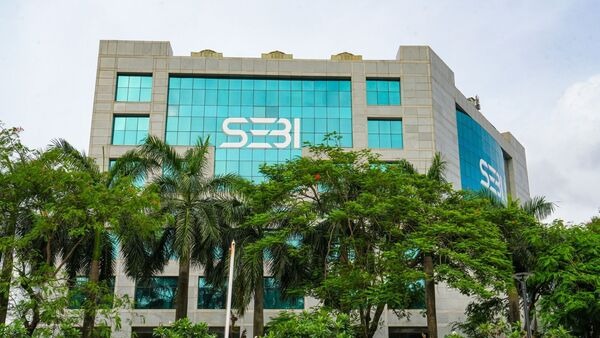
The financial regulator introduces a strict 66-day execution limit on corporate buybacks, fast-tracks AIF launches via the GARUDA framework, and dramatically simplifies asset inheritance rules.
The Securities and Exchange Board of India (SEBI) has approved a comprehensive suite of structural reforms designed to boost market liquidity, streamline regulatory compliance, and strengthen retail investor protections. At its 214th board meeting held in Mumbai, the capital markets regulator systematically dismantled long-standing operational bottlenecks across multiple financial sectors—ranging from public equity buybacks to mutual fund liquidity systems and family inheritance procedures.
Add businessleague.in as a Preferred Source


The headline outcome of the meeting is the formal reintroduction of open-market share buybacks through stock exchanges, scheduled to take effect on August 1, 2026. The route had previously been sidelined following fundamental alignment shifts in the national tax regime.
                           [SEBI Q1 Board Meeting Reform Matrix]
                                             │
         ┌───────────────────────────────────┼───────────────────────────────────┐
         ▼                                   ▼                                   ▼
 [Open Market Buybacks]             [The GARUDA Framework]              [Quick Transmission (QTP)]
 • Effective Date: Aug 1, 2026      • Applies to: Alternative Funds     • Focus: Small-value claims
 • Completion Limit: 66 days max    • Core Outcome: 10-day launches     • Demat Cap: Up to ₹30,000
 • Capital Deployment: 40% in half  • Immediate deployment for Accredited• Physical Cap: Up to ₹10,000
Strict Guardrails Anchoring the Return of Exchange Buybacks
While corporations are regaining the flexibility to choose between tender offers and open-market exchange purchases, SEBI has implemented uncompromising safeguards to prevent long, drawn-out stock price manipulation. Under the newly amended framework, a company’s entire buyback program must be completed within 66 working days.
Furthermore, companies are legally mandated to deploy at least 40% of their total earmarked capital within the first 33 days of the buyback period. To ensure an equitable public playing field, company promoters and their close associates are strictly banned from participating, and their personal shareholdings will remain frozen for the duration of the buyback window.
[Union Budget Tax Revisions] ──► Prompts SEBI Review of Share Buybacks
                                           │
                                           ▼
[Open Market Route Restored] ──► Fast-Tracked 66-Day Cap & Mandatory 40% Early Capital Spend
Boosting Fund Liquidity and Slashing AIF Launch Timelines
For institutional asset managers, the board cleared a key amendment allowing Mutual Funds to access intraday borrowing windows. This mechanism is targeted at addressing temporary operational cash mismatches, such as foreign exchange settlement delays, differences in trade pay-in and pay-out schedules, or sudden mark-to-market derivative obligations. SEBI explicitly stated that these funds cannot be utilized to build market leverage and must be fully repaid by the close of the same trading day.
Simultaneously, Alternative Investment Funds (AIFs) are receiving a substantial ease-of-business upgrade via the brand-new GARUDA framework (Green Channel: AIF Rollout Upon Document Acknowledgement).
                       [AIF & Institutional Liquidity Accelerators]
                                            │
    ┌───────────────────────────────────────┼───────────────────────────────────────┐
    ▼                                       ▼                                       ▼
[Standard AIF Tracking]              [The Accredited Channel]               [MF Intraday Facilities]
• Launch timelines compressed down   • Schemes for accredited investors     • Temporary bridge facility
  to just 10 working days.             can launch immediately.                restricted to single sessions.
• Drastically outpaces the legacy   • Eliminates mandatory prior review    • Absolute ban on using funding
  30-day structural waiting blocks.    by external merchant bankers.          caps to introduce portfolio leverage.
Erasing Red Tape for Inherited Financial Assets
A significant portion of the regulatory overhaul focused on minimizing procedural hardships for the legal heirs of deceased investors. SEBI has rolled out a specialized Quick Transmission Processing (QTP) tier tailored to fast-track small-value inheritance claims with minimal paperwork. The QTP category covers demat portfolios valued up to ₹30,000 and physical share certificates up to ₹10,000.
For larger estates where no nominee was originally registered, SEBI doubled the threshold limits for simplified documentation, raising the ceiling from ₹15 lakh to ₹30 lakh for demat assets, and from ₹5 lakh to ₹10 lakh for physical holdings. The regulator will now accept QR code-enabled death certificates for automated digital verification, eliminate the compulsory submission of a PAN card in specific cases, and allow a single combined affidavit-cum-NOC to replace multiple separate legal declarations.
FAQ
Q1: Why did SEBI reintroduce open-market share buybacks through stock exchanges?
Following changes to the corporate tax treatment in the Union Budget, SEBI revived the open-market exchange route to provide companies with an additional, flexible way to return capital to investors. However, it now comes with stricter guardrails—including a tight 66-working-day completion deadline—to protect public shareholders and minimize market manipulation.
Q2: What is the purpose of the new Mutual Fund intraday borrowing rule?
The rule allows mutual funds to borrow capital within a single trading day to manage short-term liquidity problems, such as unexpected gaps between trade pay-in and pay-out times, or foreign exchange settlement delays. These loans are strictly operational, cannot be used to artificially inflate a fund’s investment leverage, and must be paid back in full by the end of the day.
Q3: How do SEBI’s updated asset transmission rules help families inherit shares?
The newly introduced Quick Transmission Processing (QTP) streamlines the transfer of a deceased investor’s shares to their heirs. By doubling the monetary limits for simplified paperwork, allowing digital verification via QR-coded death certificates, and dropping mandatory probate requirements where local succession laws allow, SEBI has significantly cut down on processing times and legal costs.
Add businessleague.in as a Preferred Source
🙏 Support Independent Journalism
We keep news free for you.
Most readers support with ₹500 ❤️
or scan QR below

Voluntary contribution. No tax benefits.
DISCLAIMER
We have taken all measures to ensure that the information provided in this article and on our social media platform is credible, verified and sourced from other Big media Houses. For any feedback or complaint, reach out to us at businessleaguein@gmail.com