


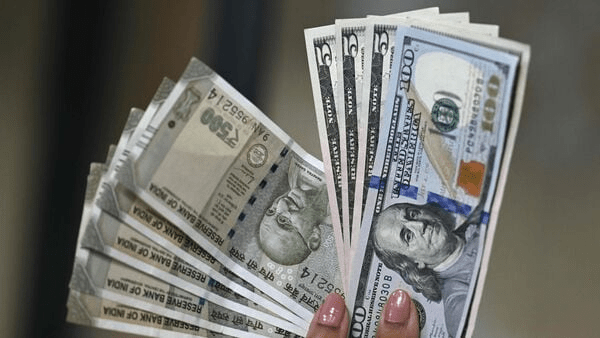
Now the Indian currency is navigating a complex web of central bank interventions and global geopolitical shocks. The Rupee vs US Dollar April 2026 trajectory saw a slight uptick this Friday morning. First, the rupee opened 9 paise higher at 92.57, largely boosted by recent Reserve Bank of India (RBI) directives. Therefore, the currency has found a temporary floor despite the massive downward pressure from high energy costs. Meanwhile, Brent crude has climbed back to $96.70, casting a long shadow over the stability of the local market.
Add businessleague.in as a Preferred Source


Also Read |Tamil Nadu Voter List Purge: 97 Lakh Names Deleted in SIR Phase 1
The RBI Deadline: Why Rupee Support is Fading
Now we must analyze why the rupee’s recent gains may be temporary. First, the RBI issued a directive on March 27 to set limits on banks’ onshore positions (NOP). Therefore, banks were forced to liquidate dollars, providing an artificial boost to the INR.
Next, today marks the Friday deadline for these positions to be cleared. Thus, the significant source of “forced” support has now diminished.
Meanwhile, without this intervention, currency traders believe the trajectory is clearly downward. Therefore, the market is bracing for a shift in momentum as the central bank’s hand moves away. So the 92.57 opening may be the “calm before the storm.”
Crude Oil Rebound: The $96.70 Brent Surge
So what is the biggest external threat to the rupee right now? The answer is the relentless rise in energy prices. First, Brent crude briefly fell to $90 following the US-Iran ceasefire announcement. Therefore, there was a brief moment of hope for global trade.
Next, prices have since surged back to $96.70 for June delivery. Thus, the market is pricing in the reality that hostilities are continuing in several areas.
Meanwhile, India remains a major oil importer. Therefore, every dollar increase in crude puts massive pressure on the rupee. So the “sticky” oil price is effectively neutralizing any small gains made in the domestic forex market.
US Economic Data: Slow Growth and Sticky Inflation
Now the macro conditions in the United States are creating a “worst of both worlds” scenario for emerging markets. First, US GDP has been revised down to a mere 0.5 per cent. Therefore, growth is slowing significantly in the world’s largest economy.
Next, inflation remains stubbornly firm, with core PCE rising 0.4 per cent month-on-month. Thus, the Federal Reserve is caught in a trap.
Meanwhile, this “sticky inflation” prevents the Fed from cutting interest rates aggressively. Therefore, the dollar remains relatively stable and strong. So the Rupee vs US Dollar April 2026 outlook stays challenged by high borrowing costs in the West.
Also Read |Tamil Nadu Voter List Purge: 97 Lakh Names Deleted in SIR Phase 1
Equity Outflows: FPI Selling Activity Continues
So how are foreign investors reacting to the Indian market? First, they have been net sellers of Indian stocks for two consecutive sessions. Therefore, the outflow of equity capital is a major drag on the rupee’s value.
Next, although the rate of selling has decreased slightly, the trend remains negative. Thus, the “risk-off” sentiment is prevalent among global fund managers.
Meanwhile, the lack of fresh inflows makes it harder for the RBI to defend the currency. Therefore, the rupee is losing its twin pillars of support—capital inflows and trade balance. So the ongoing selling activity remains a significant red flag for analysts.
Technical Outlook: Base Zones and Resistance Levels
Now let’s look at the technical charts for USDINR. Amit Pabari of CR Forex Advisors notes that the picture is changing rapidly. First, the currency is expected to find a base in the 92.20–92.50 zone.
Next, the resistance at 92.50 is proving to be a hard ceiling for the rupee. Thus, it is unlikely to breach this level and grow stronger in the short term.
Meanwhile, the long-term forecast points to a gradual move higher toward 93.50 and eventually 94.00. Therefore, the Rupee vs US Dollar April 2026 trend is one of “managed depreciation.” So businesses should prepare for a weaker INR by mid-year.
The ‘Ceasefire’ Trap: Why Markets Remain Nervous
So why didn’t the ceasefire news save the markets? First, the announcement between the US and Iran was met with initial joy. Therefore, we saw an initial decline in oil prices and a jump in the rupee.
Next, doubts about the longevity of the truce began to surface almost immediately. Thus, crude oil quickly recovered its losses.
Meanwhile, geopolitical risk is now a permanent “premium” in currency pricing. Therefore, traders are no longer taking diplomatic announcements at face value. So the volatility in the Rupee vs US Dollar April 2026 pair reflects a deep-seated global anxiety.
Also Read |Tamil Nadu Voter List Purge: 97 Lakh Names Deleted in SIR Phase 1
Labour Market Softening: Implications for the Fed
Now the US labour market is finally showing signs of cooling. First, initial jobless claims increased by 16,000 to reach 219,000. Therefore, this is the highest level in a month, suggesting a softening economy.
Next, a weaker labour market usually pressures the Fed to cut rates. But with inflation still at 0.4 per cent monthly, they are paralyzed.
Meanwhile, this uncertainty keeps the US dollar “subdued but stable.” Therefore, the rupee gets some breathing room, but not enough for a full recovery. So the Fed’s “cautious” stance is the most important variable for local traders.
Currency Trading Sentiment: The Trader’s View
So what is the talk on the trading floors today? First, traders are watching the 92.50 resistance level with eagle eyes. Therefore, any move beyond this would be seen as a major shift in policy.
Next, the exhaustion of the RBI’s position-limit support is the main topic of conversation. Thus, there is a sense that the rupee is now “on its own.”
Meanwhile, the “slow growth, sticky inflation” environment in the US is the baseline for all forecasts. Therefore, the appetite for high-risk emerging market currencies like the INR is low. So the sentiment remains cautious, with a clear bias toward a stronger dollar.
Common Questions Answered
What is the Rupee vs US Dollar April 2026 rate today? Now the rupee opened 9 paise higher at 92.57 on April 10. Therefore, it has seen a very minor recovery.
Why is the Rupee under pressure despite the ceasefire? First, crude oil prices have surged back to $96.70. Next, foreign investors are continuing to sell Indian stocks. Thus, the downward pressure remains.
What was the RBI’s recent action to help the Rupee? So the RBI set limits on banks’ onshore positions. Therefore, banks had to sell dollars and buy rupees, supporting the INR.
Where is the Rupee headed next? Actually, technical analysts predict a move toward 93.50 and 94.00. Therefore, the current strength is likely temporary.
How does US inflation affect the Rupee? Finally, “sticky” US inflation at 0.4% prevents the Fed from cutting rates. This keeps the dollar strong and the rupee weak.
Is the 92.50 level important? Yes. It is considered a significant resistance level. Thus, the rupee is unlikely to grow much stronger than this in the near term.
Also Read |Tamil Nadu Voter List Purge: 97 Lakh Names Deleted in SIR Phase 1
End….
Add businessleague.in as a Preferred Source

