


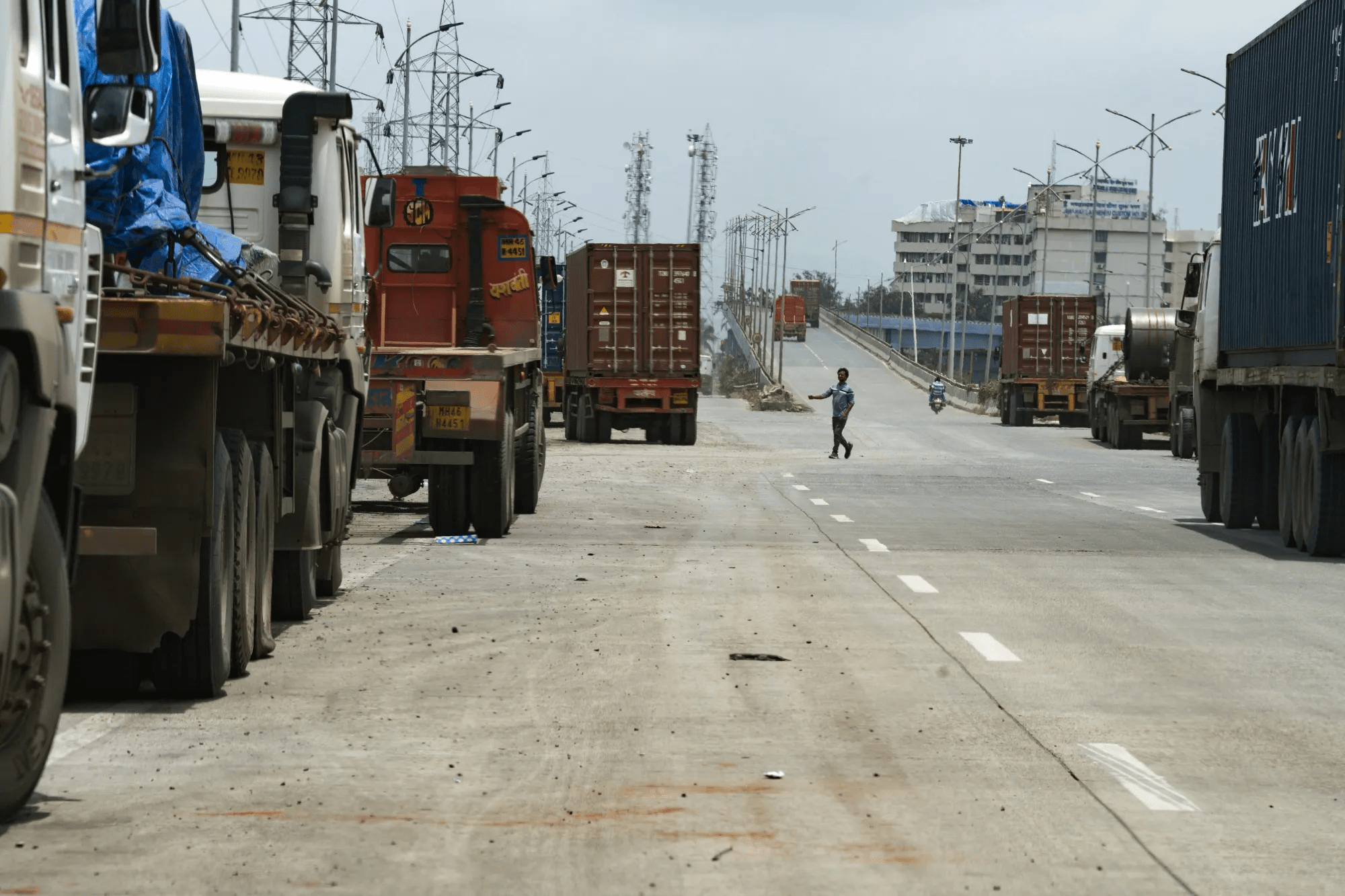
Now the Indian economy is displaying a surprising degree of agility in the face of a dual-track global crisis. In a data release that has caught many economists off guard, the India trade gap shrinks 2026 narrative has taken a positive turn this Wednesday. First, the merchandise trade deficit unexpectedly narrowed to a nine-month low of $20.67 billion in March. Therefore, a massive surge in exports to the US—India’s largest market—has effectively cushioned the massive $3.5 billion loss in Middle Eastern trade caused by the ongoing Iran war. Meanwhile, a landmark US Supreme Court ruling has slashed tariffs on Indian engineering and textile goods to 10%, triggering a 17.4% month-on-month export spike.
Add businessleague.in as a Preferred Source


Also Read |Tamil Nadu Voter List Purge: 97 Lakh Names Deleted in SIR Phase 1
The March Surprise: Why the Trade Deficit Hit a 9-Month Low
Now we must analyze the “expectations vs. reality” gap in the latest trade figures. First, Reuters polls had predicted a massive widening of the trade deficit to over $32 billion. Therefore, the India trade gap shrinks 2026 headline is a significant psychological win for the rupee.
Next, the deficit actually fell to $20.67 billion as exports rose to $38.92 billion while imports contracted to $59.59 billion. Thus, the “unexpected narrowing” suggests that Indian exporters are successfully rerouting their focus away from war zones and toward resurgent Western demand.
Meanwhile, the drop in imports of crude oil and gold provided additional breathing room. Therefore, the “dual-sided” reduction in the deficit is the result of both high-performance exports and tactical import management.
US Tariff Cuts: The Legal Ruling That Saved Indian Textiles
So what triggered the 17.4% jump in US-bound shipments? First, a critical US Supreme Court ruling forced a reduction in duties on Indian goods, bringing them down to a flat 10%. Therefore, the India trade gap shrinks 2026 success is largely a result of legal de-escalation in Washington.
Next, these goods—previously saddled with tariffs of up to 50%—saw a massive “release valve” effect. Thus, engineering goods and textiles are flowing into the US market at record levels for the month of March.
The US Export Snapshot:
-
Value: $8.02 Billion (March 2026).
-
MoM Increase: 17.4%.
-
Impacted Sectors: Textiles, apparel, and high-end engineering components.
Meanwhile, this surge has almost entirely offset the disruption in Gulf shipping. Therefore, the “US pivot” has become the primary survival strategy for Indian manufacturing in early 2026.
Strait of Hormuz Crisis: A Month and a Half of Shipping Delays
Now we must consider the “Hormuz Factor.” First, the Strait of Hormuz—a critical artery for Indian oil and gas—has been effectively blocked for 45 days. Therefore, the India trade gap shrinks 2026 achievement is even more remarkable considering the surging logistics costs.
Next, exporters have warned that freight and insurance premiums have more than doubled since the war began. Thus, the cost of “doing business” has skyrocketed, even if the demand exists.
Shipping Bottlenecks:
-
Duration: 1.5 months of near-blockade.
-
Direct Hit: Shipments to the UAE, Qatar, and Kuwait have slowed to a crawl.
-
Rerouting: Some firms are attempting the much longer route around the Cape of Good Hope.
Meanwhile, unlike competitors in East Asia, India is uniquely dependent on these Gulf routes. Therefore, the continued closure of the Strait remains the single biggest “known unknown” for the next quarter.
Also Read |Tamil Nadu Voter List Purge: 97 Lakh Names Deleted in SIR Phase 1
Middle East Fallout: Trade Secretary Rajesh Agrawal on the $3.5B Loss
So how much did the war actually cost Indian exporters? First, Trade Secretary Rajesh Agrawal revealed that exports to the Middle East dropped by a staggering $3.5 billion in March alone. Therefore, the India trade gap shrinks 2026 data is a story of “loss vs. gain.”
Next, the war has effectively severed the trade links that were flourishing under the I2U2 and IMEC frameworks. Thus, the “West Asia dream” is currently on life support.
Secretary Agrawal’s Analysis:
-
The Hit: $3.5 billion in lost goods exports.
-
The Cause: Direct war impact and total maritime insecurity.
-
The Resilience: Diversified sourcing and the US tariff “gift” prevented a total deficit blowout.
Meanwhile, Agrawal noted that negotiations between the US and Iran over the weekend failed, though talks may resume. Therefore, the ministry is preparing for a “long war” scenario where the Middle East remains a trade-negative zone.
Gold and Oil: Why Import Values are Falling Amid the Conflict
Now let’s look at the “import side” of the shrinking gap. First, crude oil imports fell nearly 36% year-on-year to $12.18 billion. Therefore, the India trade gap shrinks 2026 is also a result of a massive reduction in the value of inbound energy shipments.
Next, gold imports—a traditional deficit driver—declined by 31.6% to $3.06 billion. Thus, the high global prices of gold and oil are actually deterring volume, leading to a lower total spend.
Import Contraction:
-
Crude Oil: -36% YoY (Strategic reserves and reduced demand).
-
Gold: -31.6% (Record high prices dampening consumer sentiment).
-
Logistics Effect: Ships simply cannot enter Indian ports as frequently due to the Hormuz blockade.
Meanwhile, India remains the world’s No. 3 oil consumer. Therefore, this “import dip” may be temporary as summer demand ramps up. So the current narrowing of the trade gap is a delicate balancing act of high prices vs. low volume.
The Service Surplus: An $18.24 Billion Anchor for the Rupee
So what about the “invisible” trade? First, India estimates that services exports stood at a healthy $35.20 billion in March. Therefore, the India trade gap shrinks 2026 story is bolstered by a surplus of $18.24 billion in the services sector.
Next, this surplus acts as a vital cushion for the merchandise deficit. Thus, India’s “overall” trade position is much stronger than the goods deficit would suggest.
Total FY 2025-26 Performance:
-
Goods & Services Exports: $860.09 Billion (+4.22%).
-
Goods & Services Imports: $978.40 Billion (+6.36%).
-
Overall Annual Deficit: $119.3 Billion (Widened from $94.66B).
Meanwhile, Reuters calculations suggest that IT services and consultancy remain the backbone of this surplus. Therefore, while the “war at sea” hits goods, the “cloud” keeps India’s trade afloat.
Also Read |Tamil Nadu Voter List Purge: 97 Lakh Names Deleted in SIR Phase 1
The April 20 Mission: In-Person Trade Negotiations in Washington
Now we must look at the upcoming diplomatic offensive. First, an Indian negotiating team is set to visit the US starting April 20. Therefore, the India trade gap shrinks 2026 is the backdrop for a high-stakes meeting to finalize an interim trade deal.
Next, this will be the first in-person engagement after a three-to-four-month gap of virtual talks. Thus, New Delhi is pushing for “boots on the ground” to secure long-term tariff stability.
Meanwhile, the officials (speaking on anonymity) confirmed that the legal framework for the deal will be the priority. Therefore, the visit is intended to turn the “temporary” Supreme Court-led tariff cuts into a permanent “Preferred Partner” status.
Interim Trade Pact: Seeking the 18% Tariff Goal
Finally, what is the “holy grail” for Indian trade in 2026? First, India aims to finalize an interim pact that would cap US tariffs on Indian goods at about 18%. Therefore, the India trade gap shrinks 2026 is a proof of concept that lower tariffs work.
Next, New Delhi is specifically looking to align this deal with Washington’s planned changes to “Section 301 tariffs” in June. Thus, India is seeking a “reset” that gives it a permanent edge over peers in Southeast Asia.
Strategic Goals for June 2026:
-
Section 301 Alignment: Ensuring India is not caught in the crossfire of US-China trade wars.
-
Market Access: Expanding the “tariff-free” list for organic chemicals and pharmaceuticals.
-
Permanent Status: Moving away from “court-ordered” cuts to “treaty-mandated” ones.
Meanwhile, the negotiations will also address ongoing US trade investigations. Therefore, the April 20 visit is the most important date on the 2026 trade calendar.
Common Questions Answered
Why did India’s trade gap shrink in March 2026? Now, the merchandise deficit narrowed to $20.67 billion because a 17.4% surge in exports to the US offset the $3.5 billion loss from the Middle East war. Therefore, the trade gap hit a nine-month low.
How did the US Supreme Court affect Indian trade? First, a landmark ruling forced a reduction in US tariffs on Indian goods to 10%. Thus, shipments of textiles and engineering goods surged as they became much cheaper for US buyers.
What is the impact of the Strait of Hormuz blockade? So the critical supply route has been nearly blocked for 1.5 months. This has led to “severe delays” and doubled the cost of freight and insurance for Indian exporters.
Why did oil and gold imports fall? Next, crude oil imports fell 36% and gold imports fell 31.6% year-on-year. This was largely due to high global prices deterring volume and the logistics difficulty of moving ships through the war zone.
What is the status of the India-US trade deal? Finally, an Indian team will visit Washington on April 20 to finalize an interim pact. Therefore, they are seeking an 18% tariff cap to preserve a competitive edge over global peers.
Is India’s overall trade in surplus or deficit for the fiscal year? Actually, the annual merchandise deficit widened to $119.3 billion. However, the services sector provided a surplus of $18.24 billion in March alone, helping stabilize the Rupee.
Also Read |Tamil Nadu Voter List Purge: 97 Lakh Names Deleted in SIR Phase 1
End…
Add businessleague.in as a Preferred Source

