


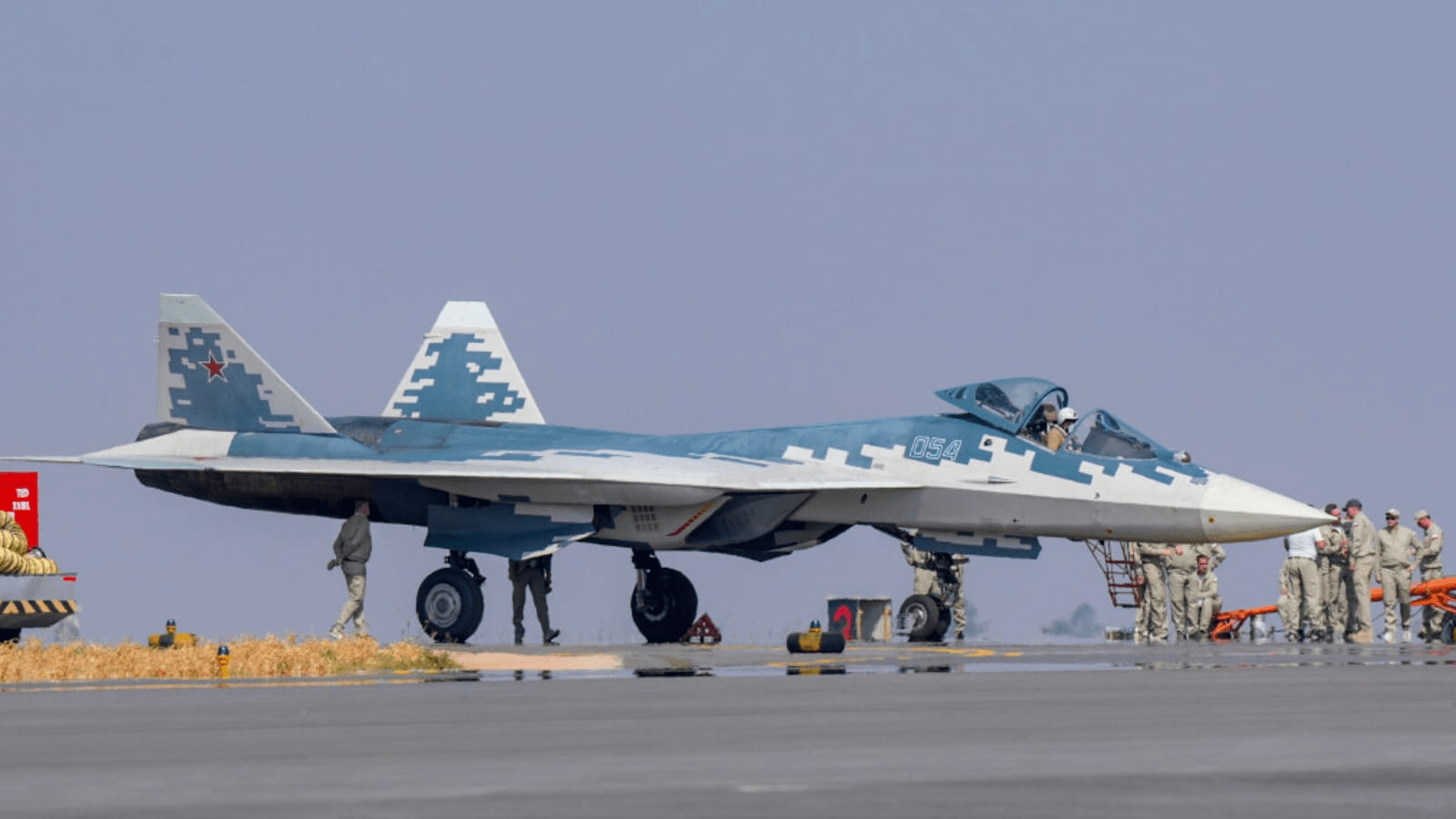
Now the aerial defense landscape of Southeast Asia is approaching a historic crossroads. On Tuesday, April 28, 2026, reports suggest that a high-stakes Rafale vs Su-57 battle Vietnam India monitoring is intensifying. Vietnam, currently reliant on an aging fleet of Russian-origin Su-22, Su-27, and Su-30MK2 aircraft, is looking to diversify its suppliers to reduce strategic dependence on Moscow. Specifically, the contest pits France’s 4.5-generation Dassault Rafale against Russia’s fifth-generation Su-57 Felon. While Hanoi’s decision will redefine the South China Sea power balance, it also mirrors the technical “bind” New Delhi finds itself in regarding its own massive Rafale procurement.
Add businessleague.in as a Preferred Source


Meanwhile, a Vietnamese pilot has reportedly flown the Rafale in a highly confidential flight test—a signal that negotiations have moved well beyond the preliminary phase.
But for India, the challenge is not about the aircraft’s performance, but about the “digital keys” to its software.
Also Read |Tamil Nadu Voter List Purge: 97 Lakh Names Deleted in SIR Phase 1
Vietnam’s Diversification: Moving Away from the Sukhoi Monopoly
Now we must examine Hanoi’s long-standing relationship with Russian defense hardware. For decades, the Vietnamese People’s Air Force has been almost exclusively powered by Russian Sukhoi jets. Therefore, the Rafale vs Su-57 battle Vietnam India watching is a shift in core military philosophy.
Reducing Single-Supplier Dependence
First, the current fleet of Su-30MK2s remains the backbone of Vietnam’s defense in the South China Sea. Then, the rising geopolitical pressure and the complexities of Russian supply chains have prompted Hanoi to look at Western alternatives. Thus, a move toward the Rafale would signify a massive pivot toward European defense standards. Next, allowing a foreign pilot into a Rafale cockpit—as French media reports suggest occurred recently—is a traditional marker that a deal is imminent. Therefore, Vietnam is effectively preparing for a post-Russian aviation era.
The Rafale Advantage: Why Hanoi is Eyeing French Tech
Now, what makes the Rafale so attractive to a nation currently flying Russian airframes? The Dassault Rafale is known for its “omnirole” capability, meaning it can perform multiple mission types in a single sortie.
Combat Proven Performance
First, the Rafale has a distinguished record in combat across several global theaters. Then, its electronic warfare suite, SPECTRA, is considered world-class, providing a significant edge in the contested electronic environment of the South China Sea. Thus, it offers Vietnam a leap in situational awareness over its current Su-30s. Next, the ease of maintenance and the potential for a long-term partnership with Dassault Aviation are high selling points. Therefore, the Rafale is being viewed as the “pragmatic” choice for modernizing a legacy air force.
Su-57 Felon: Russia’s Stealth Card in the South China Sea
Now we cannot discount Russia’s Su-57 Felon. As a fifth-generation stealth fighter, it technically belongs to a more advanced class than the 4.5-generation Rafale.
The Stealth Factor
First, the Su-57 offers a low-radar cross-section, making it difficult for enemy sensors to detect. Then, for a country facing a major regional power like China, stealth could be a game-changing deterrent. Thus, the Su-57 has remained on Vietnam’s radar since 2018 as a direct answer to the region’s evolving threats. Next, sticking with Sukhoi would also mean a smoother transition for Vietnamese pilots and ground crews familiar with Russian systems. Therefore, the choice between Rafale and Su-57 is a debate between “proven reliability” and “cutting-edge stealth.”
Also Read |Tamil Nadu Voter List Purge: 97 Lakh Names Deleted in SIR Phase 1
The Indonesia Precedent: A Reference Point for Asian Defense
Now, Vietnam is closely watching the 2022 deal signed by its neighbor, Indonesia. Jakarta’s acquisition of 42 Rafales for $8.1 billion has set a new benchmark for defense spending in the ASEAN region.
Regional Scaling
First, Indonesia’s move proved that even traditionally non-aligned nations are willing to invest in high-end French tech. Then, the regional interoperability that would come from multiple ASEAN nations flying the Rafale would be a significant strategic asset. Thus, Vietnam’s potential purchase of 24 to 40 jets fits perfectly into this emerging regional trend. Next, the price tag of $4 billion to $8 billion for Vietnam would be a “once-in-a-generation” investment for Hanoi. Therefore, the Rafale could soon become the standard-bearer for air superiority across the South China Sea littoral.
India’s Rafale Bind: The Source Code and Software Stand-off
Now we must shift our focus to New Delhi, where a parallel Rafale story is unfolding. India is currently in negotiations for 114 Multi-Role Fighter Aircraft (MRFA) in a deal estimated at $35–40 billion.
The Source Code Stalemate
First, the negotiations have hit a technical wall over the “source code.” Then, France has traditionally refused to share this underlying software logic with any foreign customer. Thus, the Rafale vs Su-57 battle Vietnam India bind is essentially a struggle for digital sovereignty. Next, without the source code, India cannot modify the aircraft’s internal computers to accept new software updates or weapons. Therefore, India is hesitant to commit to such a massive fleet if it remains dependent on Paris for every minor technical adjustment.
Indigenous Integration: Why New Delhi Needs the “Digital Keys”
Now, why does India care so much about the software? New Delhi is heavily invested in its “Atmanirbhar Bharat” (Self-Reliant India) program, which includes developing indigenous missile systems.
Integrating the Astra and BrahMos
First, India wants to integrate its own Astra air-to-air missiles and BrahMos cruise missiles into the Rafale platform. Then, to do this, Indian engineers need access to the aircraft’s mission computer software. Thus, without the “digital keys,” every integration requires French approval and potentially exorbitant “software integration fees.” Next, this creates a bottleneck that slows down India’s ability to evolve its air power independently. Therefore, the stand-off over tech transfer is the primary reason the $35 billion deal has not moved to the contract stage.
Also Read |Tamil Nadu Voter List Purge: 97 Lakh Names Deleted in SIR Phase 1
Regional Impact: The Rafale as a Central Asian Platform
Now, if both the Vietnam and India deals eventually move forward, the Rafale could become the “central platform” in Asian air defenses. This would represent a major shift away from the US-Russian duopoly.
The Strategic Pivot
First, India already operates 36 Rafales, and the Navy has selected the Rafale-M for its aircraft carriers. Then, if the Air Force adds another 114, India will become the world’s largest foreign operator of the jet. Thus, a Rafale-heavy Asia would create a unique maintenance and training ecosystem. Next, this would also give France significant geopolitical leverage in the Indo-Pacific. Therefore, the Rafale vs Su-57 battle Vietnam India is tracking is as much about diplomatic influence as it is about supersonic flight.
Defense Diplomacy: France’s Growing Footprint in Asia
Now we see France positioning itself as a “third alternative” to the US and Russia. By offering high-end technology without the heavy political baggage often associated with American or Russian deals, Paris is winning over neutral powers.
The Strategic Autonomy Play
First, France’s willingness to negotiate—even if they have “red lines” like the source code—is viewed favorably by nations like Vietnam. Then, for India, the deep trust in French hardware (going back to the Mirage 2000) makes the Rafale the natural choice. Thus, the “Rafale Club” in Asia is growing. Next, the competition with Russian stealth technology like the Su-57 continues to define the region’s defense balance. Therefore, the outcome of these negotiations in 2026 and 2027 will decide which side of the “stealth vs. combat-proven” divide Asian nations will fall.
Common Questions Answered
Is Vietnam ditching Russia for the Rafale? Now, while not official, Vietnam is actively diversifying. The recent confidential test flights by Vietnamese pilots suggest they are very serious about adding the Rafale to their fleet.
Why is India’s Rafale deal stuck? First, the $35–40 billion deal for 114 jets is held up because France refuses to share the source code. Therefore, India cannot integrate its own indigenous missiles without French help.
What is the Su-57’s advantage over the Rafale? Next, the Su-57 is a 5th-generation stealth fighter, whereas the Rafale is a 4.5-generation jet. Thus, the Su-57 has better radar-evading capabilities.
How many Rafales is Vietnam considering? So, open-source estimates suggest two squadrons, which equals roughly 24 to 40 aircraft.
Why does India need the source code? Finally, to achieve “Atmanirbhar Bharat.” India wants the “digital keys” to its aircraft so it can upgrade and arm them with Indian-made missiles without needing foreign permission.
Also Read |Tamil Nadu Voter List Purge: 97 Lakh Names Deleted in SIR Phase 1
End….
Add businessleague.in as a Preferred Source

