

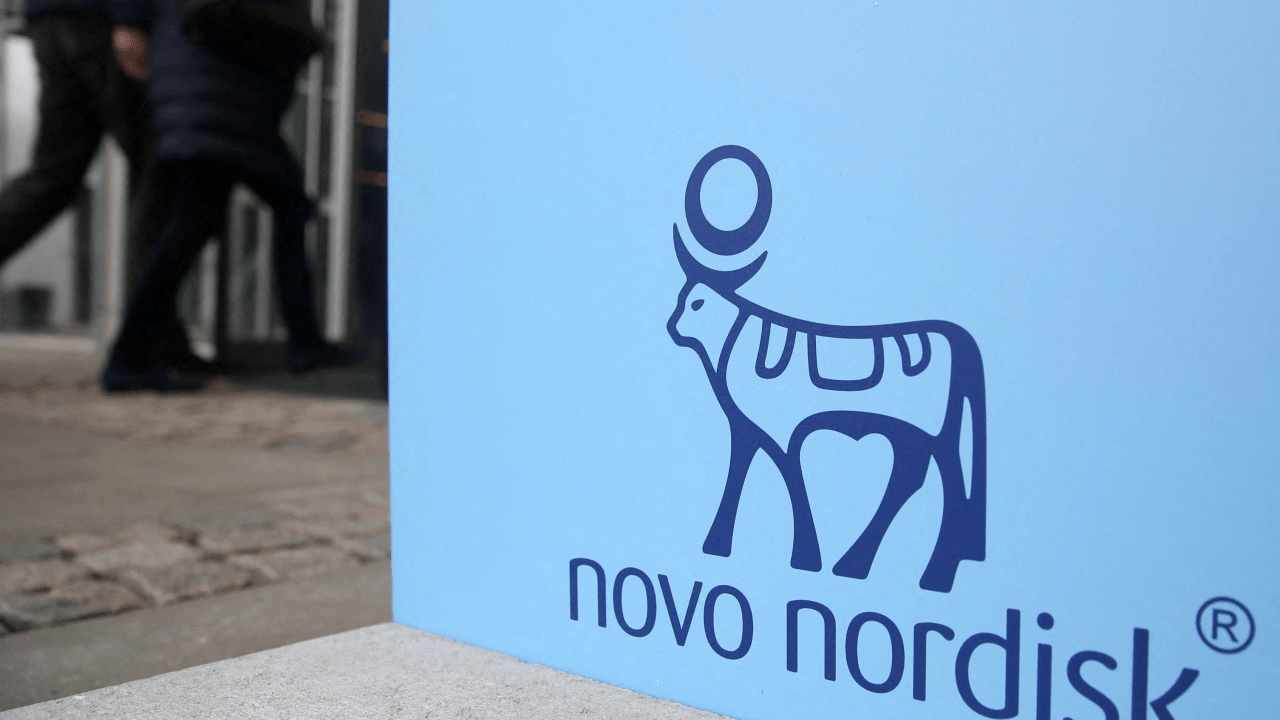
Now the global pharmaceutical landscape is undergoing a radical digital shift. In a landmark announcement this Tuesday, Danish major Novo Nordisk revealed a strategic Novo Nordisk OpenAI partnership 2026 designed to deploy advanced artificial intelligence across its entire operation. First, the collaboration aims to speed up the discovery of next-generation medications for obesity and diabetes. Therefore, the company is integrating OpenAI’s capabilities from early-stage research to commercial supply chains. Meanwhile, the move comes as the pharmaceutical industry faces increasing pressure to shorten the timeline between laboratory breakthroughs and patient access.
Add businessleague.in as a Preferred Source


Also Read |Tamil Nadu Voter List Purge: 97 Lakh Names Deleted in SIR Phase 1
Mike Doustdar’s Vision: Leading the Next Era of Healthcare
Now we must analyze the leadership driving this multi-billion dollar pivot. First, Mike Doustdar, the Iranian-born Austrian who took over as President and CEO in 2025, described this move as an “essential step.” Therefore, the Novo Nordisk OpenAI partnership 2026 is the centerpiece of his turnaround strategy for the company.
Next, Doustdar emphasized that integrating AI into everyday workflows allows the firm to “identify patterns we could not see” before. Thus, the company is moving away from traditional trial-and-error research toward a data-first philosophy.
Meanwhile, his appointment has coincided with a sharper focus on efficiency and speed. Therefore, the partnership is not just a technology deal but a cultural overhaul of how the Danish giant operates globally. So the “speed” Doustdar is known for is now being automated by OpenAI’s algorithms.
Sam Altman on AI: Redefining the Life Sciences Sector
So what does the world’s most famous AI executive think of this venture? First, OpenAI CEO Sam Altman noted that the life sciences sector is one of the “key areas of transformation” for human progress. Therefore, the Novo Nordisk OpenAI partnership 2026 is more than just a software license—it’s a test bed for “General Purpose AI” in biology.
Next, Altman highlighted that AI can help people live “longer, better lives” by accelerating scientific breakthroughs that once took decades. Thus, the collaboration is being framed as a philanthropic mission as much as a business one.
Meanwhile, this deal marks another major win for OpenAI, following its previous alliances with Moderna and Sanofi. Therefore, Altman is successfully positioning OpenAI as the “operating system” for the 2026 biotech boom. So the future of patient care is increasingly being written in Silicon Valley code.
Drug Discovery 2.0: Analyzing Previously ‘Impossible’ Datasets
Now let’s look at the technical “muscle” behind the partnership. First, AI will be used to analyze complex datasets that were previously “impossible” for human teams to navigate. Therefore, the Novo Nordisk OpenAI partnership 2026 will focus on identifying new molecular candidates for chronic weight management.
Next, the AI models are tasked with testing hypotheses in a virtual environment before they ever reach a physical lab. Thus, the time taken to move from research to clinical application could be reduced by as much as 40%.
Discovery Milestones:
-
Pattern Recognition: Identifying rare genetic markers for obesity.
-
Molecule Screening: Virtually testing millions of compounds in seconds.
-
Clinical Simulation: Predicting patient responses to GLP-1 agonists.
Meanwhile, this builds on Novo’s existing use of NVIDIA’s Gefion supercomputer. Therefore, the company is now running a “double-engine” AI strategy to stay ahead of global rivals.
Also Read |Tamil Nadu Voter List Purge: 97 Lakh Names Deleted in SIR Phase 1
Beyond the Lab: Improving Manufacturing and Supply Chains
So is this just about new drugs? Actually, no. First, the partnership extends into the “full value chain,” including manufacturing and commercial operations. Therefore, the Novo Nordisk OpenAI partnership 2026 is designed to fix the supply shortages that have plagued Ozempic and Wegovy for years.
Next, OpenAI will help optimize global supply chains to ensure that life-saving medications reach high-demand markets like India and the US without delay. Thus, logistics are becoming as “smart” as the medicine itself.
Meanwhile, corporate functions like HR and finance will also see an AI-driven efficiency boost. Therefore, Novo Nordisk is aiming to become a “lean” organization that can react to market shifts in real-time. So the goal is a complete operational “nervous system” powered by AI.
The Abbott Connection: Widening Access to Ozempic in India
Now we should consider how this affects the Indian market. First, Novo Nordisk India recently partnered with Abbott to launch “Extensior,” a second brand of Ozempic. Therefore, the Novo Nordisk OpenAI partnership 2026 will likely help manage the massive distribution demands of the Indian subcontinent.
Next, with over 100 million diabetics in India, the need for “smarter global operations” is critical. Thus, the AI integration will directly support the partnership with Abbott to ensure consistent supply beyond metros.
Meanwhile, the AI-driven discovery of new therapies will eventually feed into this Indian pipeline. Therefore, patients in Mumbai and Delhi will be the first to benefit from these “accelerated” 2026 clinical trials. So the Silicon Valley-Copenhagen axis has a very real impact on Indian healthcare.
Workforce Transformation: Upskilling Global Pharma Teams
So what happens to the employees? First, OpenAI is tasked with supporting “workforce upskilling” across Novo’s global teams. Therefore, thousands of scientists and administrators are being trained in “AI literacy” this year.
Next, the company wants AI to be a “co-pilot” for its workforce rather than a replacement. Thus, the 2026 corporate culture at Novo is shifting toward human-AI collaboration.
Upskilling Agenda:
-
Prompt Engineering: Training researchers to “talk” to AI models.
-
Data Literacy: Empowering non-tech staff to use AI dashboards.
-
Global Teams: Enhancing collaboration across 80+ countries.
Meanwhile, this move is expected to boost productivity by automating repetitive data entry and analysis. Therefore, the Novo Nordisk OpenAI partnership 2026 is a major human capital investment.
Also Read |Tamil Nadu Voter List Purge: 97 Lakh Names Deleted in SIR Phase 1
Ethics and Compliance: The Human Oversight Guardrails
Now we must address the “red flags.” First, Novo Nordisk emphasized that the partnership includes “strict data protection and governance.” Therefore, the use of patient data for AI training is strictly regulated to meet global standards.
Next, the company insists on “human oversight” to ensure that no AI-generated hypothesis is moved to trial without expert validation. Thus, the “black box” problem of AI is being managed through rigorous internal audits.
Meanwhile, the partnership adheres to ethical AI compliant technologies to prevent bias in drug discovery. Therefore, the Novo Nordisk OpenAI partnership 2026 is being built on a foundation of “responsibility and transparency.” So while the tech is fast, the safety checks remain deliberately human.
Common Questions Answered
What is the Novo Nordisk OpenAI partnership 2026?
Now it is a strategic alliance to use advanced AI to speed up drug discovery for obesity and diabetes, while also improving manufacturing and supply chain efficiency.
Who is Mike Doustdar?
First, he is the current President and CEO of Novo Nordisk, appointed in August 2025. Thus, he is the primary architect of the company’s current AI-driven transformation.
How will this affect Ozempic and Wegovy?
Next, while these are existing drugs, AI will help optimize their supply chains and potentially discover even more effective “next-gen” versions of these GLP-1 therapies.
Will AI replace human scientists at Novo?
So no. The partnership focuses on “workforce upskilling” to make AI a tool for researchers, allowing them to test hypotheses faster than ever before.
Is India involved in this AI shift?
Finally, yes. The operational efficiencies gained through AI will support the Novo-Abbott partnership in India to widen access to diabetes drugs across the country.
When will the full integration be complete?
Actually, pilot programs are rolling out now, with full integration planned across the entire global value chain by the end of 2026.
Also Read |Tamil Nadu Voter List Purge: 97 Lakh Names Deleted in SIR Phase 1
End….
Add businessleague.in as a Preferred Source

