


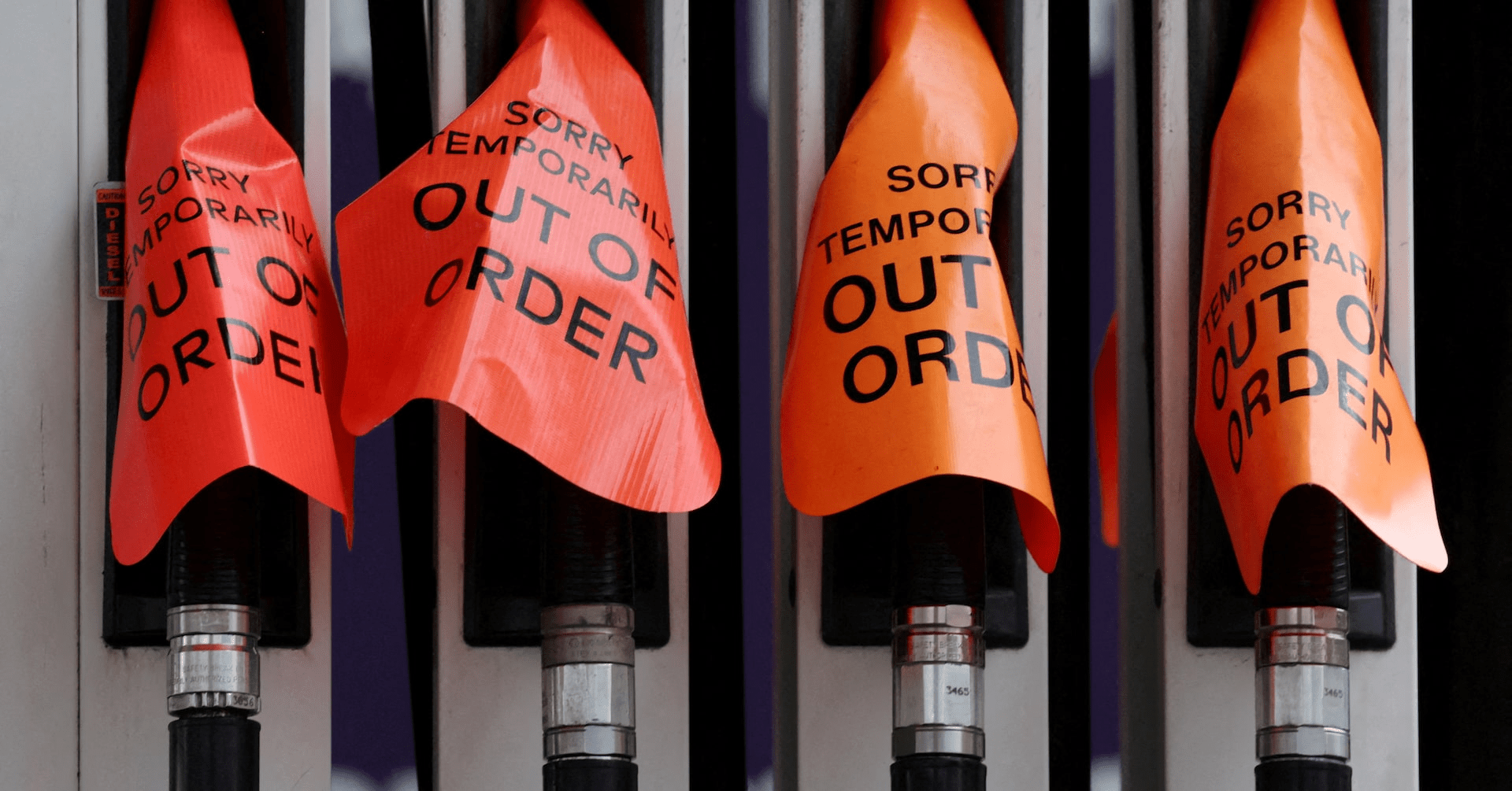
Now the global energy landscape is facing a seismic shift that few predicted just months ago. In a startling revision of its monthly forecast, the IEA oil demand supply report 2026 has signaled the largest supply disruption in history. First, the ongoing conflict in West Asia has forced the agency to pivot from a projected growth phase to a severe contraction. Therefore, global oil supply is now forecasted to fall by 1.5 million barrels per day (BPD) this year—a dramatic reversal from last month’s predicted 1.1 million BPD increase. Meanwhile, “demand destruction” is beginning to surface across the Asia-Pacific as record-high prices and scarcity begin to take their toll on the global economy.
Add businessleague.in as a Preferred Source


Also Read |Tamil Nadu Voter List Purge: 97 Lakh Names Deleted in SIR Phase 1
The Supply Shock: Reversing a Year of Growth in 30 Days
Now we must analyze the sheer scale of the IEA’s forecast reversal. First, just weeks ago, the market was expecting a steady 1.1 million BPD increase in global supply. Therefore, the IEA oil demand supply report 2026 reveals a total swing of 2.6 million BPD in the agency’s internal math.
Next, this sudden contraction is the direct result of targeted attacks on energy infrastructure. Thus, the supply side of the economy is essentially being “throttled” by geopolitical events.
Meanwhile, the IEA notes that the speed of this disruption is “unprecedented.” Therefore, the global supply chain has had zero time to adjust or find alternative routes. So the “steady recovery” of early 2026 has been officially declared dead.
Demand Destruction: How High Prices are Killing Consumption
So what happens when the world can no longer afford the oil that is left? First, the IEA has slashed its demand projection, now seeing a fall of 80,000 BPD for the year. Therefore, the IEA oil demand supply report 2026 warns that “demand destruction will spread” as scarcity persists.
Next, this is a massive drop from the earlier projection of 640,000 BPD growth. Thus, consumers are simply “tapping out” as fuel costs breach historical limits.
Demand Hotspots:
-
Asia-Pacific: Seeing the sharpest decline in industrial consumption.
-
Middle East: Local economies are stalling as regional infrastructure fails.
-
Europe: High prices are forcing a move away from oil-dependent heating and transport.
Meanwhile, the agency warns that this isn’t a “voluntary” shift toward green energy. Therefore, it is a forced economic slowdown caused by raw scarcity.
Hormuz Blockade: The Historic Closure of a Global Artery
Now we come to the primary catalyst for the chaos. First, the IEA oil demand supply report 2026 identifies Iran’s “effective closure” of the Strait of Hormuz as the most significant event in the 2026 energy war. Therefore, the world’s most critical maritime oil passage is currently non-functional.
Next, this closure has removed nearly a fifth of the world’s daily oil consumption from the market. Thus, the “historic” label used by the IEA is not hyperbole.
Meanwhile, international efforts to reopen the Strait have so far been unsuccessful. Therefore, the blockage is creating a “permanent” supply gap in the short-term outlook. So the “Strait crisis” is now the single biggest variable in global inflation.
Also Read |Tamil Nadu Voter List Purge: 97 Lakh Names Deleted in SIR Phase 1
Infrastructure Damage: Why Recovery Could Take Years
So is there a quick fix? First, the IEA report highlights that attacks on energy infrastructure have been “devastating and strategic.” Therefore, it’s not just about a blocked sea lane; it’s about the destruction of refineries and pumping stations.
Next, internal reports suggest that some of these facilities could take up to 24 months to fully repair. Thus, even if the war ended tomorrow, the IEA oil demand supply report 2026 indicates that supply will not return to normal anytime soon.
Infrastructure Status:
-
Refineries: Multiple facilities in the Gulf region reported as non-operational.
-
Pipelines: Sabotage has disrupted land-based alternatives to the Strait.
-
Terminals: Export hubs are facing significant structural damage.
Meanwhile, the cost of these repairs will likely keep oil prices elevated for years. Therefore, we are looking at a “long-term energy reset” rather than a temporary spike.
March Data Deep Dive: The 10.1 Million Barrel Disappearance
Now let’s look at the most shocking number in the report. First, the IEA reveals that around 10.1 million BPD of supply were lost in the month of March alone. Therefore, the IEA oil demand supply report 2026 confirms that the market experienced a “sudden stop” scenario.
Next, this 10 million barrel gap represents a hole in the global economy that no other producer—including the US or Guyana—can fill. Thus, the “buffer” in the system has been entirely erased.
Meanwhile, the IEA describes this as the “largest oil supply disruption in history.” Therefore, the previous records set during the 1973 embargo or the 1990 Gulf War have been officially shattered. So the 2026 crisis is now the new benchmark for energy volatility.
Asia-Pacific Vulnerability: The Economic Fallout in the East
So how is this affecting the “factory of the world”? First, the IEA notes that the biggest drop in consumption has been seen in the Asia-Pacific region. Therefore, countries like India, China, and Japan are bearing the brunt of the supply shock.
Next, as an 87% oil-importer, India’s industrial sectors are facing a “slow squeeze” on production. Thus, the IEA oil demand supply report 2026 paints a grim picture for East Asian GDP growth.
Asia-Pacific Risks:
-
Supply Chains: Higher shipping costs leading to “logistics inflation.”
-
Manufacturing: Factories cutting runs due to high fuel and energy costs.
-
Currency: Strengthening USD making oil imports even more expensive for local buyers.
Meanwhile, the “demand destruction” here is a sign of a looming regional recession. Therefore, the energy crisis is quickly turning into a humanitarian and economic crisis for millions.
Also Read |Tamil Nadu Voter List Purge: 97 Lakh Names Deleted in SIR Phase 1
Fragile Markets: The Confluence of Scarcity and Uncertainty
Now for the road ahead. First, the outlook for the oil market has become “far more uncertain” as scarcity and higher prices persist. Therefore, the IEA oil demand supply report 2026 offers no immediate relief for traders or governments.
Next, the confluence of weaker demand and even weaker supply means that prices are being driven by “desperation” rather than fundamentals. Thus, “spot” prices are far outstripping futures.
Meanwhile, the IEA warns that a “fragile market” is prone to sudden, violent price swings. Therefore, businesses are advised to hedge against extreme volatility through the end of 2026. So the “new normal” is one of constant alert.
IEA Messaging: From Recovery to ‘Unprecedented’ Crisis
Finally, what is the tone of the agency itself? First, the IEA has moved from a tone of “steady recovery” in January to “unprecedented crisis” in April. Therefore, the IEA oil demand supply report 2026 represents a total collapse in institutional optimism.
Next, Executive Director Fatih Birol has emphasized that “oil prices don’t yet reflect the severity” of what is happening on the ground. Thus, the “paper market” is still lagging behind the physical reality of empty tankers.
Key Quotes from the IEA:
-
“The largest oil supply disruption in history.”
-
“Demand destruction will spread.”
-
“The outlook has become far more uncertain.”
Meanwhile, the agency is urging member countries to coordinate on emergency reserve releases. Therefore, the 400 million barrel IEA buffer is now the only thing standing between the global economy and a total energy shutdown.
Common Questions Answered
What is the IEA oil demand supply report 2026 saying about supply? Now it forecasts that global oil supply will fall by 1.5 million BPD this year. Therefore, it is a massive reversal from the earlier projection of an 1.1 million BPD increase.
How much oil was lost in March 2026? First, around 10.1 million BPD were lost in March alone. Thus, it represents the single largest monthly supply drop in historical records.
What is ‘demand destruction’? Next, it refers to a permanent drop in consumption because prices are so high that consumers and businesses can no longer afford to buy oil. Therefore, the IEA sees an 80,000 BPD drop for 2026.
Why is the Strait of Hormuz closure so important? So the Strait is the world’s most critical oil artery. Its closure has effectively shut off 20% of global supply. Thus, it is the primary driver of the current crisis.
Which regions are most affected by the demand drop? Finally, the Middle East and the Asia-Pacific region are seeing the biggest drops in oil consumption. So these regions are at the highest risk of an energy-led recession.
Will prices go down soon? Actually, the IEA warns that because of infrastructure damage and the Hormuz blockade, scarcity and higher prices will likely persist throughout 2026. Therefore, no immediate relief is expected.
Also Read |Tamil Nadu Voter List Purge: 97 Lakh Names Deleted in SIR Phase 1
End….
Add businessleague.in as a Preferred Source

