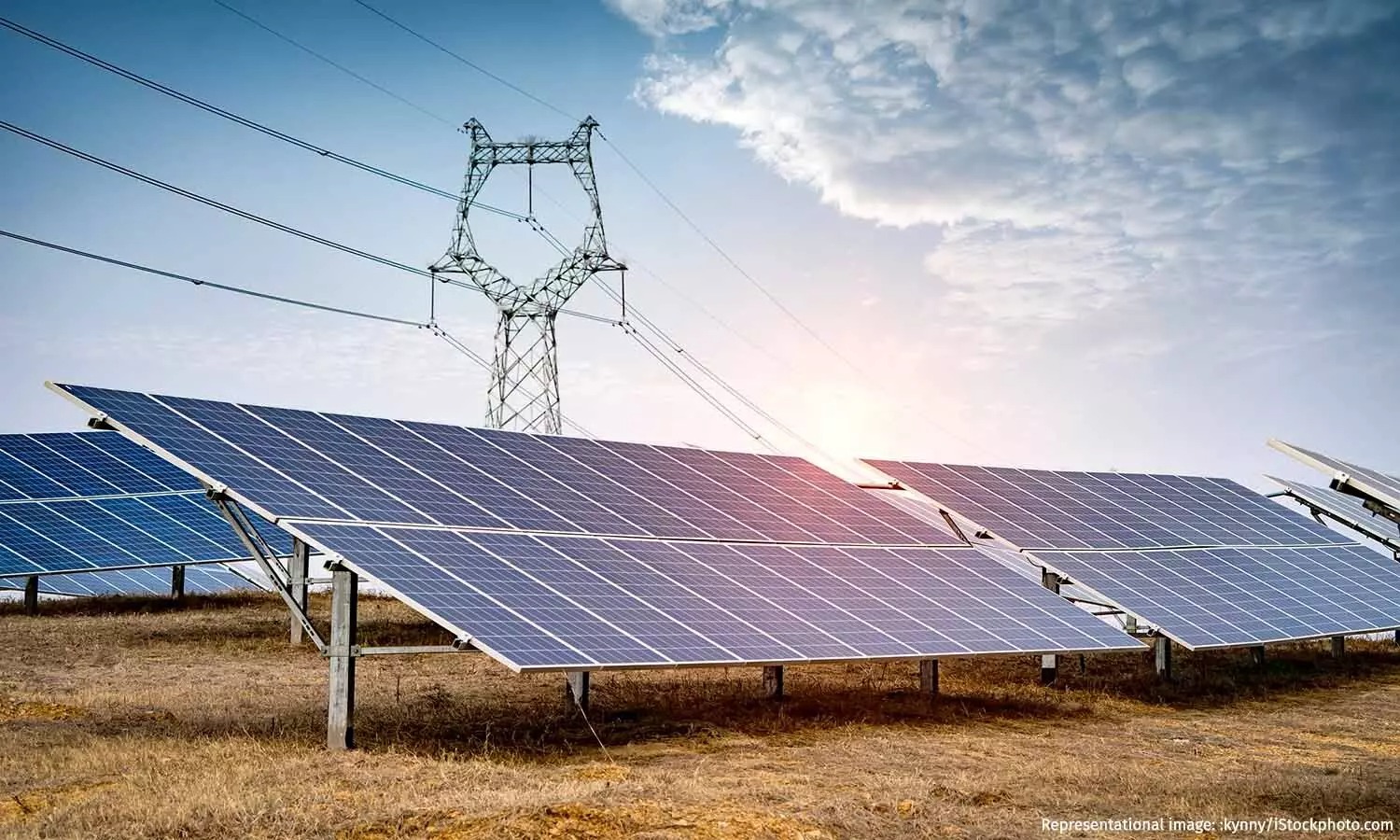
On February 10, 2026, the government’s premier think tank, NITI Aayog, released a landmark series of 11 study reports outlining India’s path to a 30 trillion economy and Net Zero emissions. The findings suggest a radical “structural transformation” of the national grid. While coal has been the bedrock of Indian industry for decades, the report signals a definitive transition where sunlight and the atom will soon do the heavy lifting.
Add businessleague.in as a Preferred Source


Also Read |Tamil Nadu Voter List Purge: 97 Lakh Names Deleted in SIR Phase 1
The Gap: Why Capacity ≠ Generation
Despite India reaching a milestone of 258 GW of renewable capacity by December 2025, a troubling “structural challenge” remains.
-
The Reality Check: While RE sources now make up 50% of installed capacity, they only contribute about 22% of actual electricity generation.
-
The CUF Factor: Low Capacity Utilisation Factors (CUF) mean solar and wind are often “curtailed” due to grid constraints or timing mismatches.
-
The Solution: NITI Aayog emphasizes that the next decade must focus on grid flexibility and market-based procurement rather than just adding panels and turbines.
Nuclear Power: The New Strategic Pillar
Perhaps the most significant shift in the 2026 roadmap is the elevation of nuclear energy. As coal exits the stage, the grid needs a “firm” source of power that doesn’t rely on the weather.
-
Scaling Up: Capacity is projected to jump from 8.18 GW to a staggering 295–320 GW under the Net Zero Scenario.
-
SMR Revolution: The report pushes for Small Modular Reactors (SMRs) to replace aging coal-based captive power plants in heavy industries like steel and cement.
-
24/7 Clean Power: Nuclear is identified as the “carbon-free baseload” that will support green hydrogen production and high-temperature industrial heat.
Also Read |Tamil Nadu Voter List Purge: 97 Lakh Names Deleted in SIR Phase 1
The Coal Paradox: A 2050 Peak Before the Plunge
Despite the green push, coal isn’t disappearing overnight. NITI Aayog identifies a “dual trajectory” for fossil fuels.
-
The Peak: Coal demand is expected to more than double, peaking at 2.62 billion metric tons by 2050 to support rapid urbanization.
-
The Collapse: Post-2050, demand will crash. By 2070, coal will be restricted to “hard-to-abate” sectors, requiring Carbon Capture (CCUS) to meet climate goals.
-
Insurance Role: Existing coal plants will eventually transition from primary energy producers to “insurance” assets, used only during peak deficits or emergencies.
Infrastructure Hurdles: Storage and Grid Flexibility
A grid dominated by variable renewables requires an unprecedented investment in storage. The report estimates that India will need a cumulative investment of 14.23 trillion in the power sector by 2070.
-
Battery Storage: Projected to scale to 2,500–3,000 GW by 2070.
-
Pumped Hydro: Essential for long-duration stability, reaching 150–165 GW.
-
Land Use: While RE requires massive space, NITI Aayog notes this will only consume about 12% of India’s current wasteland.
Also Read |Tamil Nadu Voter List Purge: 97 Lakh Names Deleted in SIR Phase 1
[INDIA’S ENERGY MIX PROJECTIONS: 2025 vs 2070]
| Source | Share in 2025 (Approx.) | Share in 2070 (CPS) | Share in 2070 (Net Zero) |
| Renewable Energy | 22% | 80%+ | 90-98% |
| Coal | 74% | 6–10% | 0% |
| Nuclear | 3% | 5–8% | 10-12% |
| BESS Storage | <1 GW | 1,400 GW | 3,000 GW |
Next Steps
If you are an investor in the energy sector, you should focus on Long-Duration Energy Storage (LDES) and transmission infrastructure, as these are the primary bottlenecks identified in the NITI Aayog report. Furthermore, if you are a corporate leader in heavy industry, you should explore the government’s new Nuclear Energy Mission for Viksit Bharat, which offers federal funds for early adoption of indigenous Small Modular Reactors.
Also Read |Tamil Nadu Voter List Purge: 97 Lakh Names Deleted in SIR Phase 1
End…
Add businessleague.in as a Preferred Source
🙏 Support Independent Journalism
We keep news free for you.
Most readers support with ₹500 ❤️
or scan QR below

Voluntary contribution. No tax benefits.
DISCLAIMER
We have taken all measures to ensure that the information provided in this article and on our social media platform is credible, verified and sourced from other Big media Houses. For any feedback or complaint, reach out to us at businessleaguein@gmail.com