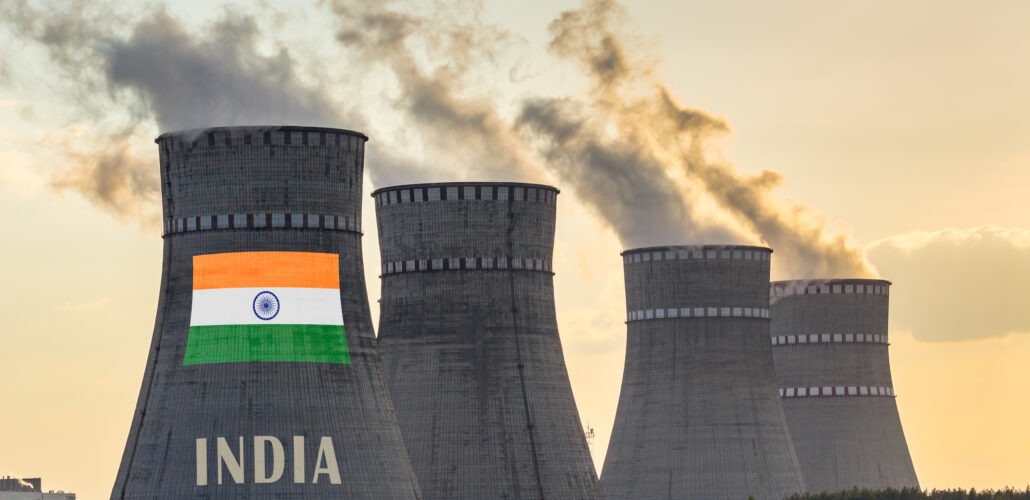
The Indian energy landscape reached a historic turning point on Wednesday, February 11, 2026. Adani Power Limited formally announced the creation of Adani Atomic Energy Limited (AAEL), a wholly-owned subsidiary dedicated to the generation, transmission, and distribution of nuclear power.
Add businessleague.in as a Preferred Source


This development signifies more than just a corporate expansion; it represents the first major private-sector response to the government’s radical deregulation of the atomic energy sector.
Also Read |Tamil Nadu Voter List Purge: 97 Lakh Names Deleted in SIR Phase 1
AAEL: The Corporate Blueprint for Adani’s Atomic Foray
Headquartered in Ahmedabad, the new entity commences with an initial authorized capital of ₹5 lakh, structured to scale as project clearances are secured.
-
100% Ownership: Adani Power retains total control of the subsidiary, ensuring the group’s infrastructure expertise is directly applied to nuclear projects.
-
Broad Mandate: AAEL is authorized to handle the entire value chain, from power generation to distribution, aligning with the group’s “pit-to-plug” strategy seen in its thermal and renewable businesses.
The SHANTI Act 2025: Breaking the State Monopoly
The formation of AAEL was made possible by the Sustainable Harnessing and Advancement of Nuclear Energy for Transforming India (SHANTI) Act, passed by Parliament in December 2025.
-
Repealing Old Laws: The Act repealed the Atomic Energy Act of 1962, which had previously restricted nuclear operations to the state-owned NPCIL.
-
Private Licensing: For the first time, Indian private conglomerates can now apply for licenses to build, own, and operate nuclear facilities.
-
Strategic Control: To maintain national security, the central government retains exclusive control over “sensitive” activities, including uranium enrichment and spent fuel reprocessing.
Also Read |Tamil Nadu Voter List Purge: 97 Lakh Names Deleted in SIR Phase 1
Small Modular Reactors (SMRs): Powering the AI Boom
Adani’s nuclear entry is strategically tied to its massive AdaniConneX data center platform. AI infrastructure requires massive “baseload” power that weather-dependent solar and wind cannot always provide.
-
The 1.6 GW Project: Reports indicate that Adani is scouting riverside sites in Bundelkhand, Uttar Pradesh, to deploy eight Bharat Small Modular Reactors (BSMR-200).
-
What are SMRs? Unlike traditional massive reactors, SMRs are compact, factory-built units. They are cheaper to construct and feature “passive safety” systems that shut down automatically without human intervention or external power.
Safety & Oversight: The Role of the Empowered AERB
Despite the privatization, the nuclear sector will remain the most regulated industry in India.
-
Statutory Independence: The SHANTI Act granted formal statutory status to the Atomic Energy Regulatory Board (AERB), making it an independent watchdog similar to SEBI or RBI.
-
The PPP Model: Industry insiders suggest a “Collaborative Model” where private firms like AAEL provide the capital and land, while NPCIL provides the trained nuclear engineers to run the reactors, ensuring that safety is never compromised for profit.
Also Read |Tamil Nadu Voter List Purge: 97 Lakh Names Deleted in SIR Phase 1
[NUCLEAR ENERGY MISSION: 2026-2047 TARGETS]
| Milestone | Target Capacity | Focus Area |
| 2026 (Current) | ~8.8 GW | State-run PHWRs |
| 2032 (Short-term) | 22.4 GW | Fleet mode completion |
| 2047 (Long-term) | 100 GW | SMRs & Private Participation |
Next Steps
If you are a retail investor in the power sector, you should watch for regulatory filings from the AERB regarding the first private site clearances, as these will trigger significant Capex cycles for the Adani Group. Furthermore, if you are a professional in the engineering sector, you should look into specialized nuclear certification programs, as the entry of private players like Adani and Reliance is expected to create over 50,000 high-skill jobs in nuclear supply chain management by 2030.
Also Read |Tamil Nadu Voter List Purge: 97 Lakh Names Deleted in SIR Phase 1
End…
Add businessleague.in as a Preferred Source
🙏 Support Independent Journalism
We keep news free for you.
Most readers support with ₹500 ❤️
or scan QR below

Voluntary contribution. No tax benefits.
DISCLAIMER
We have taken all measures to ensure that the information provided in this article and on our social media platform is credible, verified and sourced from other Big media Houses. For any feedback or complaint, reach out to us at businessleaguein@gmail.com