
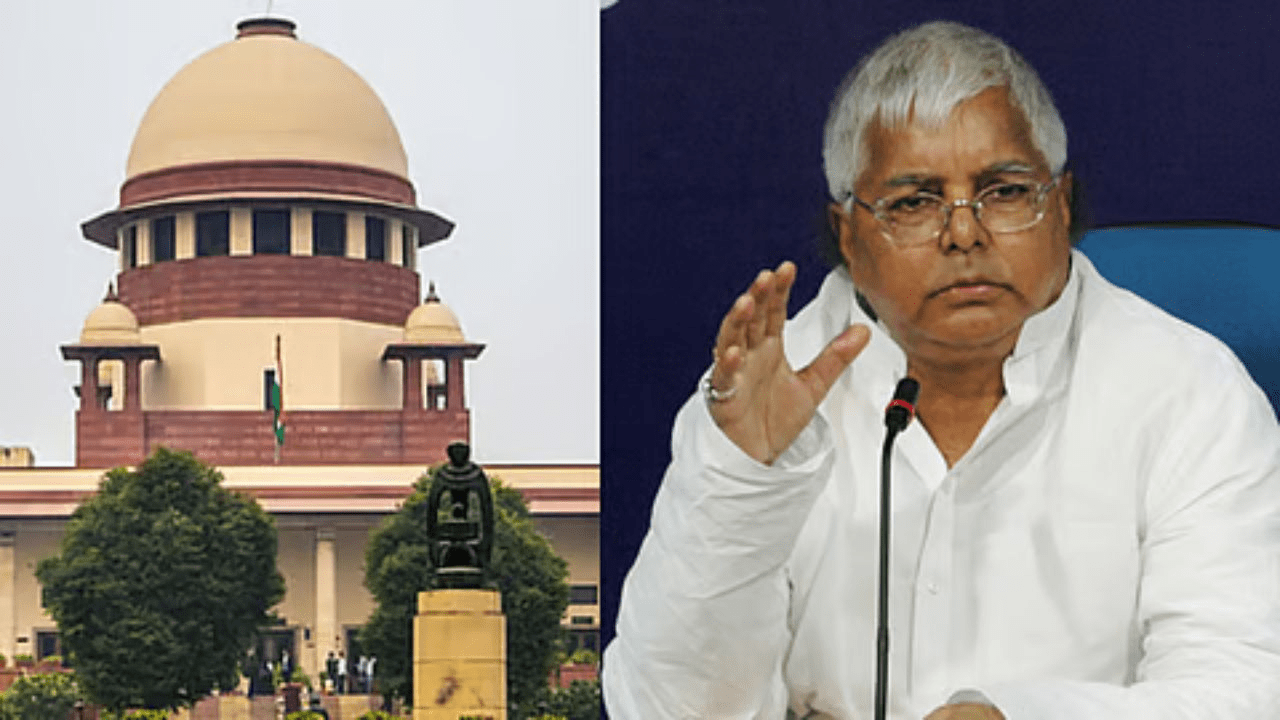
Now the legal landscape for the RJD patriarch has become increasingly complex as the highest court in the land weighs in on procedural technicalities. In a significant hearing this Monday, the Supreme Court refused to quash the Lalu Prasad job scam FIR 2026 registered by the CBI. First, the case involves allegations that land was taken in exchange for appointments during his tenure as the Union Railway Minister. Therefore, the bench of Justices M.M. Sundresh and N. Kotiswar Singh ruled that the investigation must proceed, though they granted some relief regarding personal appearances. Meanwhile, a heated debate has erupted over the necessity of prior government sanction under a specific 2018 amendment.
Add businessleague.in as a Preferred Source


Also Read |Tamil Nadu Voter List Purge: 97 Lakh Names Deleted in SIR Phase 1
Section 17A: The 2018 Amendment Shielding Public Servants
Now we must analyze the specific piece of legislation at the heart of this dispute. First, Section 17A was introduced to the Prevention of Corruption Act through an amendment in July 2018. Therefore, it was designed to prevent the “frivolous” prosecution of public servants by requiring prior approval from an appropriate authority before an inquiry begins.
Next, Lalu Prasad’s legal team argued that the CBI failed to obtain this sanction from the Centre. Thus, they contended that the Lalu Prasad job scam FIR 2026 was legally unsustainable from its inception.
Meanwhile, the court noted that the applicability of this section to offenses committed before 2018 remains a point of intense judicial debate. Therefore, the “shield” of Section 17A is being tested against the “sword” of a decade-old investigation. So the legal battle is now a fight over the timeline of justice.
The CBI Argument: Decision-Making vs. Influencing
So how does the agency justify bypassing the sanction requirement? First, Additional Solicitor-General S.V. Raju argued that Section 17A only applies if the accused was the actual “decision-making authority.” Therefore, the CBI claims that since Lalu was neither the one who took the final decision nor the recommending authority in the official files, no sanction was needed.
Next, this creates a nuanced legal distinction between “official decisions” and “political influence.” Thus, the Lalu Prasad job scam FIR 2026 is anchored on the claim that the influence was extra-constitutional.
Meanwhile, the agency is essentially trying to narrow the scope of the 2018 amendment to exclude ministers who “command” rather than “process.” Therefore, the outcome of this argument will have massive implications for other high-profile corruption cases currently under probe.
Kapil Sibal’s Defense: The Prospective Application Controversy
Now let’s look at the arguments presented by senior advocate Kapil Sibal. First, he asserted that the Delhi High Court erred in its previous observation that Section 17A applies “prospectively.” Therefore, the lower court had ruled that because the crimes happened between 2004 and 2009, the 2018 rule did not apply.
Next, Sibal argued that procedural safeguards should be available to the accused regardless of when the crime took place. Thus, the Lalu Prasad job scam FIR 2026 should have been quashed due to this procedural lapse.
Sibal’s Core Points:
-
Erroneous Setting: The Delhi HC ignored the inherent protections of the act.
-
Retrospective Need: Safeguards should protect against current investigations into past acts.
-
Due Process: The lack of a Central sanction makes the CBI’s move ultra vires.
Meanwhile, the Supreme Court has decided to let the trial court settle this specific dispute. Therefore, the “prospective vs. retrospective” debate will now be the primary focus of the lower court’s deliberations.
Also Read |Tamil Nadu Voter List Purge: 97 Lakh Names Deleted in SIR Phase 1
Trial Court Exemption: A Health-Based Consideration?
So what was the “silver lining” for the RJD chief? First, while the bench refused to quash the case, it exempted Lalu Prasad from appearing before the trial court in person. Therefore, he can now be represented by his legal team without the physical strain of multiple court visits.
Next, this move is widely seen as a consideration for his advanced age and known health issues. Thus, the Lalu Prasad job scam FIR 2026 proceedings will continue “in absentia” of the primary accused.
Meanwhile, this exemption does not weaken the case on its merits. Therefore, the legal burden remains exactly the same, but the logistical pressure on the former minister has been eased. So the “battle of the files” will happen without the “battle of the stairs.”
The Land-for-Jobs Allegations: A 2004-2009 Retrospective
Now we should remind ourselves of the core allegations of the case. First, the CBI claims that several people were appointed as substitutes in Group D of the Railways in return for land transferred to the Lalu family. Therefore, the “quid pro quo” was reportedly documented in the form of land deeds at undervalued rates.
Next, these alleged appointments took place during Lalu’s stint as Railway Minister from 2004 to 2009. Thus, the Lalu Prasad job scam FIR 2026 is reviving a saga of political patronage that is nearly two decades old.
Allegation Snapshot:
-
Period: 2004–2009.
-
Modus Operandi: Railway jobs given to residents of Patna in exchange for land.
-
Beneficiaries: Family members of the then-Railway Minister.
Meanwhile, the CBI has reportedly collected evidence of land parcels totaling thousands of square feet that changed hands. Therefore, the “land-for-jobs” tag remains the central investigative pillar of the current trial.
Justice Sundresh’s Observation: The Recommendation Loophole
So did the judges find a flaw in the CBI’s logic? First, Justice Sundresh made a critical observation that might trouble the agency later. Therefore, he pointed out that if the CBI’s own FIR states that Lalu “recommended” the appointments and “influenced” the process, it becomes hard to argue he wasn’t a decision-maker.
Next, this observation directly counters the ASG’s claim that Lalu was “neither the decision-maker nor the recommending authority.” Thus, the Lalu Prasad job scam FIR 2026 contains internal contradictions that the trial court must resolve.
Meanwhile, this indicates that the bench is aware of the potential “oversimplification” of the minister’s role by the CBI. Therefore, while they didn’t quash the case, they have handed the defense a significant “talking point” for the trial.
Also Read |Tamil Nadu Voter List Purge: 97 Lakh Names Deleted in SIR Phase 1
ASG SV Raju’s Stand: When Sanction is Not Required
Now let’s analyze the Additional Solicitor-General’s stance on the law. First, S.V. Raju argued that prior approval for prosecuting under Section 17A is not required if the act is “purely corrupt” and outside the scope of official duty. Therefore, he is trying to carve out a “corruption exception” to the sanction rule.
Next, he reiterated that the Railway Minister’s role in these specific Group D hirings was “informal and influential” rather than “official.” Thus, the Lalu Prasad job scam FIR 2026 shouldn’t be hampered by the need for a bureaucratic green light.
CBI’s Strategy:
-
Informal Power: Arguing that the influence was exercised outside the official file movement.
-
Sanction Barrier: Portraying Section 17A as a procedural hurdle that shouldn’t apply to “gross misconduct.”
-
Agency Autonomy: Defending the CBI’s right to probe historical scams without current government interference.
Meanwhile, this “informal influence” theory is what the defense plans to challenge most vigorously. Therefore, the trial will focus heavily on how much “official power” was actually used.
The Delhi High Court Precedent: What Happened in the Lower Court
Finally, why did the Delhi High Court set the stage for this SC battle? First, the High Court had previously dismissed Lalu’s petition for quashing by ruling that Section 17A only applied to offenses committed after the July 2018 amendment. Therefore, the “prospective only” ruling was the primary catalyst for the Supreme Court appeal.
Next, the High Court had observed that corruption cases cannot be derailed by new procedural shields that didn’t exist when the crime happened. Thus, the Lalu Prasad job scam FIR 2026 is now the definitive test case for this principle.
Meanwhile, the Supreme Court has not explicitly overturned this “prospective” view yet. Therefore, the current state of the law remains that Section 17A may not be a universal shield for old scams. So the RJD chief must now prepare for a full-scale trial on the facts.
Common Questions Answered
What happened to the Lalu Prasad job scam FIR 2026? Now the Supreme Court has refused to quash it. Therefore, the corruption case registered by the CBI regarding land-for-jobs allegations will proceed to trial.
What was Lalu Prasad’s primary argument in court? First, his team argued that the FIR should be quashed because the CBI did not get prior sanction under Section 17A of the Prevention of Corruption Act.
What is Section 17A? Next, it is a 2018 amendment that requires police to get government approval before investigating a public servant. Thus, Lalu’s team says the 2004-2009 probe should have followed this rule.
Did Lalu Prasad get any relief from the Supreme Court? So yes. While the case wasn’t quashed, he was exempted from appearing before the trial court in person. Therefore, he can handle the case through his lawyers.
Why did the CBI say they didn’t need a sanction? Finally, because they argued Lalu was an “influencing authority” rather than the “official decision-maker” in the Group D appointments. So they claim the 2018 rule doesn’t apply to him.
What is the ‘prospective application’ debate? Actually, it’s about whether a 2018 law can protect someone from crimes committed between 2004 and 2009. Therefore, the trial court will now decide if the shield works backwards.
Also Read |Tamil Nadu Voter List Purge: 97 Lakh Names Deleted in SIR Phase 1
End…
Add businessleague.in as a Preferred Source
🙏 Support Independent Journalism
We keep news free for you.
Most readers support with ₹500 ❤️
or scan QR below

Voluntary contribution. No tax benefits.
DISCLAIMER
We have taken all measures to ensure that the information provided in this article and on our social media platform is credible, verified and sourced from other Big media Houses. For any feedback or complaint, reach out to us at businessleaguein@gmail.com