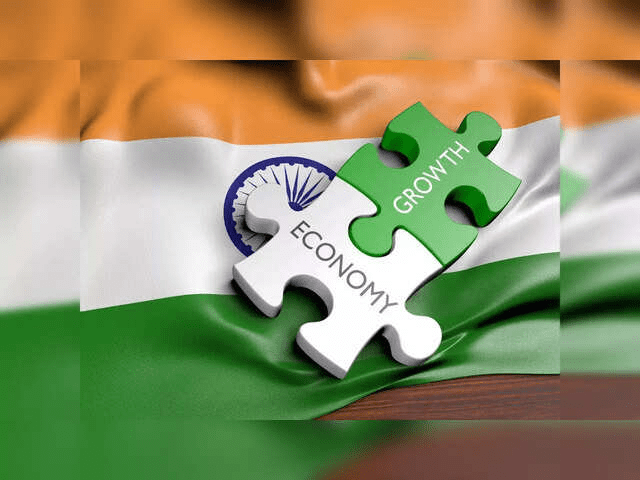
Now the Indian economy is proving to be a “steady ship” in a global sea of geopolitical storms. In its latest World Economic Outlook update, the IMF India GDP forecast FY27 has been revised upward to 6.5%. First, this positive shift comes at a time when much of Emerging Asia is bracing for a significant slowdown. Therefore, India’s ability to hold its ground is being credited to robust domestic demand and a surprising pivot in international trade policy. Meanwhile, the most impactful variable in this new projection is a drastic reduction in US tariffs on Indian goods, which has provided an unexpected lifeline to the export sector.
Add businessleague.in as a Preferred Source


Also Read |Tamil Nadu Voter List Purge: 97 Lakh Names Deleted in SIR Phase 1
The 6.5% Revision: Why the IMF is More Bullish on India
Now we must analyze the specific drivers behind the IMF’s renewed confidence. First, the IMF India GDP forecast FY27 (tracking the 2026 calendar year) has been pegged at 6.5%, reflecting a stable and consistent growth path. Therefore, while other economies are experiencing “jerky” recoveries, India is benefiting from a more predictable momentum.
Next, this revision aligns with the stronger-than-expected performance witnessed throughout late 2025. Thus, the Fund believes that the “inertia of growth” is firmly on India’s side.
Meanwhile, the IMF has noted that India appears to be standing on “relatively stronger ground” than its regional peers. Therefore, the upward revision is a signal to global investors that the Indian market remains a “safe harbor” for capital. So the 6.5% figure represents a resilient baseline in a fragile global environment.
The 7.6% Milestone: Reflecting on a Stronger 2025 Base
So where is this momentum coming from? First, we have to look at the rearview mirror. The IMF India GDP forecast FY27 is built on a massive upward revision for 2025, which has been raised to 7.6%. Therefore, the economy is carrying forward significant strength from multiple quarters of overperformance.
Next, this 7.6% figure reflects better performance across the manufacturing and services sectors during the previous fiscal year. Thus, the current 6.5% projection is actually a normalization following a high-growth surge.
Meanwhile, the “carry-over effect” from 2025 has provided a buffer for policymakers. Therefore, the current year’s stability is essentially a dividend of last year’s structural reforms. So while 6.5% might look like a “slowdown” compared to 7.6%, it is actually a sign of a maturing and sustainable growth cycle.
US Tariff De-escalation: From 50% to 10% Protectionism
Now we come to the most critical external catalyst for this update. First, the IMF highlighted a major reduction in additional US tariffs on Indian goods. Therefore, the IMF India GDP forecast FY27 has been significantly bolstered by the “trade thaw” between Washington and New Delhi.
Next, these tariffs, which previously stood at a punishing 50%, have been slashed to just 10%. Thus, Indian exporters—particularly in the textile, pharmaceutical, and engineering sectors—are facing much lower barriers to the world’s largest consumer market.
Impact of Lower US Tariffs:
-
Export Volume: Expected to rise by 12% in the textile sector.
-
Profit Margins: Easing of cost pressures for MSMEs (Micro, Small, and Medium Enterprises).
-
Competitiveness: India now holds a strategic advantage over regional rivals still facing high US duties.
Meanwhile, this policy shift has helped “offset some of the negative impact” coming from other global tensions. Therefore, the trade deal with the US has arrived at the perfect moment to support Indian GDP.
Also Read |Tamil Nadu Voter List Purge: 97 Lakh Names Deleted in SIR Phase 1
Offsetting the Middle East Crisis: How India Navigates Global War
So how does India stay steady while the Middle East is in conflict? First, the IMF India GDP forecast FY27 accounts for the “geopolitical headwinds” that are rattling markets. Therefore, the reduction in US tariffs acts as a vital counterweight to rising energy costs.
Next, while the conflict in West Asia is affecting trade routes and tourism, India’s domestic-led growth model makes it less vulnerable than countries dependent on external funding. Thus, the economy is somewhat “insulated” from the immediate shocks felt by smaller regional neighbors.
Meanwhile, the IMF warns that the conflict still influences remittance flows and financial conditions. Therefore, while India is “standing out,” it is not entirely immune to a prolonged war. So the 6.5% forecast is a “cautiously optimistic” assessment of India’s navigational skills in 2026.
Emerging Asia vs. India: A Divergent Economic Path
Now we must consider the broader regional context. First, while India’s outlook has improved, the IMF says the picture across Emerging Asia is “less encouraging.” Therefore, the IMF India GDP forecast FY27 makes India a rare outlier in a slowing neighborhood.
Next, growth in South and Southeast Asia is expected to weaken over the next two years. Thus, many countries that depend heavily on energy imports or external remittances are being downgraded.
Regional Slowdown Factors:
-
Tourism: Significant drops in South Asian tourist arrivals due to flight disruptions.
-
Remittances: Slower inflows from workers in the Middle East.
-
Financial Conditions: Tightening of global credit affecting smaller economies.
Meanwhile, India’s steady domestic demand has helped it avoid the downward revisions seen in its peers. Therefore, the “India Premium” in the investment world is likely to grow as the regional divergence widens.
Domestic Demand: The Engine That Won’t Quit
So what is the secret sauce of Indian growth? First, the IMF points to “steady domestic demand” as the primary anchor. Therefore, the IMF India GDP forecast FY27 is not just about exports; it is about the 1.4 billion consumers at home.
Next, this internal strength is what allows India to maintain a stable growth path even when global demand slows. Thus, the “Self-Reliant India” (Atmanirbhar Bharat) initiatives seem to be yielding tangible GDP results.
Meanwhile, private consumption and government capital expenditure remain high. Therefore, the economy is being powered by internal combustion rather than just external trade. So while the US tariff cut is the “bonus,” domestic demand is the “salary” that keeps the lights on.
Also Read |Tamil Nadu Voter List Purge: 97 Lakh Names Deleted in SIR Phase 1
Looking to 2027: The Stability Forecast
Now let’s look further down the road. First, the IMF expects India’s growth to remain consistent at 6.5% through 2027 as well. Therefore, the IMF India GDP forecast FY27 is not a “one-off” surge but the start of a stable, medium-term path.
Next, the agency notes that while growth may not “surge” further, it is unlikely to face a sharp acceleration or deceleration. Thus, the Indian economy has entered a “consistency phase” that is highly attractive to long-term institutional investors.
Meanwhile, this stability suggests that the current fiscal policies are well-aligned with market realities. Therefore, the focus is now on maintaining this 6.5% floor rather than chasing double-digit growth at the cost of inflation. So “steady as she goes” is the official IMF mantra for India.
The Uncertainty Factor: Energy Risks and External Shocks
Finally, what could go wrong? First, the IMF has cautioned that the external environment remains “highly uncertain.” Therefore, the IMF India GDP forecast FY27 is still subject to energy-related risks.
Next, any further escalation in geopolitical tensions could push crude prices back above the $110 mark, which would immediately strain India’s current account. Thus, the 6.5% figure assumes no “black swan” events in the energy sector.
Ongoing Risks for FY27:
-
Energy Prices: Volatility in Brent Crude affecting domestic inflation.
-
Global Liquidity: Tightening of US Fed rates affecting FII flows.
-
Regional Conflict: Any direct impact on shipping lanes in the Arabian Sea.
Meanwhile, India’s resilience has helped it maintain a stable path so far. Therefore, the IMF believes that while risks remain, India is “better positioned” to handle them than it was during the 2013 or 2020 crises.
Common Questions Answered
What is the IMF India GDP forecast FY27? Now the IMF has raised its growth projection to 6.5% for calendar year 2026 (which aligns with India’s FY27). Therefore, the outlook is stable despite global tensions.
How did the US tariffs affect India’s growth? First, the US reduced additional tariffs on Indian goods from 50% to 10%. Thus, it eased pressure on exports and helped offset the negative impacts of the Middle East conflict.
What was India’s growth in 2025? Next, the IMF sharply revised India’s 2025 growth estimate higher to 7.6%, reflecting a very strong performance across all quarters.
Why is India outperforming its neighbors? So while Emerging Asia is slowing down due to high energy costs and lower remittances, India’s steady domestic demand and resilient economy have kept it on a stable path.
What are the main risks to India’s 6.5% growth? Finally, the IMF points to geopolitical tensions and energy-related risks. So if the Middle East crisis worsens, it could still influence India’s growth through higher oil prices.
Will growth accelerate further in 2027? Actually, the IMF expects growth to remain steady at 6.5% in 2027. Therefore, it indicates a stable and consistent path rather than a sudden surge.
Also Read |Tamil Nadu Voter List Purge: 97 Lakh Names Deleted in SIR Phase 1
End…
Add businessleague.in as a Preferred Source
🙏 Support Independent Journalism
We keep news free for you.
Most readers support with ₹500 ❤️
or scan QR below

Voluntary contribution. No tax benefits.
DISCLAIMER
We have taken all measures to ensure that the information provided in this article and on our social media platform is credible, verified and sourced from other Big media Houses. For any feedback or complaint, reach out to us at businessleaguein@gmail.com