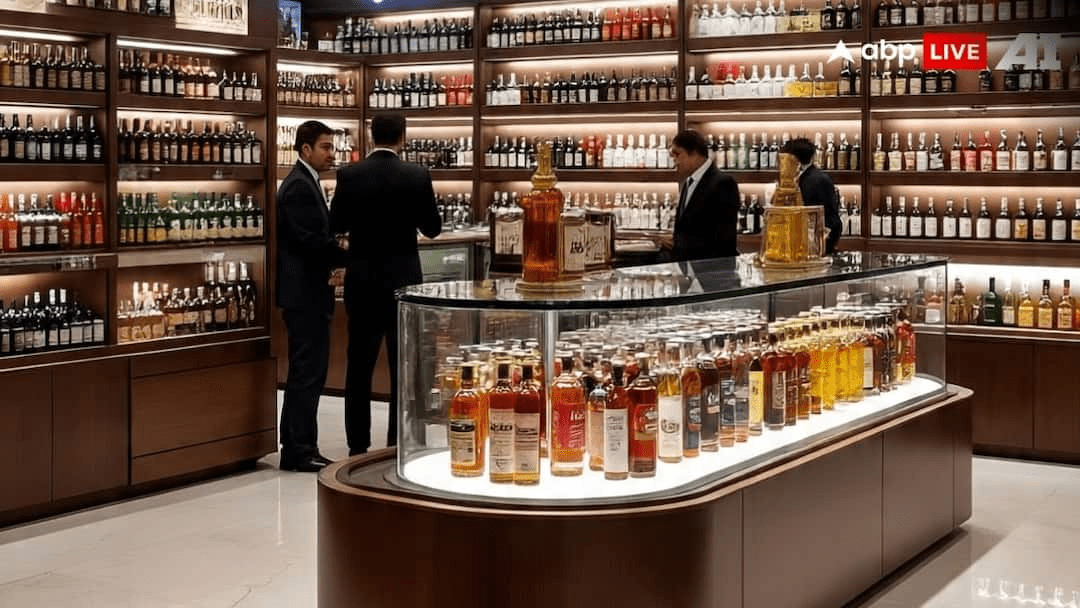
Now the spirits and brewery sectors in South India are bracing for a massive policy shift. The Karnataka government has proposed a comprehensive overhaul of its liquor taxation framework. Therefore, the state is moving away from a price-based model toward an “Alcohol-in-Beverage” (AIB) system. This move has triggered a mixed response from industry bodies. Specifically, brewers have welcomed the change as a “watershed moment,” while distillers warn of an impending price hike for mass-market consumers.
Add businessleague.in as a Preferred Source


Meanwhile, the stock market reacted positively, with shares of major liquor companies like United Breweries and Radico Khaitan rising by up to 3%.
But for the common consumer, the “per-peg” cost of a 180 ml bottle is likely to see another jump.
Also Read |Tamil Nadu Voter List Purge: 97 Lakh Names Deleted in SIR Phase 1
What is the Alcohol-in-Beverage (AIB) Framework?
Now we must understand the technical heart of this proposal. The AIB framework defines tax based on the actual volume of pure alcohol in a drink. Therefore, the tax is no longer tied strictly to the Maximum Retail Price (MRP).
First, the government defines AIB as the alcohol content per litre of liquor. Then, this applies to everything from Brandy and Whisky to Beer and Fruit Wine. Thus, the state aims to align its revenue goals with international best practices.
Next, the uniform duty is set at ₹1,000 per litre of pure alcohol for spirits supplied to distributors. Therefore, a drink with higher alcohol content will naturally attract a higher tax, regardless of its brand name.
Brewers Association Hails “Watershed Moment” for Health
Now the Brewers Association of India has been the loudest supporter of the draft rules. Vinod Giri, the director general, described the move as a landmark decision. Therefore, the Karnataka liquor tax overhaul 2026 is seen as a victory for those advocating for lower-alcohol beverages.
Public Health Alignment
First, the AIB system explicitly links revenue goals with public health outcomes. Then, it encourages the consumption of beverages with lower alcohol percentages, such as beer and wine. Thus, it follows World Health Organization (WHO) recommendations on discouraging high-strength spirits.
Next, Giri noted that Karnataka is the first state in India to explicitly implement this model. Therefore, the state is being positioned as a leader in “responsible taxation.”
Mass-Market Impact: Why Distillers are Concerned
Now not everyone is celebrating the new draft. The Karnataka Brewers and Distillers Association has raised red flags regarding affordability. Therefore, they fear that the move might alienate lower-income consumers.
The Affordability Crisis
First, the proposed changes could lead to significantly higher retail prices. Then, this would hit the most commonly consumed liquor categories. Thus, the President of the association, Arun Kumar Parasa, intends to take the issue to the Chief Minister.
Next, distillers argue that a uniform tax on pure alcohol ignores the diverse economic profiles of consumers. Therefore, they expect the government to rethink the “unintended consequences” of the 2026 regime.
Also Read |Tamil Nadu Voter List Purge: 97 Lakh Names Deleted in SIR Phase 1
Retail Price Projection: From ₹95 to ₹110
Now the math for the consumer is quite stark. Currently, the liquor pricing follows a slab-based system linked to MRP. Therefore, lower-income consumers currently benefit from lower tax slabs.
The Cost of a Peg
First, a standard 180 ml bottle rose from ₹80 to ₹95 last year. Then, under the AIB model, this could jump further to ₹105 or ₹110. Thus, the first four slabs of the current system—which serve 80% of the market—will face the most pain.
Next, these categories typically contain an average alcohol content of 42.8%. Therefore, taxing them at ₹1,000 per litre of pure alcohol creates a massive price delta at the retail counter.
Draft Rules: Price Deregulation and 24-Hour Operations
Now the overhaul isn’t just about tax; it’s about ease of doing business. The draft rules published in the gazette on April 18 include several pro-industry measures. Therefore, the long-term outlook for the sector remains optimistic.
Modernizing the Sector
First, the government is proposing price deregulation for certain categories. Then, they are introducing 24-hour operations for breweries and distilleries. Thus, production capacity can be maximized without bureaucratic hurdles.
Next, the rules support brewery-linked tourism and automatic license renewals. Therefore, Karnataka is looking to monetize the “lifestyle” aspect of the beverage industry.
-
Online Approvals: Moving away from paper-based excise permits.
-
Automatic Renewals: Reducing the annual “license raj” pressure.
-
Tourism: Encouraging microbreweries to become tourist destinations.
Slab-Based vs. AIB: Comparing the Two Systems
Now it is important to see the shift in logic. The current slab-based system is “Ad Valorem,” meaning it is based on value. Therefore, expensive brands pay more because they cost more.
The Logic Shift
First, the AIB system is “Specific,” meaning it is based on a measurable quantity (alcohol). Then, a premium whisky and a budget whisky might pay similar taxes if their alcohol percentages are the same. Thus, the “brand tax” is being replaced by a “potency tax.”
Next, this model is already used in several Western countries. Therefore, the Karnataka liquor tax overhaul 2026 is an experiment in bringing global standards to the Indian heartland.
Also Read |Tamil Nadu Voter List Purge: 97 Lakh Names Deleted in SIR Phase 1
Excise Revenue: The 80% Dependency Factor
Now the state government is walking a tightrope. The categories that will be most affected by the AIB system account for 80% of the state’s excise revenue. Therefore, any drop in consumption could hurt the public exchequer.
Maximizing the Goal
First, the government aims to maximize revenue while maintaining public health. Then, if consumers move toward beer (lower tax per bottle) but consume more of it, the revenue might stabilize. Thus, the shift is a calculated gamble on consumer behavior.
Next, officials are monitoring the impact on military and paramilitary canteens. Therefore, institutional buyers will continue to be taxed based on volume to protect their benefits.
Timelines: Seven Days for Public Objections
Now the window for feedback is very short. The notification was published in the state gazette on April 18. Therefore, stakeholders have only seven days to submit their objections and suggestions.
Finalization Steps
First, the government will review the industry feedback after the seven-day period. Then, the rules will be finalized and implemented across the state. Thus, we can expect the new prices to take effect as early as May 2026.
Next, investors are already betting on the “efficiency” of the new rules. Therefore, the stock rally for United Breweries and Tilaknagar Industries is a sign of market confidence.
Common Questions Answered
What is the AIB liquor tax in Karnataka? Now it stands for Alcohol-in-Beverage. It is a new system that taxes liquor based on the volume of pure alcohol rather than the retail price.
Will liquor prices increase in Karnataka in 2026? First, yes. Distillers warn that standard 180 ml bottles could rise to ₹110. Therefore, the lower-income segments will be the most affected.
Why are brewers supporting the move? Next, it aligns with global best practices and rewards lower-alcohol beverages like beer. Thus, it promotes a healthier drinking culture.
Are breweries going to operate 24/7 now? So yes, the draft rules propose 24-hour operations and automatic license renewals to improve ease of doing business.
When will the new Karnataka liquor tax be finalized? Finally, the government has invited suggestions until April 25. Therefore, a final notification is expected shortly after.
Also Read |Tamil Nadu Voter List Purge: 97 Lakh Names Deleted in SIR Phase 1
End…
Add businessleague.in as a Preferred Source
🙏 Support Independent Journalism
We keep news free for you.
Most readers support with ₹500 ❤️
or scan QR below

Voluntary contribution. No tax benefits.
DISCLAIMER
We have taken all measures to ensure that the information provided in this article and on our social media platform is credible, verified and sourced from other Big media Houses. For any feedback or complaint, reach out to us at businessleaguein@gmail.com