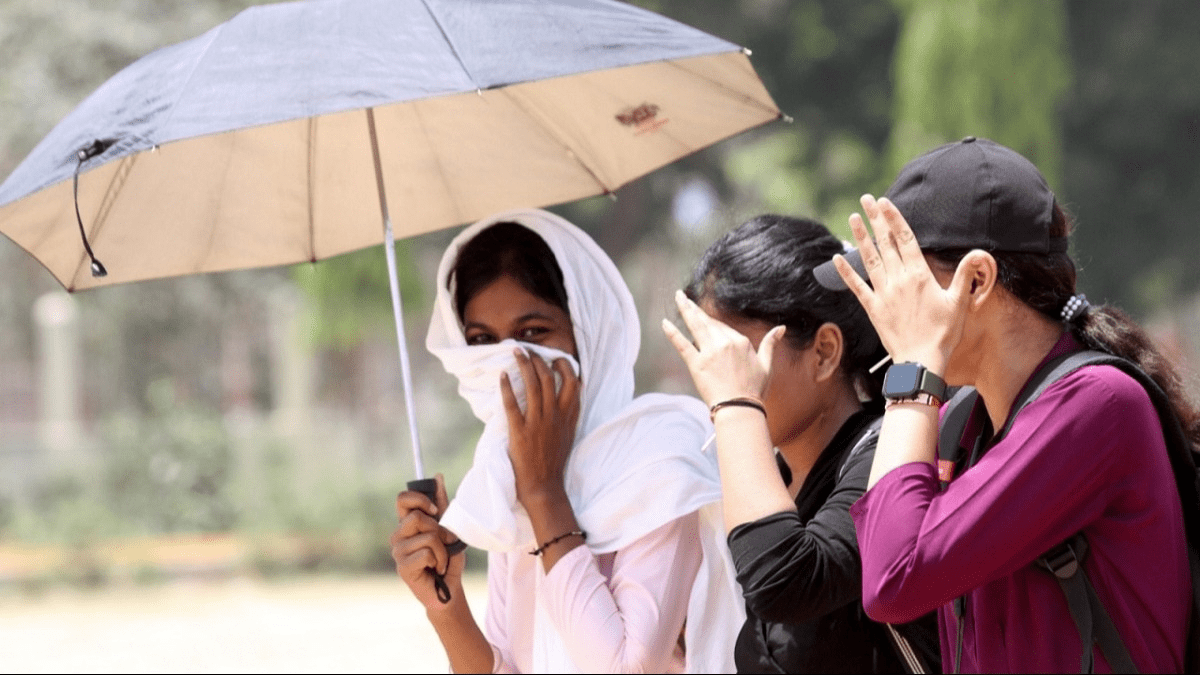
Now the Indian summer is preparing to test the nation’s resilience. The India Meteorological Department (IMD) has officially warned of an increased frequency of heatwave days from April to June 2026. Therefore, several regions across the country must brace for temperatures exceeding the 40°C mark. Specifically, the Indo-Gangetic plains and western states like Gujarat and Maharashtra are expected to be the most affected.
Add businessleague.in as a Preferred Source


Meanwhile, the IMD is deploying innovative communication strategies to protect vulnerable populations.
But with the monsoon still months away, the immediate focus is on survival and adaptation.
Also Read |Tamil Nadu Voter List Purge: 97 Lakh Names Deleted in SIR Phase 1
High-Risk Regions for Heatwaves in 2026
Now the geography of the 2026 heatwave is becoming clear. Northern parts of the Indo-Gangetic plains are at the top of the risk list. Therefore, millions of residents in these densely populated areas will face higher-than-normal heat days.
First, the eastern coastal states are expected to see a significant surge in frequency. Then, the western states of Gujarat and Maharashtra will experience adjoining thermal pressure. Thus, the heat is not just a local issue but a multi-state phenomenon.
Next, even regions that don’t technically hit “heatwave” status will still see extreme discomfort. Therefore, the IMD is urging local governments to activate their Heat Action Plans (HAPs) immediately.
Vidarbha and the Indo-Gangetic Plains: 44°C Thresholds
Now we must look at the specific numbers that define this crisis. Mrutyunjay Mohapatra, Director General of the IMD, highlighted the normal baselines for May. Therefore, any variation above these already high levels is dangerous.
Extreme Baselines
First, the Vidarbha region in Maharashtra typically sees 41°C to 42°C at this time. Then, in states like Uttar Pradesh and Haryana, the mercury touches 40°C to 44°C in May. Thus, even a “normal” day in these regions is physically taxing.
Next, when a heatwave is officially declared, these numbers climb even higher. Therefore, the risk of heatstroke and dehydration becomes a critical public health concern.
“Therefore, we should be prepared for such high-temperature days,” Mohapatra warned.
How the IMD is Using WhatsApp to Protect Laborers
Now the IMD is recognizing that traditional media may not reach everyone. They have started setting up dedicated WhatsApp groups for associations. Therefore, information is flowing directly to those who need it most.
Direct Communication
First, rickshaw pullers, street vendors, and domestic workers requested better access to data. Then, the IMD began providing forecast information to association secretaries. Thus, the secretaries can forward alerts to thousands of members instantly.
Next, these alerts include “expected actions” to be taken. Therefore, workers can decide to shift their hours or find shade before the peak heat hits.
So the goal is to bridge the “last-mile” gap in weather communication.
Also Read |Tamil Nadu Voter List Purge: 97 Lakh Names Deleted in SIR Phase 1
NDMA’s Common Alert Protocol: Technology for All
Now the high-tech side of the warning system is equally robust. The IMD works with the National Disaster Management Authority (NDMA). Therefore, the “Common Alert Protocol” is the backbone of the 2026 safety strategy.
Mobile Safety
First, this protocol enables any person with a mobile phone to receive emergency alerts. Then, it uses location-based targeting to send specific warnings to affected districts. Thus, you don’t need to be following the news to know a heatwave is coming.
Next, display boards are being put up in public spaces. Therefore, those without smartphones can still see the expected temperature and safety precautions.
Meanwhile, the IMD is exploring “traditional means” like local announcements for deep rural areas.
Climate Outlook: The March-June Temperature Roadmap
Now look at the timeline of the IMD’s planning. They began issuing the 2026 summer outlook as early as February. Therefore, the current warnings are based on months of data collection.
Predictive Precision
First, the initial outlook for March-May was updated in late March to include June. Then, the department began providing “extended range” outlooks valid for four weeks. Thus, every Thursday, the nation gets a fresh look at the month ahead.
Next, these updates help agricultural sectors plan their irrigation cycles. Therefore, the heatwave forecast is as much about food security as it is about human safety.
District-Level Warnings and Extended Range Forecasts
Now the granularity of the data has improved significantly in 2026. The IMD provides a seven-day warning every single day at the district level. Therefore, local administrations have the specific data they need for their towns.
Operational Flexibility
First, a district-level focus allows for more accurate local messaging. Then, the extended range outlook provides a broader strategic view for the next 28 days. Thus, both short-term and long-term planning are supported.
Next, this system helps power grids manage the massive surge in cooling demand. Therefore, preventing blackouts during 44°C peaks is a top priority for the government.
So the 2026 system is more reactive than ever before.
Also Read |Tamil Nadu Voter List Purge: 97 Lakh Names Deleted in SIR Phase 1
Impact on Outdoor Workers and Street Vendors
Now we must consider the human cost of these “heatwave days.” Outdoor workers are on the front lines of the climate crisis. Therefore, the IMD’s focus on this sector is vital.
Risk Mitigation
First, laborers in fields and construction sites face the highest risk of heat exhaustion. Then, street vendors often have no choice but to stay in the sun to earn a living. Thus, providing them with timely data allows them to take necessary breaks.
Next, the IMD is encouraging companies to implement “cool-down” periods for their outdoor staff. Therefore, the forecast is becoming a tool for labor rights and workplace safety.
Regional Breakdown: South West Bengal to Telangana
Now let’s look at the specific eastern corridor risks. Heatwave conditions are expected in many places, especially in the north coastal states. Therefore, the humidity in these regions will make the “apparent temperature” feel even higher.
Eastern Coastal Risk
-
West Bengal: Southern parts are at high risk.
-
Odisha & Andhra Pradesh: Coastal areas to see increased heat days.
-
Telangana & Chhattisgarh: Adjoining inland areas to face similar surges.
First, the humidity on the coast prevents sweat from evaporating effectively. Then, the “Wet Bulb” temperature rises, making it dangerous for the body to cool down. Thus, the 2026 forecast for the East Coast is particularly concerning.
Common Questions Answered
Which months will see the most heatwaves in 2026? Now the IMD has warned of increased heatwave frequency specifically during April, May, and June.
Which states are at the highest risk? First, Uttar Pradesh, Haryana, Bihar, and Jharkhand in the North. Then, Gujarat, Maharashtra, West Bengal, Odisha, and Andhra Pradesh are also in the high-risk zones.
What is the peak temperature expected? Next, regions like Vidarbha and Haryana are expected to see temperatures between 40°C and 44°C, with potential spikes during peak heatwave days.
How can I get heatwave alerts on my phone? So you can receive alerts through the NDMA’s Common Alert Protocol. Additionally, many worker associations have WhatsApp groups linked to the IMD.
Is the monsoon expected to be delayed? Finally, the IMD mentions higher temperatures are expected before the “advance of the monsoon” in June, but a specific monsoon onset date will be released later.
Also Read |Tamil Nadu Voter List Purge: 97 Lakh Names Deleted in SIR Phase 1
End…
Add businessleague.in as a Preferred Source
🙏 Support Independent Journalism
We keep news free for you.
Most readers support with ₹500 ❤️
or scan QR below

Voluntary contribution. No tax benefits.
DISCLAIMER
We have taken all measures to ensure that the information provided in this article and on our social media platform is credible, verified and sourced from other Big media Houses. For any feedback or complaint, reach out to us at businessleaguein@gmail.com