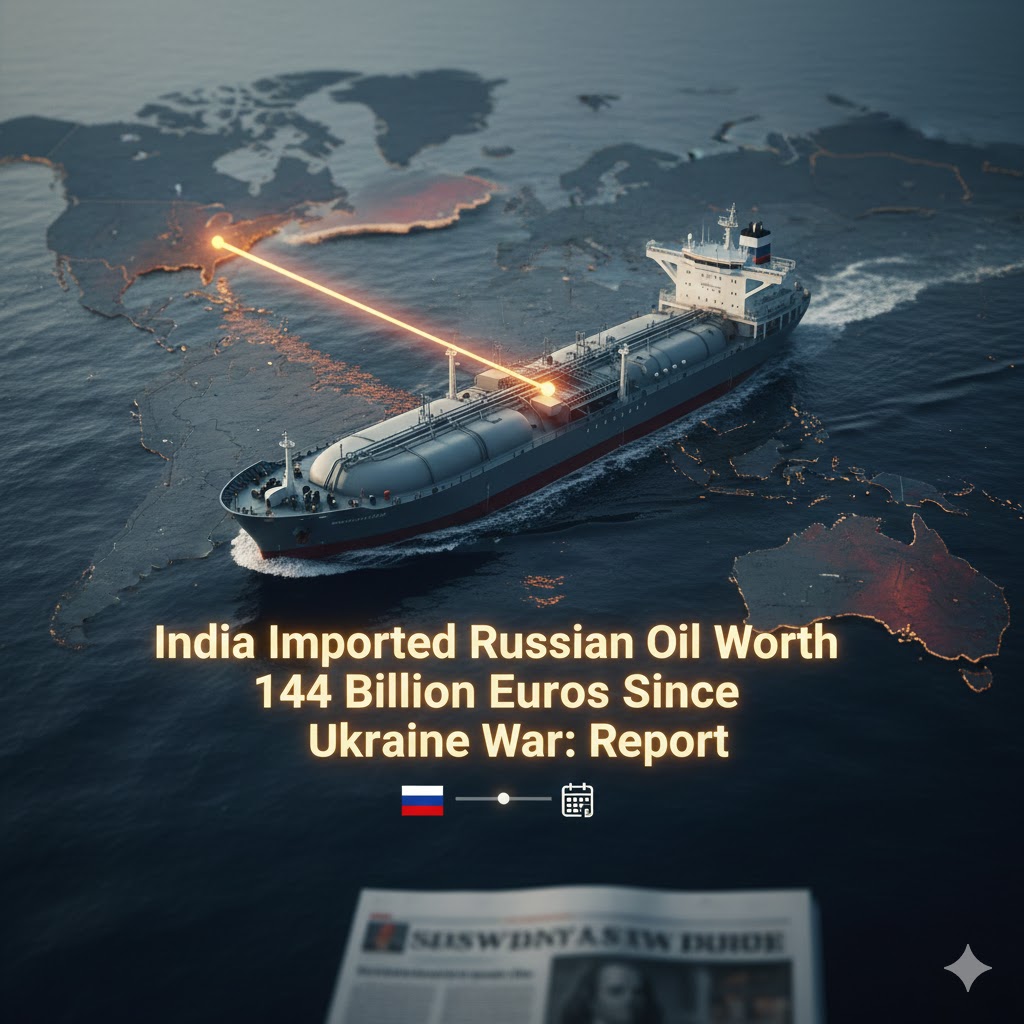
India Spends €144 Billion on Russian Oil: Second Only to China
According to a new report by the Centre for Research on Energy and Clean Air (CREA) released on January 6, 2026, India has imported approximately €144 billion ($157 billion) worth of crude oil from Russia since the start of the Ukraine war in February 2022.
Add businessleague.in as a Preferred Source


Despite mounting Western sanctions, Russia’s global fossil fuel earnings have hit a staggering €1 trillion ($1.09 trillion) milestone as of January 2026, with India and China serving as the primary pillars of this trade.
Also Read | Retirement Planning: Why does the 4% ‘fire’ rule not work in India, what changes can be made in it?
1. Global Leaderboard of Russian Energy Buyers
Since February 24, 2022, three major entities have accounted for the bulk of Russia’s fossil fuel revenue.
| Region | Total Fossil Fuel Spend | Primary Fuel | Amount (Oil/Gas/Coal) |
| China | €293.7 Billion | Oil | €210.3bn Oil |
| European Union | €218.1 Billion | Gas | €108.2bn Gas |
| India | €162.5 Billion | Oil | €143.9bn Oil |
Key Insight: While the EU has drastically cut oil imports, it remains a major consumer of Russian gas, which remains largely unsanctioned.3 Conversely, India’s purchases are almost exclusively crude oil and coal.
Also Read | Retirement Planning: Why does the 4% ‘fire’ rule not work in India, what changes can be made in it?
2. The Recent Slump: US Sanctions Impact (2025–26)
While India’s share of Russian oil peaked at nearly 40% of its total crude basket in 2023, it has seen a sharp decline following fresh US sanctions on November 22, 2025.
-
Daily Purchases: Dropped to €72.92 million in early January 2026, down from a peak of €189.07 million in July 2023.
-
Corporate Shift: Major private refiners like Reliance Industries and state-run HPCL have paused imports from sanctioned entities like Rosneft and Lukoil to avoid secondary sanctions and 100% tariff threats from the US.
-
The “Shadow Fleet”: Despite the slowdown, trade continues through a “shadow fleet” of aging tankers and non-sanctioned intermediaries like Tatneft and Alghaf Marine.
Also Read | Retirement Planning: Why does the 4% ‘fire’ rule not work in India, what changes can be made in it?
3. The “Refining Loophole”
CREA notes that while the EU and G7 have banned direct Russian oil, they continue to fund the Kremlin indirectly.
-
The Process: India imports discounted Russian crude, refines it into diesel or jet fuel at facilities like Reliance’s Jamnagar, and exports the finished products back to the EU, US, and Australia.
-
Policy Change: As of January 2026, new EU compliance guidelines aim to tighten this “loophole,” though enforcement remains complex.
Also Read | Retirement Planning: Why does the 4% ‘fire’ rule not work in India, what changes can be made in it?
Add businessleague.in as a Preferred Source
We have taken all measures to ensure that the information provided in this article and on our social media platform is credible, verified and sourced from other Big media Houses. For any feedback or complaint, reach out to us at businessleaguein@gmail.com