
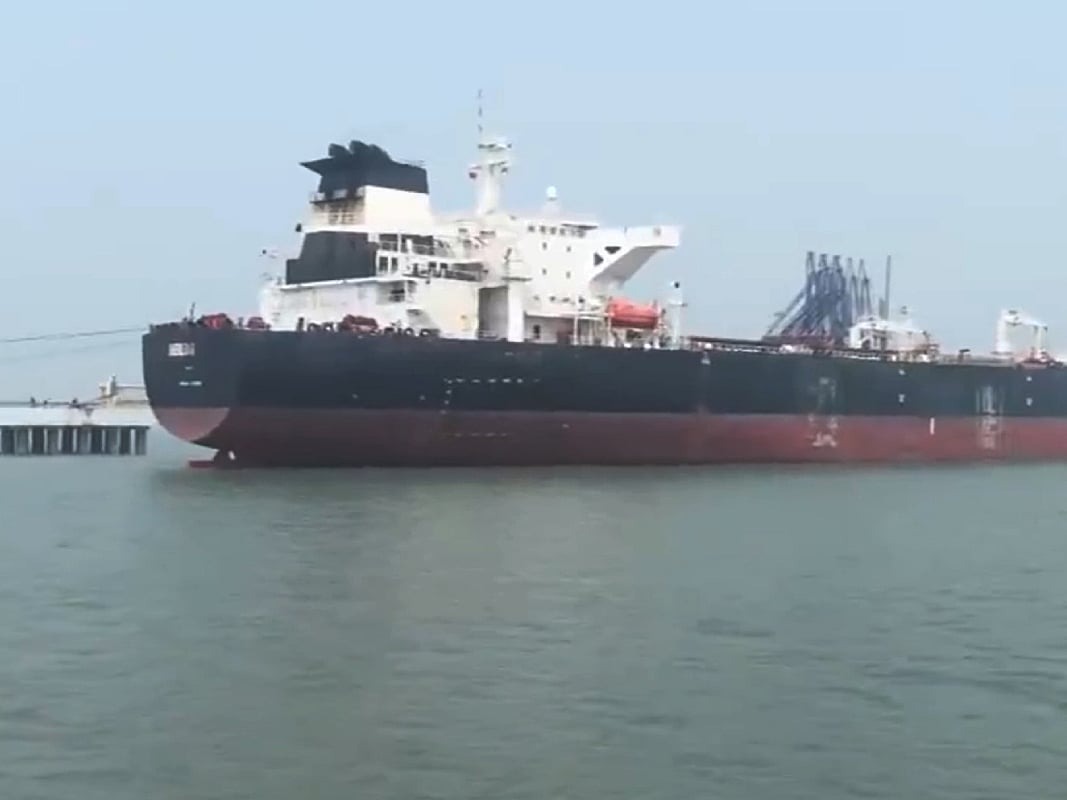
In an era where global trade relies almost entirely on satellite precision, the voyage of the Shenlong stands as a testament to raw human skill. On Friday, March 13, 2026, as the tanker prepares to depart Mumbai, the 29-member crew shared harrowing details of their journey through the Strait of Hormuz—the world’s most perilous waterway.
Add businessleague.in as a Preferred Source


While Iran has choked the transport of energy supplies for most nations, the Shenlong navigated through a “electronic fog” of GPS jamming and spoofing, successfully delivering a vital lifeline of crude oil to an India currently gripped by an energy crisis.
Also Read |Tamil Nadu Voter List Purge: 97 Lakh Names Deleted in SIR Phase 1
Sailing Blind: The Battle Against GPS Jamming
The most significant hurdle wasn’t just the threat of physical missiles, but the total loss of electronic navigational equipment.
-
Electronic Warfare: Both the Captain and the Second Officer confirmed that GPS signals were lost multiple times due to spoofing and jamming in the conflict zone.
-
The Old Ways: Captain Sandhu, a resident of Mohali, utilized “secondary options” and traditional seamanship to navigate the Suezmax vessel—techniques largely abandoned in modern commercial shipping.
-
Visual Cues: While fighter jets were spotted overhead in Saudi airspace, the crew had to rely on visual lookouts and manual charting to ensure they didn’t drift into hostile waters or collide with wreckage.
The Crew: A Multinational Effort Amidst War
The ship’s 29-man crew—consisting of Indian, Pakistani, and Filipino nationals—remained united under the Captain’s leadership.
-
The Karachi Connection: Third Officer Osman Arshad from Pakistan noted that despite the geopolitical tensions between their nations, the shared goal of survival and national duty kept the crew focused.
-
Mental Toll: Many crew members reported high stress due to the “uncertainties” of the voyage. Arshad mentioned he is taking a four-month vacation to recover once his contract expires.
Route & Risks: From Ras Tanura to Mumbai
The Shenlong left the Ras Tanura terminal in Saudi Arabia on March 3, right at the onset of the escalation.
-
The Transit: For a brief period, the ship’s AIS (Automatic Identification System) went dark, leading to speculation about its safety before it reappeared on the Indian coastline.
-
Strategic Cargo: The 1.35 lakh metric tonnes of crude is being pumped to refineries in Mahul, eastern Mumbai, providing a much-needed boost to the city’s fuel reserves.
Also Read |Tamil Nadu Voter List Purge: 97 Lakh Names Deleted in SIR Phase 1
Destination Fujairah: Returning to the Red Zone
The return journey is equally fraught with risk.
-
Fujairah Port: Located on the eastern coast of the UAE, Fujairah serves as a major refueling hub outside the Strait.
-
Recent Attacks: Just days ago, on March 9, drone interceptions sparked fires at the Fujairah storage terminals, proving that even “non-Hormuz” ports are now within the combat zone.
Reality Check
The successful arrival of the Shenlong and the upcoming Smyrni proves that “grey zone” shipping is still possible. Still, these are isolated victories. Therefore, while India has secured some crude, the GPS-jammed environment means that only the most seasoned captains are willing to make the run. In fact, insurance premiums for such voyages have likely quintupled, which will eventually be reflected in the petrol and diesel prices at your local pump.
The Loopholes
The government says the supply position is “secure.” In fact, this is a “Courage Loophole”—the supply is only secure as long as merchant crews are willing to risk their lives in a GPS-jammed war zone. Therefore, the “diversification” mentioned by officials is heavily dependent on the bravery of individuals rather than a stable logistics network. Still, the “AIS Loophole” remains; by turning off transponders, tankers like the Shenlong are essentially “ghosting” their way across the sea, which prevents missile locks but significantly increases the risk of ship-to-ship collisions in the narrow strait.
Also Read |Tamil Nadu Voter List Purge: 97 Lakh Names Deleted in SIR Phase 1
What This Means for You
If you are seeing fuel prices hold steady today, thank the crew of the Shenlong. First, realize that this single shipment represents enough crude to power millions of vehicles for several days. Then, if you are an investor in shipping or energy, understand that GPS-resilient navigation technology will become a massive new market for maritime firms in 2026.
Finally, understand that supply is still “thin.” You should continue to avoid unnecessary travel and hoarding, as the frequency of these “ghost tankers” is not yet enough to replace the lost daily volume from the Gulf. Before you celebrate the Smyrni’s arrival tomorrow, check if global Brent crude stays above $100, as that will dictate the long-term price regardless of these successful individual transits.
What’s Next
The Shenlong departs Mumbai tonight for Fujairah. Then, look for the Smyrni to berth at Butcher Island on Saturday morning. Finally, expect the Ministry of Shipping to issue new “War Zone Navigation Guidelines” to Indian-flagged vessels to help them manage GPS-denied environments.
Also Read |Tamil Nadu Voter List Purge: 97 Lakh Names Deleted in SIR Phase 1
End….
Add businessleague.in as a Preferred Source
🙏 Support Independent Journalism
We keep news free for you.
Most readers support with ₹500 ❤️
or scan QR below

Voluntary contribution. No tax benefits.
DISCLAIMER
We have taken all measures to ensure that the information provided in this article and on our social media platform is credible, verified and sourced from other Big media Houses. For any feedback or complaint, reach out to us at businessleaguein@gmail.com