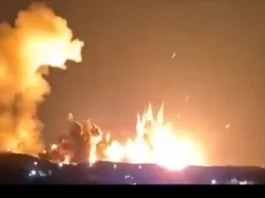
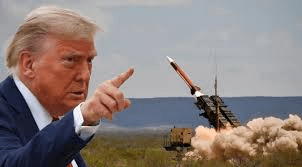
Now the US administration has bypassed traditional congressional review to finalize a massive defense package. On May 1, 2026, the State Department approved over $8.6 billion in arms sales to key Middle Eastern allies. Therefore, Israel and Gulf nations will receive advanced missile defense and precision weapons. Meanwhile, President Trump has informed lawmakers that the war against Tehran is now officially “terminated.”
Add businessleague.in as a Preferred Source


Also Read |Tamil Nadu Voter List Purge: 97 Lakh Names Deleted in SIR Phase 1
Strategic Arms Package: Who Gets What in the $8.6B Deal?
Now we must look at the specific distribution of this massive military investment. The US State Department finalized these approvals on Friday, May 1. Therefore, the strategic balance in West Asia is about to receive a significant technological boost.
First, Qatar is the largest beneficiary, receiving $4.01 billion for Patriot air and missile defense replenishment. Next, Kuwait has been approved for a $2.5 billion integrated battle command system. Thus, the Gulf allies are hardening their defenses against potential retaliatory drone or missile strikes.
Meanwhile, Israel and the UAE are receiving Advanced Precision Kill Weapon Systems (APKWS). Specifically, Israel’s portion is worth $992.4 million. Therefore, the focus remains on surgical strike capabilities and air defense.
So what are the primary contractors involved?
First, BAE Systems will handle the APKWS sales for Qatar, Israel, and the UAE. Next, RTX and Lockheed Martin are the lead contractors for the Patriot services in Qatar. Thus, the US defense industry is playing a central role in this regional “re-arming” phase.
Finally, these sales were approved without the standard congressional review period, citing regional instability.
The End of Hostilities: Trump’s Letter to Congress
Now a major legal and military milestone has been reached. President Donald Trump sent a formal letter to congressional leaders on Friday, May 1. Therefore, he has officially declared that the war against Tehran has “terminated.”
First, the letter addressed Republican House Speaker Mike Johnson and Senator Chuck Grassley. Next, Trump stated that there has been “no exchange of fire” between US forces and Iran since April 7, 2026. Thus, he considers the active combat phase of Operation Epic Fury to be over.
Meanwhile, this declaration serves a specific legal purpose.
First, it effectively waves off the May 1 deadline imposed by the War Powers Act. Next, Trump argued that the ceasefire, which began three weeks ago, effectively ended the hostilities. Therefore, he believes congressional authorization is no longer a legal requirement.
Finally, the President told reporters that the War Powers Act is “totally unconstitutional” and has never been used before in this manner.
War Powers Resolution: Navigating the 60-Day Deadline
Now we must understand the legal tension between the White House and the Capitol. Under the 1973 War Powers Resolution, a President must terminate military action within 60 days unless Congress authorizes it. Therefore, since the Iran war began on February 28, the clock ran out on May 1.
First, Democrats like Senator Chuck Schumer have called the campaign an “illegal war.” Next, they argue that a ceasefire does not “reset” the 60-day clock. Thus, the legal scholars and lawmakers are deeply divided over the President’s unilateral use of force.
Meanwhile, the Trump administration maintains a different interpretation.
First, they argue that the ceasefire “paused” the statutory deadline. Next, they claim the President’s responsibility to protect US interests abroad overrides the resolution. Therefore, the administration is proceeding as if the legal constraints no longer apply.
Finally, the ACLU and other legal bodies have expressed “profound concern” over this precedent.
Also Read |Tamil Nadu Voter List Purge: 97 Lakh Names Deleted in SIR Phase 1
Operation Epic Fury: The 9-Week Conflict Summarized
Now we should look back at the conflict that sparked this crisis. Operation Epic Fury was launched on February 28, 2026. Therefore, the war lasted roughly nine weeks before the current fragile ceasefire took hold.
First, the US and Israel launched massive air strikes against Iranian nuclear sites. Next, the operation resulted in the assassination of Supreme Leader Ayatollah Ali Khamenei and several senior IRGC officials. Thus, the Iranian leadership structure was essentially decapitated in the opening hours.
Meanwhile, Iran responded with “unprecedented damage” to US bases in the Gulf.
First, they used drone swarms and ballistic missiles to target regional infrastructure. Next, they effectively closed the Strait of Hormuz to hostile traffic. Therefore, the economic fallout of the conflict was felt globally almost immediately.
Finally, Trump claimed on Friday that the “job is finished” and Iran’s military capacity is “decimated.”
Strait of Hormuz: The Global Energy Choke Point
Now the economic war continues even as the shooting has slowed. The Strait of Hormuz remains under significant strain. Therefore, the global energy markets are still experiencing the largest disruption since the 1970s.
First, the Iranian Revolutionary Guard (IRGC) has boarded and attacked several merchant ships since February. Next, shipping firms have suspended operations, causing tanker traffic to drop by nearly 70%. Thus, a “dual blockade” has emerged in the region.
Meanwhile, the US Navy began blockading Iranian ports on April 13.
First, the situation has created a stalemate where neither side can easily withdraw. Next, Iran has recently announced that the strait will be open to commercial shipping only during the truce. Therefore, the “tolls” and restrictions continue to haunt the shipping industry.
Finally, Trump has repeatedly threatened to destroy Iran’s remaining infrastructure if the strait is not fully reopened.
Negotiations with Tehran: Fragmented Leadership and Failed Deals
Now diplomatic efforts are proving even more difficult than the military ones. Trump told reporters on Friday that he is “not satisfied” with Iran’s latest proposal. Therefore, the peace talks in Islamabad have seemingly reached a dead end.
First, Trump described the Iranian leadership as “all messed up” and “disjointed.” Next, he claimed that internal discord is weakening Tehran’s ability to reach a consensus. Thus, there is no clear figurehead for the US to negotiate with after the February strikes.
Meanwhile, the Iranians have reportedly establishing new regulations for the Strait of Hormuz.
First, they want to safeguard their remaining nuclear capabilities. Next, they are seeking an end to the US naval blockade of their ports. Therefore, the gap between the two sides remains massive.
Finally, Trump warned that military action remains “on the table” if a satisfactory deal is not reached.
Also Read |Tamil Nadu Voter List Purge: 97 Lakh Names Deleted in SIR Phase 1
Regional Defense: The Role of B2 Bombers and Patriot Missiles
Now we should analyze the hardware that defined—and will define—this conflict. Trump specifically credited B2 bombers with stopping Iran’s nuclear progress. Therefore, the $8.6 billion in new arms is meant to sustain this air superiority.
First, the Patriot missile replenishment for Qatar is vital. These systems are designed to intercept the very drones and missiles Iran used in its retaliatory strikes. Next, the APKWS precision weapon systems allow for high-accuracy strikes with low collateral damage. Thus, the allies are preparing for a long-term “defensive posture.”
Meanwhile, the integrated battle command system for Kuwait will allow for better coordination with US forces.
First, this tech allows for a unified response to incoming threats. Next, it integrates radar and satellite data into a single screen. Therefore, the Gulf allies are building a “digital shield” against any future Iranian aggression.
Finally, the US maintains that these sales are purely defensive in nature.
The Shift in Strategy: Alliances and Strategic Priorities
Now we are seeing a total recalibration of US Middle East policy. The bypass of congressional review signals that the administration prioritizes speed over legislative consensus. Therefore, the focus has shifted toward “Permanent Deterrence.”
First, the US is cementing its alliances with Israel and the UAE. Next, they are ensuring that Qatar and Kuwait remain firmly within the Western security umbrella. Thus, the regional map is being redrawn around the containment of whatever remains of the Iranian regime.
Meanwhile, the “War Powers” controversy suggests a shift in how the US handles conflict.
First, the administration is moving toward a “Decapitation and Exit” strategy. Next, they are using arms sales to empower allies to handle the “aftermath.” Therefore, the US hopes to reduce its direct footprint while maintaining indirect control through technology and hardware.
Finally, the “termination” of hostilities is a tactical reset, not necessarily a permanent peace.
Common Questions (FAQ)
1. Is the US-Iran war officially over? Now President Trump has declared hostilities “terminated” in a letter to Congress. Therefore, the active combat phase is over, though the US remains on high alert and a naval blockade continues.
2. Why did the US bypass Congress for the $8.6B arms sale? First, the State Department cited “emergency” regional instability. Next, they argued that allies needed immediate replenishment of missile defenses. Thus, they used a legal loophole to avoid a 30-day review.
3. Which countries are receiving the weapons? Meanwhile, the package is split between Israel, Kuwait, Qatar, and the United Arab Emirates. Therefore, it covers the most critical allies in the direct path of Iranian missiles.
4. What is the status of the Strait of Hormuz? So it remains partially blocked. First, Iran is allowing some commercial traffic during the truce. Next, the US Navy is blockading Iranian ports. Thus, energy prices remain volatile.
5. What happens if the 60-day War Powers deadline is ignored? First, it triggers a constitutional crisis between the President and Congress. Next, lawmakers could try to sue or cut off funding. Thus, the legal battle in Washington is just beginning.
6. Who is currently leading Iran? Finally, Trump described the leadership as “fragmented” and “disjointed.” Therefore, there is no single Supreme Leader following the assassination of Ayatollah Khamenei.
Also Read |Tamil Nadu Voter List Purge: 97 Lakh Names Deleted in SIR Phase 1
End…
Add businessleague.in as a Preferred Source
🙏 Support Independent Journalism
We keep news free for you.
Most readers support with ₹500 ❤️
or scan QR below

Voluntary contribution. No tax benefits.
DISCLAIMER
We have taken all measures to ensure that the information provided in this article and on our social media platform is credible, verified and sourced from other Big media Houses. For any feedback or complaint, reach out to us at businessleaguein@gmail.com