


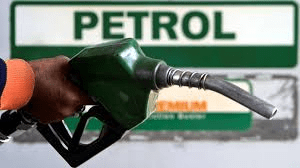
Now the Indian government is taking drastic measures to insulate the domestic market from the catastrophic energy shocks of the West Asia war. In a major policy shift announced this Saturday, the Finance Ministry implemented a massive diesel export duty hike India 2026. First, the levy on diesel exports has more than doubled, jumping from ₹21.5 to ₹55.5 per litre. Therefore, the government is effectively making it commercially unattractive for refiners to send fuel abroad while domestic demand remains high. Meanwhile, jet fuel (ATF) has also seen a significant hike to ₹42 per litre as the blockade of the Strait of Hormuz continues to choke global energy flows.
Add businessleague.in as a Preferred Source


Also Read |Tamil Nadu Voter List Purge: 97 Lakh Names Deleted in SIR Phase 1
The Windfall Tax Surge: Doubling the Stakes for Diesel
Now we must examine the sheer scale of this fiscal intervention. First, the export duties—often referred to as windfall gains taxes—were initially imposed on March 27. Therefore, today’s hike represents a doubling down on that strategy within just two weeks.
Next, the jump to ₹55.5 per litre for diesel is one of the steepest single-day increases in recent history. Thus, the government is signaling that the era of “export-first” profits for private refiners is over for the duration of the crisis.
Meanwhile, jet fuel exports now face a ₹42 per litre levy. Therefore, the diesel export duty hike India 2026 is part of a broader “energy fortress” strategy to keep essential refined products within Indian borders. So the Finance Ministry is prioritizing national security over corporate windfall profits.
Why the Hike? Protecting the Domestic Pump
So what is the underlying philosophy behind these taxes? The Petroleum Ministry has been very clear. First, international diesel prices have surged so sharply that refiners are tempted to prioritize high-paying foreign markets. Therefore, the levy is designed to “disincentivize” these exports.
Next, the goal is to ensure that refinery output is directed first toward meeting Indian demand. Thus, the government believes that keeping Indian pumps fully supplied takes precedence over any commercial opportunity.
Meanwhile, Public Sector Oil Marketing Companies (OMCs) have been under instructions not to hike retail prices despite the global surge. Therefore, this export duty acts as a regulatory “dam” to prevent fuel from leaking out of the country. So the Indian commuter is being shielded from the full brunt of the West Asia war.
Strait of Hormuz: The $195/Barrel Reality
Now let’s look at the global trigger that necessitated the diesel export duty hike India 2026. First, the West Asia war has effectively closed the Strait of Hormuz. Therefore, one-fifth of the world’s oil and natural gas is no longer flowing through its traditional routes.
Next, this maritime “heart attack” has caused global prices to skyrocket. Thus, for the week ended March 27, global ATF prices nearly doubled to $195.19 per barrel compared to just $99.40 before the war began.
Meanwhile, the crack spread—the profit margin for turning crude into fuel—has trebled to over $81 per barrel. Therefore, without this export duty, Indian refiners would have every reason to ignore the local market. So the government is fighting a global price war with domestic fiscal tools.
Also Read |Tamil Nadu Voter List Purge: 97 Lakh Names Deleted in SIR Phase 1
OMC Under-Recoveries: The ₹104 Per Litre Loss
So how much are our local fuel companies losing? The numbers released by the Ministry of Petroleum and Natural Gas (MoPNG) are staggering. First, as of April 1, PSU OMCs were incurring under-recoveries of ₹104.99 per litre on diesel at the retail level. Therefore, every time a truck fills up in India, the oil company is losing a massive amount of money.
Next, the loss on petrol stands at ₹24.40 per litre. Thus, the OMCs are in a precarious financial position.
Meanwhile, the gains from the diesel export duty hike India 2026 are only a “fraction” of what is needed to offset these losses. Therefore, the government is attempting a delicate balancing act to keep the OMCs afloat without crushing the consumer. So the export tax is a small but vital piece of the survival puzzle.
Reliance SEZ Exemption: Judicial Pronouncements and Rules
Now there is a significant exception to these new rules. First, the export levies are not applicable to fuel exports from Reliance Industries (RIL) Special Economic Zone (SEZ) refinery. Therefore, the 35.2-mtpa SEZ unit in Jamnagar can still export without paying the ₹55.5 levy.
Next, the CBIC has clarified that export duties are not applicable to SEZ refineries as per previous judicial rulings. Thus, the Jamnagar mega-complex—the largest in the world—maintains a dual status.
Reliance Jamnagar Breakdown:
-
SEZ Refinery: 35.2 mtpa (Exempt from Export Duties)
-
DTA Refinery: 33.0 mtpa (Subject to Export Duties)
Meanwhile, the government previously exempted SEZ units during the Russia-Ukraine crisis. Therefore, the diesel export duty hike India 2026 only impacts fuel intended for the “Domestic Tariff Area” or produced in non-SEZ units.
Also Read |Tamil Nadu Voter List Purge: 97 Lakh Names Deleted in SIR Phase 1
Excise Duty Rebalancing: Slicing Revenue to Save Consumers
So what is the government doing to help the oil companies directly? Along with the export tax, they have also slashed excise duties on domestic sales. First, this move is intended to provide immediate relief to OMCs that are bleeding cash. Therefore, the government is willing to take a revenue hit of ₹7,000 crore per fortnight.
Next, the gains from the new export duties will only bring in about ₹1,500 crore in the same period. Thus, the net result is a massive fiscal sacrifice by the Center.
Meanwhile, the objective remains purely non-revenue based. Therefore, as the Petroleum Ministry stated, these duties are not for “boosting government revenue” but for supply management. So the tax is a tool for stability, not a treasury filler.
Fortnightly Reviews: How Vivek Chaturvedi Plans to Align Rates
Now the government isn’t just setting these rates and forgetting them. First, CBIC Chairman Vivek Chaturvedi has announced that these duty rates will be reviewed on a “fortnightly basis.” Therefore, every 14 days, the tax will be adjusted to match international price movements.
Next, if global oil prices begin to cool, the export duty will likely be reduced. Thus, it is a dynamic and reactive system.
Meanwhile, this ensures that the levy doesn’t become a permanent burden if the market stabilizes. Therefore, the diesel export duty hike India 2026 is a “crisis-mode” intervention. So refiners can expect the next update around April 25.
India’s Refining Strength vs. Global Scarcity
So how does India’s internal capacity help us in this crisis? First, India’s total refining capacity stands at around 260 million tonnes per annum (mtpa). Therefore, we actually produce more fuel than we consume domestically.
Next, this makes India a “net exporter” of refined fuels during normal times. Thus, we have the physical product available to satisfy our own people.
Meanwhile, the problem is not a lack of fuel, but the “attractiveness” of selling it abroad. Therefore, the diesel export duty hike India 2026 is the key to locking that massive refining power inside the country. So while the rest of the world scrambles for diesel, Indian supplies remain protected by this fiscal wall.
Common Questions Answered
What is the diesel export duty hike India 2026? Now it is a doubling of the tax on diesel exports to ₹55.5 per litre. Therefore, it is designed to keep fuel in the country during the West Asia war.
Why did the government increase the duty on jet fuel? First, because global ATF prices have hit $195 per barrel. Thus, the tax was hiked to ₹42 per litre to ensure domestic airlines have enough fuel.
Are petrol prices also affected by export duties? Next, no. The export duty on petrol remains at Nil. Therefore, the focus is entirely on diesel and jet fuel.
Does Reliance have to pay this tax? So only on its domestic (DTA) refinery. The SEZ unit at Jamnagar is exempt due to judicial rulings. Thus, RIL still has an export channel.
How often will these rates change? Finally, every fortnight. The CBIC will review the rates every two weeks to align them with global benchmarks.
Is the government making money from this tax? Actually, the revenue gain is small (₹1,500 Cr) compared to the loss from excise cuts (₹7,000 Cr). So the primary goal is supply, not revenue.
Also Read |Tamil Nadu Voter List Purge: 97 Lakh Names Deleted in SIR Phase 1
End…
Add businessleague.in as a Preferred Source

