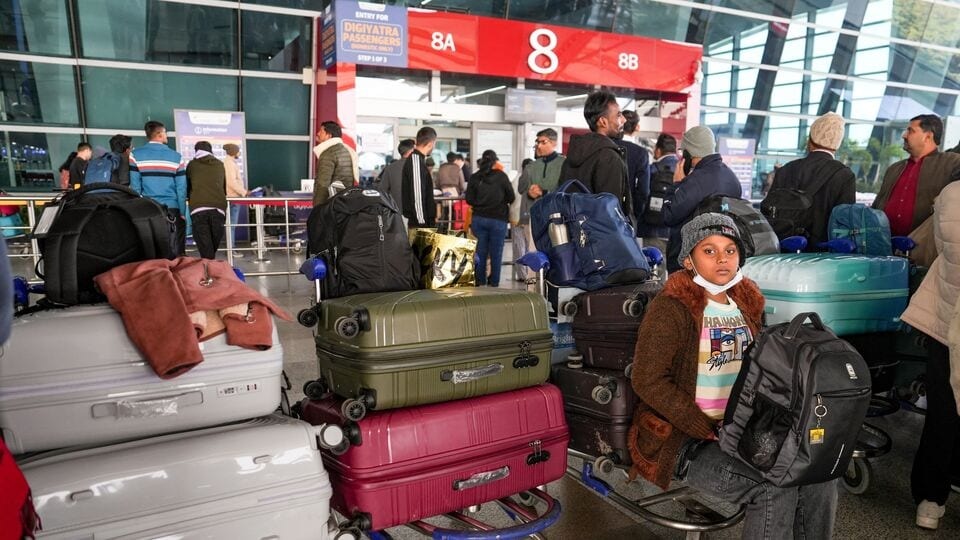
India’s aviation regulator, the Directorate General of Civil Aviation (DGCA), proposed a sharp escalation in penalties for disruptive passengers Thursday. The draft revised Civil Aviation Requirement (CAR) introduces an immediate “Zero Tolerance Policy” aimed at curbing the rising tide of onboard misconduct.
Add businessleague.in as a Preferred Source


The most significant shift gives airlines the power to bypass independent committees for short-term sanctions. Under the new proposal, an airline may directly ban a passenger for up to 30 days if they are found committing specific disruptive acts, such as smoking or unauthorized use of emergency equipment.
Also Read |Tamil Nadu Voter List Purge: 97 Lakh Names Deleted in SIR Phase 1
The “Instant Ban” Mechanism
Currently, airlines must wait for an independent committee to rule on a case before a formal ban is enacted. The DGCA’s proposed change allows for “fast-track” enforcement. This immediate 30-day ban applies to:
-
Smoking on board: Regardless of the flight duration.
-
Alcohol consumption: Specifically on domestic flights where it is prohibited.
-
Emergency exit misuse: Opening or tampering with exit levers without instruction.
-
Life-saving equipment: Unauthorised deployment of life jackets or oxygen masks.
Meanwhile, the existing independent review mechanism remains in place for longer-term bans. If an airline seeks to bar a passenger for more than 30 days, the case must still be referred to the committee, which can impose bans ranging from three months to life.
Graded Punishment: Level 1 to Level 4
The DGCA has reaffirmed its tiered system for classifying offenses. This ensures that the punishment remains proportional to the threat posed to aircraft safety and passenger dignity.
Also Read |Tamil Nadu Voter List Purge: 97 Lakh Names Deleted in SIR Phase 1
| Offence Level | Description | Potential Ban Duration |
| Level 1 | Verbal harassment, physical gestures, inebriation. | Up to 3 months |
| Level 2 | Physically abusive behavior (hitting, kicking, sexual harassment). | Up to 6 months |
| Level 3 | Life-threatening behavior (violence, choking, damaging systems). | Minimum 2 years |
| Level 4 | Attempted or actual breach of the flight crew compartment. | 2 years to No Upper Limit |
Standard Operating Procedures (SOPs)
The regulator has also mandated that every airline implement a formal Standard Operating Procedure (SOP) for handling unruly passengers. These SOPs must be circulated among all crew members and stakeholders. The goal is to ensure that “misconduct” is not a subjective judgment but a clearly defined violation with an established reporting chain.
Next, airlines must continue to report every incident to the DGCA. Even with the new 30-day “instant power,” the regulator will maintain oversight to prevent misuse of the ban by airline staff. In fact, a separate category exists for national security risks, which allows for indefinite bans outside of the misconduct grading system.
Reality Check
The DGCA markets this as “tougher enforcement.” Still, the immediate 30-day ban is largely a response to the administrative delays that have allowed unruly flyers to board subsequent flights before their case was even heard. Therefore, the “instant” nature of the ban is its biggest asset. However, with airlines facing record-high passenger volumes, the pressure on cabin crew to “judge” and “enforce” these bans mid-flight could lead to increased confrontations.
The Loopholes
The draft allows for an “instant 30-day ban” for smoking or alcohol. In fact, if a passenger is banned by one airline, they can technically still book on a competitor during those 30 days unless they are officially added to the National No-Fly List. Therefore, until the DGCA synchronizes these “instant bans” across a centralized database, the rule may only prevent you from flying the same airline. Still, the March 16 deadline for public comments provides a window to address this “carrier-jumping” loophole.
Also Read |Tamil Nadu Voter List Purge: 97 Lakh Names Deleted in SIR Phase 1
What This Means for You
If you are a frequent flyer, realize that “unruly behavior” now carries an immediate, high-stakes penalty. First, ensure you follow all crew instructions regarding seatbelt signs and electronic devices; a heated argument can now be categorized as a Level 1 offense. Then, be aware that any tampering with emergency equipment for a “social media prank” will result in an automatic 30-day grounded status.
Finally, if you witness a disruptive passenger, you should provide a statement to the crew if requested. These statements are vital for the airline to justify the 30-day ban. Before the final rules are notified, expect higher security presence at boarding gates to screen for intoxicated passengers.
What’s Next
The DGCA will accept stakeholder feedback on the draft CAR until March 16, 2026. Then, the final notification is expected by early April, making the rules effective for the busy summer travel season. Finally, we expect a new “Centralized No-Fly Portal” to be teased by the Ministry of Civil Aviation by late 2026.
Also Read |Tamil Nadu Voter List Purge: 97 Lakh Names Deleted in SIR Phase 1
End….
Add businessleague.in as a Preferred Source
🙏 Support Independent Journalism
We keep news free for you.
Most readers support with ₹500 ❤️
or scan QR below

Voluntary contribution. No tax benefits.
DISCLAIMER
We have taken all measures to ensure that the information provided in this article and on our social media platform is credible, verified and sourced from other Big media Houses. For any feedback or complaint, reach out to us at businessleaguein@gmail.com