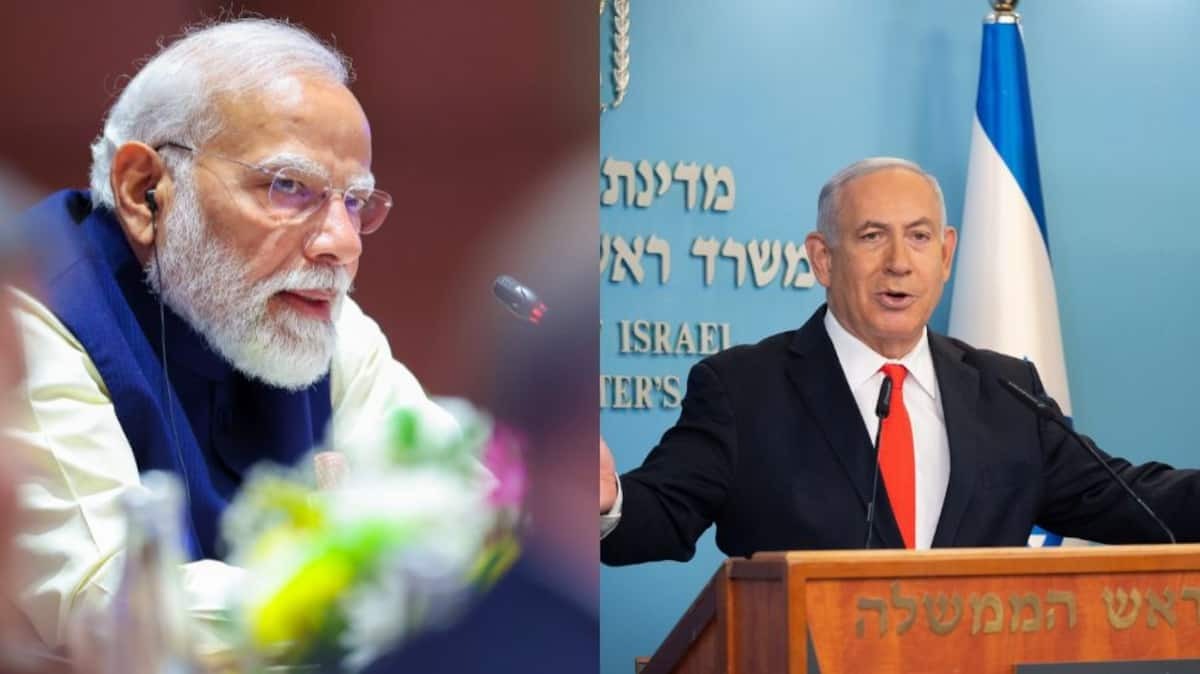
On the eve of Prime Minister Narendra Modi’s two-day visit to Israel, New Delhi has signaled a massive expansion of its defense partnership with Tel Aviv. While no formal “mega-deal” will be signed during the February 25–26 trip, the two nations are expected to execute a landmark MoU on Security Cooperation that lays the groundwork for co-developing advanced weaponry worth $10 billion over the coming years.
Add businessleague.in as a Preferred Source


The centerpiece of this visit is Mission Sudarshan, a PM Modi-led initiative to create a impenetrable anti-ballistic missile shield over the Indian hinterland. Following Israel’s successful 98% interception rate against Iranian ballistic missiles in June 2025, India is eager to integrate Israeli battle-proven tech into its domestic defense architecture.
Also Read |Tamil Nadu Voter List Purge: 97 Lakh Names Deleted in SIR Phase 1
Mission Sudarshan: India’s Protective Umbrella
Israel is a world leader in multi-layered missile defense, and India is looking to co-develop systems inspired by:
-
Arrow (Long Range): For high-altitude interceptions.
-
David’s Sling (Medium Range): To counter tactical ballistic missiles and cruise missiles.
-
Iron Dome (Short Range): To protect cities from rockets and artillery.
This collaboration is expected to move beyond “buyer-seller” dynamics toward joint development, ensuring that the Indian hinterland is shielded from enemy long-range threats under the “Mission Sudarshan” banner.
Weaponry of the Future: Lasers and Loitering Munitions
Beyond missile shields, the focus is on “unmatched stand-off capabilities.” Israel has reportedly agreed to share its highly sought-after laser defense technology (Iron Beam), which offers a significantly lower “cost-per-interception” compared to traditional missiles.
India is also looking to bolster its arsenal with:
-
Loitering Munitions: Buying more Harop and Harpy kamikaze drones, which were famously used to suppress air defenses during Operation Sindoor.
-
Long-Range Strike: Procuring Spice 1000 glide bombs, Rampage air-to-surface missiles, and the Ice Breaker missile system.
-
Naval Defense: The Indian Navy is eyeing the Extended Range Barak system to protect warships from saturating missile attacks.
Also Read |Tamil Nadu Voter List Purge: 97 Lakh Names Deleted in SIR Phase 1
Strategic Alignment: The Netanyahu-Modi Bond
The personal rapport between PM Modi and Benjamin Netanyahu has streamlined bilateral cooperation on counter-terrorism and high-tech sectors. During the visit, the two leaders will also discuss cooperation in Quantum Computing, science and technology, and clean drinking water—reflecting a partnership that extends far beyond the battlefield.
Reality Check
The government claims this is about “co-development.” Still, India remains heavily dependent on Israeli components for its current missile projects like the MRSAM. Therefore, while “Mission Sudarshan” aims for self-reliance, the actual “brains” of these systems—the seekers and sensors—will likely remain Israeli for the foreseeable future. In fact, co-development often means “assembling in India with Israeli IP.”
The Loopholes
India recently backed Palestine in condemning West Bank expansion. In fact, this “diplomatic balancing act” serves as a loophole that allows India to maintain its strategic autonomy. Therefore, India can continue buying $10 billion in Israeli weapons while keeping its traditional ties with the Arab world intact. Still, the security cooperation MoU is a “loophole-closer” that ensures Israel remains India’s primary tech-partner even when political disagreements occur in the UN.
Also Read |Tamil Nadu Voter List Purge: 97 Lakh Names Deleted in SIR Phase 1
What This Means for You
If you are in the defense manufacturing or tech sector, this visit is your signal that the $10 billion pipeline is opening. First, look for Tier-2 and Tier-3 opportunities in the Supply Chain for Mission Sudarshan; local firms will be needed to build the launchers and radar housings. Then, watch for the Quantum Computing MoUs, which could lead to new academic fellowships and research grants for Indian students.
Finally, realize that laser defense is the future of low-cost security. You should monitor the “Make in India” progress of the Iron Beam project to see when the first domestic units are tested. Before the visit concludes on February 26, check if the Extended Range Barak deal includes a full Technology Transfer (ToT) clause, as this will determine the long-term sustainability of India’s naval shield.
What’s Next
PM Modi arrives in Israel on February 25, 2026. Then, the MoU on expanded security cooperation will be signed at a joint press conference. Finally, a high-level technical team from India’s DRDO will remain in Tel Aviv to begin the first drafting phase of the Mission Sudarshan co-development roadmap.
Also Read |Tamil Nadu Voter List Purge: 97 Lakh Names Deleted in SIR Phase 1
End….
Add businessleague.in as a Preferred Source
🙏 Support Independent Journalism
We keep news free for you.
Most readers support with ₹500 ❤️
or scan QR below

Voluntary contribution. No tax benefits.
DISCLAIMER
We have taken all measures to ensure that the information provided in this article and on our social media platform is credible, verified and sourced from other Big media Houses. For any feedback or complaint, reach out to us at businessleaguein@gmail.com