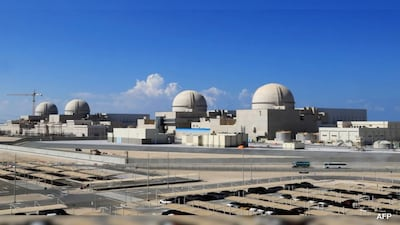
Now the architectural stability of international energy security is facing an unprecedented cross-border threat. India on Monday, May 18, 2026, issued a powerful diplomatic condemnation following a hostile drone strike targeting the outer perimeter of the United Arab Emirates’ multi-billion-dollar Barakah nuclear facility. Therefore, the Ministry of External Affairs (MEA) has officially labeled the operational breach a “dangerous escalation” that threatens the entire Persian Gulf corridor. Meanwhile, New Delhi has urged all regional combatants to practice maximum restraint and prioritize an immediate return to structured dialogue. Following the confirmation of the strike, this landmark facility—notable as the first and only operational nuclear powerhouse on the Arabian Peninsula—has become a central focus for global anti-terror tracking units.
Add businessleague.in as a Preferred Source


Also Read |Tamil Nadu Voter List Purge: 97 Lakh Names Deleted in SIR Phase 1
The MEA Mandate: New Delhi Demands a Swift Return to Diplomacy
Now the diplomatic machinery located in New Delhi’s South Block has responded with absolute clarity to the Persian Gulf crisis. The Ministry of External Affairs published an unedited executive release early Monday expressing deep, systemic concern regarding the incident. Therefore, the administration treats the targeting of civil atomic grids as a major red line for international relations.
First, the statement explicitly asserts that such actions represent an entirely unacceptable method of regional positioning. Next, the ministry has directed its diplomatic missions to actively engage with regional partners to cool down the rhetoric. Thus, the mechanical necessity of preventing a full-scale maritime trade shutdown is driving India’s rapid intervention.
So the official text demands that all parties immediately abandon kinetic maneuvers and return to formal dialogue tables. Meanwhile, domestic security analysts are tracking how this disruption might impact the safety of the massive Indian diaspora working across the Emirates. Therefore, the MEA’s prompt notification underscores India’s growing role as a stabilizing voice in West Asian politics.
Targeting Al Dhafra: Dissecting the External Generator Breach
Now analyzing the technical specifics of the assault reveals a highly calculated operational profile. The UAE military command confirmed that a single weaponized drone successfully penetrated the outer air defense layer in the Al Dhafra region. Therefore, emergency response cells were deployed to secure the surrounding grid coordinates within minutes.
First, the impact occurred against an auxiliary electricity generator system located safely outside the primary inner containment perimeter. Next, engineering logs confirm that the main reactor units continued to function smoothly, recording zero output drop-offs. Thus, the mechanical necessity of maintaining the core cooling loops was never compromised during the crisis phase.
So while the immediate structural damage remains minimal, the tactical precedent is causing considerable panic across insurance circles. The asset was intentionally picked to test the defensive responses of the host nation’s military infrastructure. Chronicles from the site confirm that remediation teams have already bypassed the damaged generator to normalize power routing.
Violating the UN Charter: The UAE’s Strict Legal Counter-Position
Now the UAE’s Ministry of Foreign Affairs (MoFA) has launched a massive international legal campaign to isolate the attackers. Abu Dhabi has vehemently condemned the strike, formally classifying the event as an act of absolute unprovoked state-sponsored terrorism. Therefore, the legal documents are being fast-tracked directly to the United Nations Security Council for review.
Primary Legal Violations Logged by the UAE:
-
UN Charter Contempt: A direct, unacceptable violation of territorial sovereignty and peaceful coexistence codes.
-
Humanitarian Law Breach: Targeting vital utility complexes introduces extreme, unneeded risks to civilian populations.
-
IAEA Non-Compliance: Bypasses established global resolutions mandating the complete immunity of civilian nuclear sites.
-
Environmental Hazard: Intentionally risking localized radiological releases that threaten transnational ecological systems.
First, the state department highlights that international frameworks stress the importance of shielding peaceful energy installations from hostile actions. Next, they argue that allowing this incident to pass without heavy international penalties would destroy decades of regulatory guardrails. Thus, the legal counter-offensive aims to construct a firm global consensus against infrastructure targeting.
Also Read |Tamil Nadu Voter List Purge: 97 Lakh Names Deleted in SIR Phase 1
Sovereign Prerogatives: Abu Dhabi Asserts Its Right to Respond
Now despite calling for global diplomatic solidarity, the Emirates have made it clear they will not rely solely on external declarations. The Ministry of Foreign Affairs asserted that the nation will tolerate zero threats to its territorial integrity under any circumstances. Therefore, the regional military components have been placed on an aggressive, pre-emptive operational footing.
First, the executive branch affirmed that the country reserves its full sovereign, legitimate, and military right to respond. Next, they stated that any eventual retaliation will be designed to permanently safeguard the national security of its citizens and visitors. Thus, the state is matching its defensive capabilities to the changing severity of the threat landscape.
So the administration is refusing to allow its economic success to be disrupted by external proxy networks. Meanwhile, anti-missile groupings are being repositioned to provide multi-layered coverage over all vital water-desalination facilities. Therefore, the sovereign warnings show that the UAE is fully prepared to enforce its own red lines if diplomacy fails.
The South Korean Link: Analyzing the $20 Billion Infrastructure Asset
Now to understand the immense material stakes involved, one must look at the industrial history of the Barakah complex. Developed at an estimated capital cost of $20 billion, the project represents a massive triumph of cross-continental engineering. Therefore, any threat to its structure impacts multiple international corporate partnerships simultaneously.
-
The Barakah Asset Profile:
-
Technical Partner: Designed and constructed in close cooperation with the Korea Electric Power Corporation (KEPCO).
-
Launch Milestone: Achieved full commercial operationalization in 2020 after rigid technical excellence testing.
-
Regional Rank: Holds historic distinction as the first and only functioning nuclear power station on the Arabian Peninsula.
-
Grid Share: Generates a massive percentage of clean base-load electricity for the UAE’s modern industrial zones.
-
First, the South Korean engineering firms maintain active technical support teams on-site to assist with daily management flows. Next, the blueprint features advanced structural containment barriers designed to survive direct impacts from commercial aviation hulls. Thus, the physical integrity of the reactor reflects world-class manufacturing standards that prevented a catastrophic event during Friday’s raid.
A Dangerous Global Trend: Nuclear Assets in Active Conflict Zones
Now geopolitical intelligence panels are pointing out that the Barakah strike is part of a deeply worrying international pattern. In recent years, civilian atomic energy projects have increasingly found themselves positioned inside active, kinetic conflict zones. Therefore, the mechanical necessity of establishing demilitarized zones around reactors is becoming a global priority.
First, this dangerous trend notably intensified during Russia’s full-scale military invasion of Ukraine back in 2022. Next, the prolonged shelling around the Zaporizhzhia installation demonstrated how easily utility grids can be used as tactical leverage. Thus, the old assumption that civilian nuclear structures are safe from conventional warfare has been completely destroyed.
So the international community is scrambling to draft tougher, binding conventions to shield these high-hazard locations. Meanwhile, the IAEA is expanding its monitoring deployments to track threat vectors in real time across multiple continents. Therefore, the 2026 Barakah event serves as a critical warning that global infrastructure safety guidelines require an immediate overhaul.
Also Read |Tamil Nadu Voter List Purge: 97 Lakh Names Deleted in SIR Phase 1
The Bushehr Parallel: Comparing Past Attacks in the Iran Corridor
Now this is not the first instance where a major nuclear facility in the West Asian corridor has faced kinetic threats. A highly similar situation has unfolded over recent months within the neighboring Iranian geographic sector. Therefore, analysts are cross-referencing previous tracking data to project the likely path of the current crisis.
[UKRAINE: 2022]      ──► Zaporizhzhia Complex Face Regular Grid Shelling
         │
         ▼
[IRAN CORRIDOR: 2025]──► Bushehr Reactor Encounter Repeated Drone Interceptions
         │
         ▼
[UAE SECTOR: 2026]   ──► Barakah External Generator Damaged by Hostile Strike
First, Tehran has repeatedly claimed that its Russian-operated Bushehr nuclear power plant was targeted by unverified hostile strikes. Next, much like the Barakah incident, those earlier interventions failed to cause any direct structural cracks to the primary reactor shield. Thus, the mechanical necessity of building thick concrete shells has been validated across both sides of the Gulf.
So the absence of radiological leakage in both instances has prevented a wider public evacuation emergency. Meanwhile, the continuous threat of automated drone incursions requires constant utilization of advanced electronic warfare jamming fields. Therefore, the Bushehr parallel proves that the current drone war is systematically targeting the core economic foundations of the region.
FAQ: Understanding the 2026 Barakah Nuclear Plant Crisis
1. What happened at the UAE’s Barakah nuclear facility? Now, a hostile drone strike targeted an external electricity generator located outside the inner perimeter of the Barakah Nuclear Power Plant in the Al Dhafra region.
2. Was there any structural damage or radiation leak reported? First, no. The UAE’s Ministry of Foreign Affairs confirmed that no damage was incurred on the primary reactor structures and zero radiological leaking occurred.
3. How did India officially respond to this drone attack? So, the Ministry of External Affairs strongly condemned the strike, describing it as a “dangerous escalation” and demanding an immediate return to dialogue and diplomacy.
4. Who built the Barakah Nuclear Power Plant and when did it start? Next, the $20 billion facility was constructed in close technical partnership with South Korea and achieved full operational status in 2020.
5. Why is this specific facility considered historically significant? Now, Barakah holds the unique distinction of being the first and only operational nuclear power plant situated on the Arabian Peninsula.
6. What international rules govern the safety of these facilities? Finally, official standards set by the International Atomic Energy Agency (IAEA) and the UN Charter explicitly prohibit any hostile actions or military threats against peaceful nuclear installations.
Also Read |Tamil Nadu Voter List Purge: 97 Lakh Names Deleted in SIR Phase 1
End…
Add businessleague.in as a Preferred Source
🙏 Support Independent Journalism
We keep news free for you.
Most readers support with ₹500 ❤️
or scan QR below

Voluntary contribution. No tax benefits.
DISCLAIMER
We have taken all measures to ensure that the information provided in this article and on our social media platform is credible, verified and sourced from other Big media Houses. For any feedback or complaint, reach out to us at businessleaguein@gmail.com