


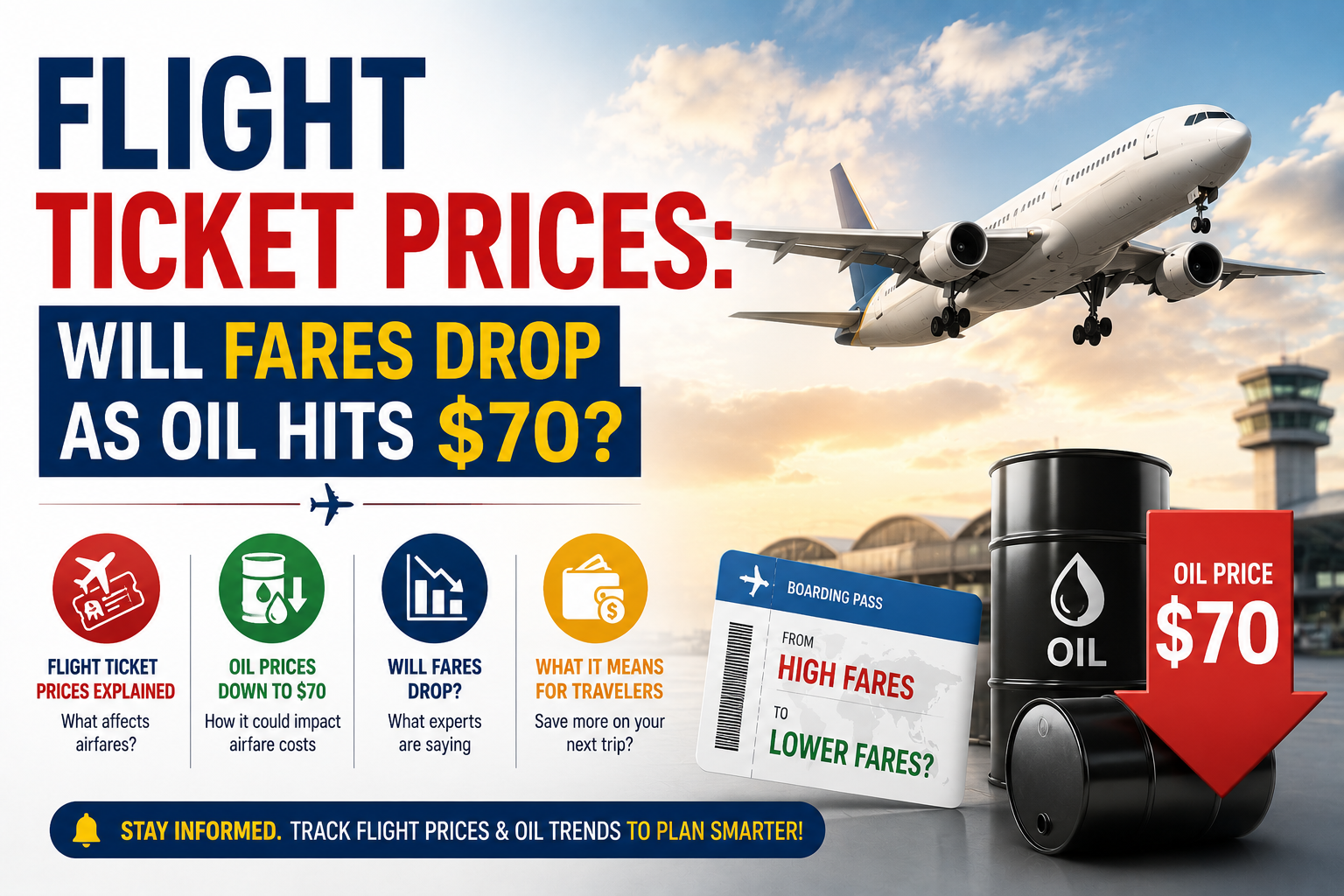
The Civil Aviation Ministry is monitoring fuel price stability before demanding a rollback of steep passenger surge fares.
The persistent surge in air travel costs may soon face administrative resistance. Following a sharp decline in global crude oil benchmarks toward the $70 per barrel mark—unwinding a prolonged spike that previously pushed oil past $100—questions are rising over when these savings will transfer to consumers.
Add businessleague.in as a Preferred Source


Also Read | Structural Rebalancing: How the HSBC India Flash PMI June 2026 Shapes Monetary Policy
The Union government signaled that it is prepared to intervene. Civil Aviation Minister K Ram Mohan Naidu indicated that the ministry may officially ask domestic airlines to recalculate their fare architectures and pull back aggressive surcharges, provided fuel markets maintain their current downward trajectory.
Addressing reporters, Minister Naidu confirmed that the government is closely tracking aviation turbine fuel (ATF) price trends and has initiated preliminary discussions with commercial carriers to evaluate the longevity of the market dip.
The Catch: Why Fares Won’t Plummet Overnight
While a drop in global oil fields usually hints at immediate relief, the structural mechanics of domestic aviation fuel pricing mean passenger ticket prices operate on a lag. Domestic jet fuel costs are reviewed and adjusted by state-run oil marketing companies on a fortnightly basis, meaning global volatility takes time to filter into local airport pumps.
Furthermore, the government’s existing safety net plays a significant role in how quickly airlines can cut consumer costs. During the height of the recent West Asia crisis, the federal government established a ₹10,000 crore price stabilization fund. This mechanism effectively capped domestic ATF costs and shielded airlines from immediate financial collapse when international fuel costs skyrocketed.
Because public funds and airline margins absorbed immense pressure over the last quarter, the current dip in crude will initially be balanced against those historical operational losses before baseline ticket structures shift.
“The last four months have been very important for the airlines,” Minister Naidu told reporters. “Once we are clear that price stability will continue for a long time, we will talk to them and work towards reducing the surge charges or the extra prices we are seeing right now.”
Current Relief Measures in Play
To ensure airlines keep secondary operational costs under control while fuel prices find a permanent floor, the ministry has maintained several temporary supply-side interventions. The government has capped local ATF pricing formulas for domestic scheduled operators, reduced specific airport landing and parking charges, and extended credit lifelines under the Emergency Credit Line Guarantee Scheme.
These interventions, paired with an industry-wide transition that has seen online digital cylinder and cargo bookings climb to roughly 99%, have kept airline capacity stable despite severe regional turbulence.
The aviation ministry maintains that if crude prices hold near the $70 floor through the next few review cycles, formal negotiations will begin to systematically lower the explicit fuel surcharges that currently inflate consumer booking applications.
Also Read | Structural Rebalancing: How the HSBC India Flash PMI June 2026 Shapes Monetary Policy
FAQ
Will international flight tickets see faster price drops than domestic flights?
International fares often react quicker to global crude drops because international flights buy fuel at market-linked spot prices, whereas domestic flights operate under regional fortnightly reviews and local state taxation structures.
What percentage of my flight ticket price goes toward fuel costs?
Typically, Aviation Turbine Fuel (ATF) accounts for 40% to 45% of a domestic airline’s total operating cost in India. Consequently, even minor shifts in oil benchmarks have an outsized impact on the final price of a ticket.
Is the government legally allowed to set limits on maximum airfares?
The Indian aviation sector operates under a deregulated framework, meaning airlines set fares based on market demand. However, the government can issue regulatory advisories and leverage policy tools, like the price stabilization fund, to pressure airlines into lowering surcharges.
What is the purpose of the ₹10,000 crore stabilization fund mentioned by the minister?
The fund was designed as an emergency buffer during geopolitical supply shocks. It subsidized high fuel costs for airlines so they wouldn’t pass the entire financial burden onto travelers through unviable ticket prices.
Also Read | Structural Rebalancing: How the HSBC India Flash PMI June 2026 Shapes Monetary Policy
Add businessleague.in as a Preferred Source

