


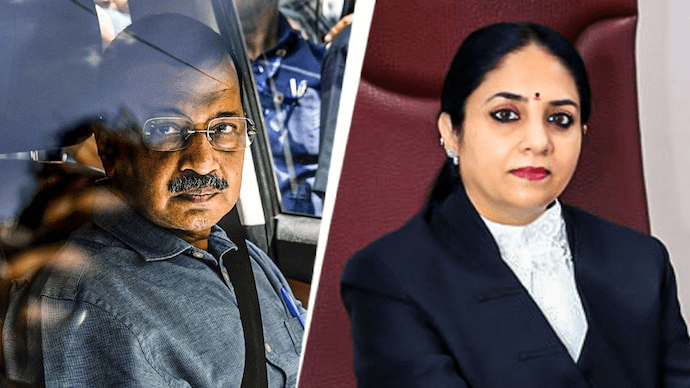
Now the legal battle over the defunct Delhi excise policy has entered a dramatic new phase in the capital’s highest court. On Monday, former Chief Minister Arvind Kejriwal personally argued for the recusal of Justice Swarana Kanta Sharma from hearing a CBI petition. First, the AAP leader presented an hour-long submission, prompting the judge to remark that he had “argued well” and could potentially practice as a lawyer. Therefore, while the courtroom witnessed rare moments of wit, the underlying stakes remain incredibly high for the 23 individuals discharged by the trial court earlier this year. Meanwhile, the court has reserved its verdict on whether Justice Sharma will continue to preside over the matter.
Add businessleague.in as a Preferred Source


Also Read |Tamil Nadu Voter List Purge: 97 Lakh Names Deleted in SIR Phase 1
Courtroom Wit: The ‘Vakeel’ Comment and Sanjay Hegde’s Response
Now we must analyze the lighter moments that punctuated a nearly five-hour legal marathon. First, after Arvind Kejriwal concluded his technical arguments, Justice Swarana Kanta Sharma offered a rare compliment. Therefore, she noted his proficiency in legal reasoning by suggesting he could become a lawyer.
Next, Kejriwal, a former IRS officer, responded that he was “happy with his present calling.” Thus, the exchange provided a brief respite from the tension of the Arvind Kejriwal Delhi High Court recusal 2026 proceedings.
Meanwhile, senior lawyer Sanjay Hegde, representing Manish Sisodia, jokingly requested Kejriwal “not to add to the competition.” Therefore, the camaraderie among the legal teams highlighted the unique nature of this high-profile hearing. So while the debate was fierce, the decorum remained notably high-level.
Grounds for Recusal: Kejriwal’s Objections to Justice Sharma
So why exactly does the AAP chief want a new judge? First, Kejriwal raised several specific objections regarding Justice Sharma’s past rulings. Therefore, he argued that her previous decisions on his arrest and bail pleas for others created a perception of bias.
Next, he pointed out that she had denied relief to Manish Sisodia and K Kavitha in related matters. Thus, the Arvind Kejriwal Delhi High Court recusal 2026 application is based on the fear that the judge has already formed “strong and conclusive” findings.
Kejriwal’s Core Objections:
-
Past Denials: Previous refusal to grant relief on arrest and bail petitions.
-
Pre-judgment: Claims that the judge’s findings are already “conclusive.”
-
Institutional Memory: The judge’s deep involvement in all related liquor policy files.
Meanwhile, the CBI has strongly opposed the recusal, arguing that judges cannot be changed based on unfavorable past rulings. Therefore, the bench must now decide if these “strong findings” constitute a legal ground for stepping aside.
The ‘Guilty’ Sentiment: Kejriwal’s Emotional Submission
Now let’s look at the more personal side of Kejriwal’s hour-long address. First, he expressed that he felt he was “almost declared guilty” and “corrupt” in earlier proceedings presided over by the same judge. Therefore, he alleged that only the “sentence was left to be pronounced.”
Next, he argued that a fresh pair of eyes was needed to review the CBI’s challenge to his discharge. Thus, the Arvind Kejriwal Delhi High Court recusal 2026 hearing was as much about “judicial perception” as it was about the law.
Meanwhile, the AAP leader emphasized that the findings against him were so strong that they left little room for a fair hearing in the discharge appeal. Therefore, he believes that the “spirit of natural justice” requires a different bench. So the court’s reserved verdict will have to address these “pre-judgment” allegations directly.
Also Read |Tamil Nadu Voter List Purge: 97 Lakh Names Deleted in SIR Phase 1
The February 27 Discharge: A Setback for the CBI
So how did we get back to the High Court in 2026? First, we must remember the landmark trial court order from February 27. Therefore, a special judge discharged Kejriwal, Sisodia, and 21 others, dealing a massive blow to the CBI’s case.
Next, the trial court had pulled up the agency, stating the case was “wholly unable to survive judicial scrutiny.” Thus, the prosecution’s narrative was described as “discredited in its entirety” at the stage of framing charges.
Trial Court Findings (Feb 2026):
-
Evidence: Termed the CBI’s proof as insufficient for trial.
-
Agency Critique: Scrutinized the Investigating Officer’s methods.
-
Discharge: All 23 accused cleared of primary liquor policy charges.
Meanwhile, the CBI immediately moved the High Court to stay and overturn this order. Therefore, the Arvind Kejriwal Delhi High Court recusal 2026 plea is a “preliminary hurdle” before the High Court can actually hear the merits of the CBI’s appeal.
CBI’s Counter-Attack: Justice Sharma’s Prima Facie Observations
Now we must look at why the CBI is confident in this specific bench. First, on March 9, Justice Sharma issued notices to all 23 accused regarding the CBI’s plea. Therefore, she indicated that the trial court’s findings “prima facie appeared erroneous.”
Next, she suggested that the discharge order needed a deeper consideration by the High Court. Thus, the Arvind Kejriwal Delhi High Court recusal 2026 application was filed shortly after these observations were made public.
Meanwhile, the CBI argued that the judge was simply performing her duty of judicial review. Therefore, the agency believes that changing the judge now would set a “dangerous precedent” for litigants seeking to “bench-hunt.” So the legal tug-of-war is now focused on the definition of “prima facie error.”
The Investigative Officer: Staying Departmental Action
So what happened to the officer who led the probe? First, the trial court hadn’t just discharged the accused; it had also recommended departmental action against the CBI’s Investigating Officer (IO). Therefore, the agency was under immense institutional pressure.
Next, Justice Sharma intervened by staying this specific recommendation. Thus, she protected the IO from immediate internal disciplinary proceedings while the main appeal is pending.
Meanwhile, Kejriwal’s team pointed to this “stay” as further evidence that the judge is protective of the CBI’s interests. Therefore, the Arvind Kejriwal Delhi High Court recusal 2026 arguments used this administrative stay to bolster the claim of bias. So even the fate of a single officer has become a point of contention in this high-profile battle.
Also Read |Tamil Nadu Voter List Purge: 97 Lakh Names Deleted in SIR Phase 1
Kejriwal the Litigant: A History of Personal Submissions
Now we should note that this is not a new habit for the former CM. First, on March 28, 2024, Kejriwal famously addressed a trial judge directly while in ED custody. Therefore, he has a history of bypassing his senior counsels to speak “from the heart” to the court.
Next, in that instance, he questioned the material used to arrest a sitting Chief Minister. Thus, he has refined his ability to present “legal-political” arguments over the last two years.
Meanwhile, his performance in the Arvind Kejriwal Delhi High Court recusal 2026 hearing confirms that he has become a formidable “pro se” litigant. Therefore, the judge’s “vakeel” comment was based on his ability to cite precedents and procedural lapses. So the “IRS officer turned politician” may have added “legal strategist” to his resume.
What Happens Next? The Impact of the Reserved Verdict
So what is the timeline for the final decision? First, the court reserved its verdict on Monday evening after a session that lasted until 7 PM. Therefore, a written order on the recusal is expected within the next few days.
Next, if Justice Sharma recuses herself, the file will be sent to the Chief Justice of the Delhi High Court to assign a new bench. Thus, the hearing on the CBI’s main appeal would be delayed.
Possible Outcomes:
-
Recusal Granted: Case moves to a new judge; timeline delayed by weeks.
-
Recusal Denied: Justice Sharma continues; hearing on discharge merits begins immediately.
-
Supreme Court Appeal: Either party might challenge the recusal order in the SC.
Meanwhile, the 23 discharged individuals remain in a state of legal limbo. Therefore, the Arvind Kejriwal Delhi High Court recusal 2026 decision is the “gateway” to the final fate of the liquor policy case. So the city waits for the “order on the order.”
Common Questions Answered
What happened in the Arvind Kejriwal Delhi High Court recusal 2026 hearing? Now Kejriwal personally argued that Justice Swarana Kanta Sharma should not hear the CBI’s appeal against his discharge. Therefore, the court has reserved its verdict on the recusal.
Why did the judge say Kejriwal can become a lawyer? First, because he presented a complex, hour-long legal argument personally. Thus, Justice Sharma praised his ability to “argue well” despite not being a practicing advocate.
What is the CBI liquor policy case about? Next, it involves allegations of corruption in the now-scrapped Delhi Excise Policy. Therefore, the CBI is trying to overturn a trial court order that cleared all 23 accused in February 2026.
Who is Justice Swarana Kanta Sharma? So she is the Delhi High Court judge currently presiding over the CBI’s appeal. Thus, she has previously heard several bail and arrest petitions related to this case.
Was Manish Sisodia also discharged? Finally, yes. The trial court on February 27 discharged both Kejriwal and Sisodia. So the current High Court proceedings are aimed at bringing them back to trial.
What did Sanjay Hegde say in court? Actually, he jokingly asked Kejriwal not to join the legal profession to avoid “adding to the competition.” Therefore, the hearing ended on a notably civil note.
Also Read |Tamil Nadu Voter List Purge: 97 Lakh Names Deleted in SIR Phase 1
End…
Add businessleague.in as a Preferred Source

