


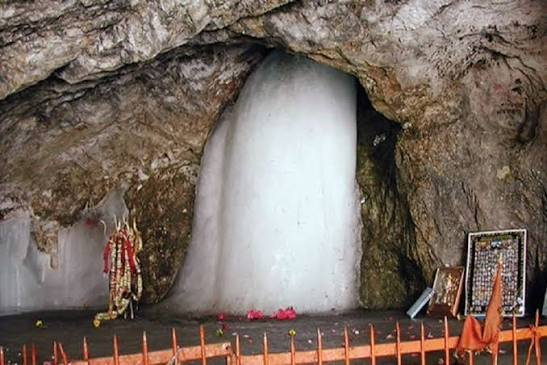
As the annual 57-day pilgrimage commences across Kashmir, state authorities enforce a strict daily cap and mandatory tracking metrics to safeguard devotees.
SRINAGAR — The annual Amarnath Yatra officially commenced on Friday, July 3, 2026, with thousands of eager pilgrims starting their journey from the twin base camps of Pahalgam and Baltal. On the opening day alone, authorities managed an influx of over 20,000 registered yatris setting out to catch a glimpse of the naturally formed ice Shiva Lingam located at an elevation of 3,888 meters in the South Kashmir Himalayas.
Add businessleague.in as a Preferred Source


The 57-day pilgrimage will conclude on August 28, 2026, coinciding with the auspicious occasion of Raksha Bandhan. To ensure safety across the rugged alpine terrain, the Jammu and Kashmir administration—acting on directives from the Supreme Court—has put strict operational checks in place.
If you are planning to undertake the holy pilgrimage this year, you must align your travel plans with the mandatory rules and registration guidelines issued by the Shri Amarnathji Shrine Board (SASB).
Strict Eligibility and Age Criteria
The Amarnath trek involves strenuous high-altitude climbing, making it physically taxing. The SASB enforces non-negotiable health and age restrictions to mitigate medical risks along the path:
Amarnath Yatra 2026 Eligibility Cap
├── Restricted Age Group: Anyone under 13 years old
├── Senior Citizen Cutoff: Anyone over 70 years old
└── Medical Restriction: Women pregnant for more than six weeks
Note: Even if a pilgrim holds a valid Compulsory Health Certificate (CHC), they will be barred from entry at the checkpoints if they fall into any of the restricted categories mentioned above.
Mandatory Registration and RFID Passes
Unregistered travel is strictly prohibited, and security checkpoints are positioned to turn back non-compliant individuals.
-
Advance Registration: Pilgrims must secure their permits ahead of time. This can be done online via the official SASB portal or offline through designated pan-India bank branches. Advance bank registration closes exactly seven days prior to the designated travel date.
-
On-the-Spot (Tatkal) Slots: While on-the-spot registration counters exist at select terminals in Jammu and Srinagar, slots are highly limited. Relying on spot registration is heavily discouraged for large groups.
-
The RFID Card Mandate: Prior to arriving at the trail gates, every single registered pilgrim must physically check in at a designated biometric distribution center in Jammu or Kashmir. Here, after undergoing an Aadhaar-based eKYC check, you will receive a mandatory RFID tracking card. This card must be worn visibly around your neck throughout the trek; no yatri will be allowed past the access control gates without it.
Choosing Your Route: Pahalgam vs. Baltal
The pilgrimage can be completed via two distinct mountain trails, each presenting a different timeline and physical demand:
| Feature | The Pahalgam Route (Traditional) | The Baltal Route (Modern Sprint) |
| Total Trekking Distance | Approximately 42 to 46 Kilometers | Approximately 14 Kilometers |
| Terrain Profile | Gradual, scenic incline winding through meadows | Considerably shorter, but incredibly steep |
| Average Duration | 3 to 4 days (Requires overnight camping) | 1 to 2 days (Can be wrapped up in a day) |
| Recommended For | First-time trekkers, families, and larger groups | Experienced trekkers or travelers short on time |
Frequently Asked Questions (FAQs)
What documents do I need to register for the Amarnath Yatra?
You need a valid official photo ID (such as an Aadhaar Card) and a Compulsory Health Certificate (CHC). For the 2026 season, the CHC must be issued on or after April 8, 2026, by a state-authorized medical practitioner listed on the SASB portal.
Can I change the travel date or route printed on my Yatra permit?
No. Your system-generated Yatra permit is strictly non-transferable and tied directly to your biometric identity. You will only be allowed to cross the entry gates on the exact date and route printed on your permit.
Are there helicopter options available for the cave?
Yes, private helicopter operators run services from both Baltal and Pahalgam base camps to Panchtarni. However, helicopters do not land at the cave itself. From the Panchtarni helipad, all passengers must travel the final 6 kilometers to the shrine on foot, by pony, or via a palki.
Add businessleague.in as a Preferred Source

