


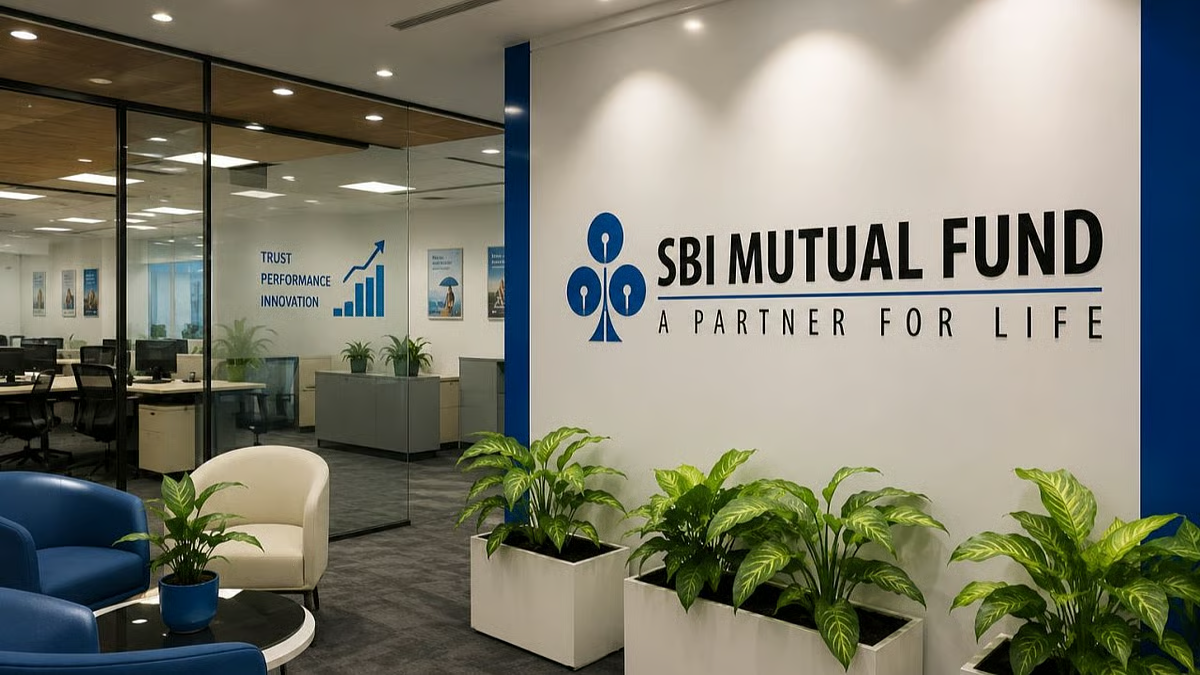
A joint venture between State Bank of India and Europe’s Amundi, the block-sale offering sets a price band of Rs 545 to Rs 574 per share to kick off a busy second half for Indian equities.
MUMBAI — State Bank of India (SBI) has formalized the pricing structure for the highly anticipated Initial Public Offering (IPO) of its investment management wing, SBI Funds Management. According to regulatory exchange filings, India’s largest asset management company is seeking a market valuation of up to Rs 1.17 trillion ($12.24 billion), positioning the share sale as one of the largest corporate listings in the country this year.
Add businessleague.in as a Preferred Source


The three-day public subscription window is scheduled to open on July 14, 2026, following a dedicated bidding session for large institutional anchor investors on July 13. Shares are expected to formally debut on the National Stock Exchange (NSE) and Bombay Stock Exchange (BSE) on July 21, 2026.
Also Read | Meta Faces Massive $1.4 Trillion Penalty Demand Over Alleged Instagram Youth Addictive Features
1. IPO Structure, Pricing, and Capital Allocation Strategy
The $1.22 billion public offering is structured entirely as an Offer for Sale (OFS), meaning the asset manager will not issue fresh equity shares or retain any direct financial proceeds from the public market transaction. Instead, the parent financial institutions are divesting a combined 10% slice of the company’s paid-up equity capital.
Divestment Breakdown (Totaling ~10% Paid-Up Equity):
🏛️ State Bank of India (SBI) ➔ Divesting up to 128.3 Million Shares
🇪🇺 Amundi India Holding ➔ Divesting up to 75.4 Million Shares
-
Official Price Band: Rs 545 to Rs 574 ($5.70 to $6.01) per individual equity share.
-
Corporate Employee Benefit: Eligible internal staff members will receive a dedicated discount of Rs 54 per share off the finalized issue price.
-
Global Backing: The institutional book-building phase has already captured significant interest from major global sovereign wealth funds, including the Abu Dhabi Investment Authority (ADIA) and Singapore’s GIC.
Also Read | Meta Faces Massive $1.4 Trillion Penalty Demand Over Alleged Instagram Youth Addictive Features
2. Market Capitalization and Competitor Matrix
As of late March, SBI Funds Management managed an aggregate asset pool worth Rs 12.5 trillion ($131.4 billion). The targeted listing valuation places the fund manager within striking distance of its top-tier listed peers in the Indian asset management landscape:
| Asset Management Corporate Entity | Assets Under Management (AUM) | Targeted or Existing Market Capitalization |
| SBI Funds Management (Targeted) | Rs 12.5 Trillion ($131.4 Billion) | Rs 1.17 Trillion ($12.24 Billion) |
| HDFC Asset Management Company | Market Baseline Core | ~Rs 1.20 Trillion ($12.50 Billion) |
| ICICI Prudential Asset Management | Market Baseline Core | ~Rs 1.64 Trillion ($17.20 Billion) |
3. Broader Market Outlook for Indian Public Offerings
The multi-billion-rupee market debut lands during a period of complex macroeconomic shifts. Geopolitical volatility in the Middle East has recently pushed crude oil prices higher, adding a layer of caution to international financial markets.
Despite these global headwinds, investment bankers view the massive SBI Funds Management listing as the first crucial test for a packed pipeline of mega-issuances scheduled for the second half of the year. Financial analysts expect success here to pave a clear path for other heavily anticipated, multi-billion-dollar market floats later this year, including retail telecom giant Reliance Jio and the primary public listing of the National Stock Exchange of India itself.
Also Read | Meta Faces Massive $1.4 Trillion Penalty Demand Over Alleged Instagram Youth Addictive Features
Add businessleague.in as a Preferred Source

