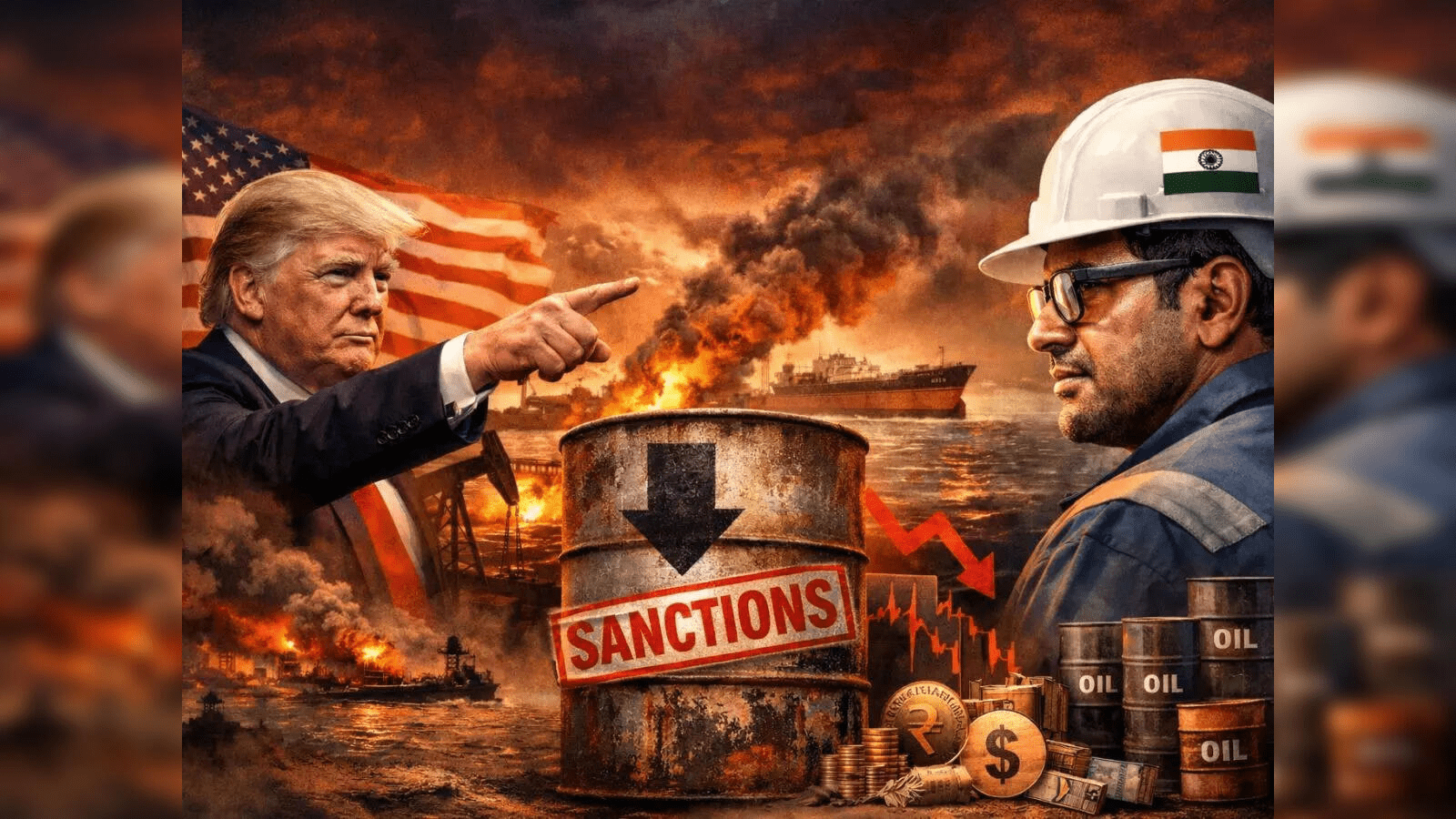
Now the global energy landscape has entered its most restrictive phase since the 2026 West Asia war began. In a move that signals a transition from kinetic warfare to financial siege, the US sanctions oil waivers India 2026 have officially been allowed to lapse. First, US Treasury Secretary Scott Bessent confirmed this Thursday that the temporary general licenses for Russian and Iranian oil—which were intended only for “oil already at sea”—will not be renewed. Therefore, countries like India, which recently utilized these waivers to secure 4 million barrels of Iranian crude, now face a return to stricter secondary sanctions. Meanwhile, Washington is launching a campaign dubbed “Economic Fury” to permanently squeeze Tehran’s financial lifeblood.
Add businessleague.in as a Preferred Source


Also Read |Tamil Nadu Voter List Purge: 97 Lakh Names Deleted in SIR Phase 1
Scott Bessent’s Decree: Why the ‘Oil at Sea’ General License is Over
Now we must analyze the firm stance taken by the US Treasury. First, Secretary Scott Bessent announced that the general license meant to clear oil already at sea prior to March 11 has run its course. Therefore, the US sanctions oil waivers India 2026 will not see another extension.
Next, Bessent stated during a media briefing that “all that oil has been used.” Thus, the temporary window of flexibility used by Asian refiners is officially closing.
Meanwhile, the Treasury insisted that the initial easing was a one-time measure to stabilize global energy markets during the initial shock of the war. Therefore, the lapse marks a return to the “Maximum Pressure” campaign of 2026. So for oil traders, the period of “permitted transit” has ended.
Economic Fury vs. Epic Fury: The Shift to Total Financial War
So what is “Economic Fury”? First, a US official described this as the Treasury going “full force” to mirror Operation Epic Fury—the US-led military campaign targeting Iran’s missile and naval infrastructure. Therefore, the US sanctions oil waivers India 2026 ending is the first shot in this financial barrage.
Next, Secretary Bessent added that Iranians should know this is the “financial equivalent” of the kinetic activities they experienced in February and March. Thus, the strategy has shifted from destroying missile silos to freezing bank accounts.
The Two-Pronged Strategy:
-
Operation Epic Fury (Kinetic): Targeted Iranian missile production and naval assets.
-
Economic Fury (Financial): Targeting oil revenue, maritime trade, and secondary banking links.
-
Objective: Total surrender of Iran’s nuclear and regional military capabilities.
Meanwhile, this move is intended to squeeze Tehran into a compromise during the upcoming peace talks. Therefore, the “Economic Fury” is the leverage Washington intends to use at the negotiating table.
The 4 Million Barrel Shipment: How India Beat the 2026 Deadline
Now let’s look at India’s strategic “last-minute” play. First, India received about 4 million barrels of Iranian crude this week aboard two vessels, the Jaya and the Felicity. Therefore, the US sanctions oil waivers India 2026 allowed for the first Iranian shipment to reach Indian shores in seven years.
Next, these tankers are currently unloading at Paradip (East Coast) and Sikka (West Coast). Thus, Indian refiners managed to navigate the logistical and regulatory minefield just days before the grace period expired.
The Indian Tanker Log:
-
Tanker Jaya: Discharging at Paradip for Indian Oil Corporation.
-
Tanker Felicity: Unloading at Sikka for Reliance/BPCL.
-
Tanker Derya: Currently in limbo off the West Coast, having likely missed the cutoff.
Meanwhile, the arrival of these cargoes highlights India’s balancing act. Therefore, while New Delhi is complying with the new reality, it capitalized on every hour of the temporary waiver to bolster its energy reserves.
Also Read |Tamil Nadu Voter List Purge: 97 Lakh Names Deleted in SIR Phase 1
Strait of Hormuz Blockade: Iran’s Counter-Move and the Omani Corridor
So how is Iran responding to this economic noose? First, the blockade of the Strait of Hormuz since February has already disrupted 20% of global oil flows. Therefore, the US sanctions oil waivers India 2026 are a response to Iran’s “maritime hostage-taking.”
Next, reports suggest that Tehran might consider allowing vessels to pass through the Omani side of the Strait if a deal is reached. Thus, the “Omani Corridor” has become the primary bargaining chip in the 2026 energy war.
Meanwhile, the US naval blockade of Iranian Gulf ports, implemented on April 13, is a direct counter to Iran’s closure of the waterway. Therefore, the “War of the Blockades” is the defining feature of the April 2026 energy market. So the flow of oil is now a question of naval positioning rather than market demand.
Secondary Sanctions Threat: Targeting China and Asian Banking Hubs
Now we must consider the risk to third-party players. First, the Trump administration has threatened to sanction any buyer of Iranian oil, specifically targeting China. Therefore, the US sanctions oil waivers India 2026 ending comes with a “warning shot” to international banks.
Next, Secretary Bessent stated that if Iranian money is sitting in foreign banks, the US is now “willing to apply secondary sanctions.” Thus, the “Economic Fury” extends beyond the direct combatants.
Secondary Sanctions Risks:
-
Banking: Risk of being cut off from the SWIFT system and the US dollar market.
-
Shipping: Potential for vessels to be seized or “blacklisted” from global ports.
-
Trade Barter: US officials are reportedly scrutinizing the “oil-for-rice” barter requests from Indian exporters.
Meanwhile, Washington believes that China will pause its purchases as the maritime blockade makes transport nearly impossible. Therefore, the US is betting that the risk of secondary sanctions will outweigh the reward of “cheap” sanctioned oil.
Chabahar Port 2026: The Impending April 26 Waiver Expiry
Now we must address the “elephant in the room” for India’s regional strategy. First, the specific waiver for India’s stake in the Chabahar port project is set to expire on April 26, 2026. Therefore, the US sanctions oil waivers India 2026 are only one part of a broader security cliff.
Next, India has already prepaid its $120 million investment commitment to Iran in late 2025 to prepare for a “sanctions-heavy” environment. Thus, the Ministry of External Affairs (MEA) is in high-stakes engagement with Washington to secure a separate extension.
Meanwhile, the Indian government remains engaged with all concerned parties to “address the implications.” Therefore, the fate of the “Gateway to Central Asia” depends entirely on the diplomatic outcome of the next 10 days. So the April 26 deadline is the true “drop-dead date” for India-Iran strategic cooperation.
Also Read |Tamil Nadu Voter List Purge: 97 Lakh Names Deleted in SIR Phase 1
Oman Peace Talks: Can Diplomacy Reopen the Global Energy Vein?
So is there a way out? First, both Washington and Tehran are reportedly preparing for a second round of peace talks in Muscat, Oman. Therefore, the US sanctions oil waivers India 2026 ending might be a “timed pressure” move to force an agreement.
Next, the White House voiced “cautious optimism” on Wednesday but warned that economic pressure would only intensify if Iran remains unyielding. Thus, the Oman talks are the last hope for a 2026 de-escalation.
The Oman Agenda:
-
Ceasefire Extension: Trying to move the April 22 expiry into a permanent truce.
-
Maritime Access: Negotiating the reopening of the Strait of Hormuz.
-
Nuclear Freeze: Addressing the uranium enrichment levels reached during the war.
Meanwhile, Pakistani officials have launched a “shuttle diplomacy” campaign to bridge the gap. Therefore, the global market is holding its breath as the “Islamabad failure” is replaced by the “Oman opportunity.”
India’s Sourcing Strategy: Navigating the 25% Russian Oil Penalty
Finally, how will India manage its energy needs? First, India continues to be one of the largest buyers of Russian crude despite the lapse of the specific “India-only” waiver. Therefore, the US sanctions oil waivers India 2026 ending means India must now navigate the US-imposed 25% penalty tariff on Russian imports.
Next, the Indian government maintains that it has a “well-diversified sourcing strategy” and adequate supplies. Thus, the shift toward US and Guyanese oil is likely to accelerate.
India’s Energy Pivot:
-
USA: Increasing imports of shale oil to replace sanctioned volumes.
-
Iraq/Saudi: Returning to traditional Middle East partners (where Hormuz allows).
-
Guyana: Exploring new “Western Hemisphere” sources to bypass Middle East blockades.
Meanwhile, the 2026 oil market remains a “high-cost” environment for the Indian economy. Therefore, the government is focusing on domestic production and green energy transitions to lower its “geopolitical risk” exposure.
Common Questions Answered
What happened to the US sanctions oil waivers for India in 2026?
Now the Trump administration has decided not to renew the temporary waivers for Russian and Iranian oil. Therefore, the grace period for shipments already at sea has officially ended as of mid-April 2026.
What is the “Economic Fury” campaign?
First, it is a US Treasury-led strategy to apply maximum economic pressure on Iran, serving as the financial equivalent of the military Operation Epic Fury. Thus, it targets banking, oil revenue, and secondary trade.
Did India receive its Iranian oil shipment?
Next, yes. About 4 million barrels arrived this week on the tankers Jaya and Felicity. So India successfully caught the tail end of the waiver before the weekend deadline.
Will the Strait of Hormuz reopen soon?
So reports suggest that a deal in the Oman peace talks could see Iran allow ships to pass through the Omani side of the Strait. However, for now, the maritime blockade remains in place.
What is the risk of secondary sanctions for India?
Finally, the US has warned that it will apply secondary sanctions on countries and banks that continue to buy Iranian oil or hold Iranian funds. Therefore, India’s trade with Iran is now at high risk.
What happens to the Chabahar port project?
Actually, the specific waiver for India’s involvement in Chabahar expires on April 26, 2026. Therefore, the Indian government is currently in intense negotiations with the US to secure an extension.
Also Read |Tamil Nadu Voter List Purge: 97 Lakh Names Deleted in SIR Phase 1
End…
Add businessleague.in as a Preferred Source
🙏 Support Independent Journalism
We keep news free for you.
Most readers support with ₹500 ❤️
or scan QR below

Voluntary contribution. No tax benefits.
DISCLAIMER
We have taken all measures to ensure that the information provided in this article and on our social media platform is credible, verified and sourced from other Big media Houses. For any feedback or complaint, reach out to us at businessleaguein@gmail.com