


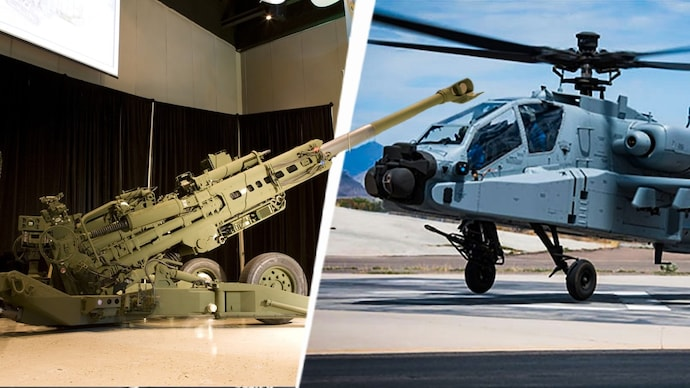
Now the long-term operational readiness of India’s frontline combat fleet is receiving an immense technological reinforcement from Washington. The United States government has formally approved two separate, highly critical Foreign Military Sales (FMS) to India worth an aggregate $428.2 million. Therefore, the processing desks at the Pentagon have cleared a clear pathway to deliver advanced technical maintenance, parts replacement, and specialized training programs. Official notifications issued by the State Department’s Bureau of Political-Military Affairs on Monday, May 18, 2026, confirm that the dual packages target both rotary-wing aviation assets and ultra-light artillery fields. Following escalating security pressures across the Indo-Pacific theater, maintaining these sophisticated combat lines stands as an absolute mechanical necessity for South Asian tactical commanders.
Add businessleague.in as a Preferred Source


Also Read |Tamil Nadu Voter List Purge: 97 Lakh Names Deleted in SIR Phase 1
At a Glance: United States-India FMS Logistics Matrix (May 2026)
| DEFENSE ASSET PLATFORM | ALLOCATED DEAL VALUE | ASSIGNED CORPORATE CONTRACTORS | TRANSIT LOGISTICS COMPLIANCE |
| M777A2 Ultra-Light Howitzer | $230.0 Million | BAE Systems PLC Group | Depot Capability & Spares Inflow |
| AH-64E Apache Helicopter | $198.2 Million | Boeing & Lockheed Martin | Engineering & Follow-On Support |
| Combined Transaction Cap | $428.2 Million | Integrated Defense Consortium | Approved via Congressional Notice |
| Strategic Theater Target | Indo-Pacific Region | Joint Interoperability Mapping | Deterring Regional Sovereignty Threats |
The Dual Clearances: Unpacking the $428.2 Million FMS Allocation
Now the official legislative channels within the United States Capitol are moving forward with major strategic arms processing loops. The dual-pronged notification process indicates that Washington is prioritizing the long-term performance stability of hardware it previously exported to New Delhi. Therefore, international military observers are treating these clearances as an essential phase of structural asset lifecycle management.
First, the synchronized notifications were formally logged within the congressional tracking network to complete mandatory statutory monitoring periods. Next, the State Department verified that the financial structures backing the support contracts will run smoothly through established central military banking pathways. Thus, the swift movement of these files underscores that bilateral defense agreements are operating at an incredibly high speed.
So international strategy desks are highlighting that this dual allocation minimizes the time needed to source critical components during operational spikes. The unified support setup helps prevent the buildup of localized maintenance backlogs across critical regional command bases. Meanwhile, technical groups are updating their system logs to streamline the delivery of incoming software modifications. Therefore, the opening clearances establish an exceptionally reliable foundation for upcoming cross-border asset integration.
Artillery Sustainability: Inside the $230 Million M777A2 Logistics Pack
Nowhere does the critical requirement for continuous component replacement manifest more urgently than within India’s high-altitude mountain artillery divisions. The single largest component of the newly approved defense package allocates exactly $230 million directly to supporting the M777A2 ultra-light howitzer fleet. Therefore, the military supply chain is receiving an immediate upgrade to secure long-term battlefield availability metrics.
First, the comprehensive logistical package includes highly specialized ancillary items, diagnostic spare parts, and custom repair-and-return pipelines. Next, the arrangement deploys experienced field service representatives directly to local maintenance nodes to construct permanent depot-level capabilities. Thus, the mechanical necessity of keeping these mobile titanium guns completely operational along rugged border zones is fully addressed.
[$230M Global Artillery FMS] ──► [BAE Systems Engineering Core] ──► Depot Capability Infusion
                                                                            │
                                                                            ▼
[Line Deployment Upgrades]   ◄── [Parts & Repair Pipelines]     ◄── [High-Altitude Readiness]
So the primary corporate contract for this massive artillery asset management project has been handed to BAE Systems. This alignment ensures that the physical components are engineered to factory specifications to withstand extreme thermal fluctuations. Meanwhile, specialized military trainers are preparing updated curriculum models to instruct local engineering crews on advanced diagnostic techniques. Therefore, the M777A2 sustainment package functions as a vital anchor for regional defense stabilization.
Also Read |Tamil Nadu Voter List Purge: 97 Lakh Names Deleted in SIR Phase 1
The Apache Flight Deck: Tracking Boeing and Lockheed’s $198.2 Million Follow-On
Now transitioning to the airborne combat segment exposes an equally significant investment targeting deep-strike rotary aviation assets. The State Department cleared a potential $198.2 million Foreign Military Sale centered on preserving the operational performance of the AH-64E Apache helicopter fleet. Therefore, the Indian Air Force’s premier tank-hunting division is securing advanced lifecycle support.
-
The Apache Sustainment Specifications:
-
Engineering Support: Direct, real-time consultation loops with United States government and contractor engineering networks.
-
Technical Data: Access to unedited technical publications, software patches, and automated flight metrics.
-
Personnel Training: Comprehensive instruction blocks for newly assigned local flight technicians and avionics managers.
-
Consortium Contractors: Principal execution duties split smoothly between aviation giants Boeing and Lockheed Martin.
-
First, this multi-million dollar agreement ensures that the complex fire-control radars and sensor pods retain peak tracking precision. Next, the ongoing logistics support allows domestic airbases to maintain high daily sortie rates without depleting local component stockpiles. Thus, the technical cooperation between Indian flight wings and American OEMs is securely cemented for the upcoming operations cycle.
The Indo-Pacific Directive: Washington’s Trans-Continental Security Architecture
Now to understand the deeper underlying motivation guiding these dual contract approvals, one must analyze the broader strategic goals of the Pentagon. In both formal notifications, the Bureau of Political-Military Affairs used identical, high-level language to link the sales directly to the defense architecture of the Indo-Pacific. Therefore, the transaction functions as a key element within a much larger geopolitical strategy.
First, Washington explicitly noted that strengthening the US-Indian strategic relationship is a direct national security objective for the United States. Next, the official texts characterized India as a major defense partner acting as an important force for political stability, peace, and economic progress in South Asia. Thus, the mechanical necessity of supporting New Delhi’s defense capability remains a central pillar of American maritime policy.
So this clear policy position aims to deter potential regional threats by creating a highly resilient, interlocking network of friendly defense forces. This comprehensive approach ensures that democratic partners possess the independent capabilities required to safeguard critical commercial shipping corridors. Meanwhile, international relations panels are analyzing how these sales strengthen India’s role as a primary security provider across regional waters. Therefore, the Indo-Pacific directive underpins the strategic logic of the entire transaction.
Absorptive Capacities: Why the Pentagon Trusts India’s Maintenance Infrastructure
Now an essential factor that cleared the way for the immediate approval of these multi-million dollar contracts is the high technical maturity of the receiving military. The State Department’s analytical briefs explicitly emphasized that India will encounter zero difficulty absorbing these advanced articles and services into its active armed forces. Therefore, the transaction avoids the long delays that frequently slow down deployments to less developed nations.
-
Ecosystem Absorption Milestones:
-
Established Infrastructure: Local airbases already operate customized, climate-controlled hangers for the Apache fleet.
-
Technical Literacy: Local engineers possess deep familiarity with digital diagnostic bus protocols.
-
Depot Integration: Domestic workshops can seamlessly house the advanced machinery provided by BAE Systems.
-
System Command: The automated mission computers align cleanly with India’s integrated air command frameworks.
-
First, this pre-existing technical capability allows the incoming support services to translate into immediate operational readiness enhancements. Next, the high baseline training of local cadres minimizes the need for long-term on-site monitoring by American personnel. Thus, the smooth integration of these support layers highlights India’s status as a top-tier global military operator.
Also Read |Tamil Nadu Voter List Purge: 97 Lakh Names Deleted in SIR Phase 1
Regional Military Equilibrium: Balancing Deterrence Without Altering Orders
Now macro-level security planners are highlighting a highly delicate nuance woven directly into the text of the Pentagon notifications. The State Department explicitly noted that the proposed $428.2 million allocation will not alter the basic military balance in the region. Therefore, the transaction is carefully designed to strengthen defensive durability rather than introducing provocative new offensive capabilities.
First, because these packages focus entirely on sustainment, spares, and engineering support, they do not add to total platform counts. Next, the technical updates ensure that existing systems perform to original design metrics without violating regional non-proliferation agreements. Thus, the support program provides a non-escalatory mechanism to harden India’s homeland defense parameters cleanly.
So the notifications also verified that the massive spare-parts allocation will cause no adverse impact to the defense readiness of the United States. This declaration protects the deal from facing unexpected political opposition from domestic defense critics in Washington. Meanwhile, regional monitoring networks are tracking how this sustained operational readiness influences stability along sensitive mountain borders. Therefore, the preservation of regional equilibrium remains a core element of the FMS design.
A Decade of Defense Hardening: Analyzing the Multi-Tiered Bilateral Pivot
Now the ultimate definitive framework contextualizing these current approvals is the spectacular expansion of Indo-US military collaboration over the past decade. The relationship has transformed from a simple, transactional buyer-seller arrangement into an integrated strategic partnership. Therefore, these latest FMS contracts act as a natural continuation of a long-term policy of technology sharing.
First, the historical expansion has been marked by multi-billion dollar platform acquisitions, including the P-8I Neptune maritime patrol fleets and C-17 Globemaster transports. Next, the implementation of foundational agreements like LEMOA and COMCASA has unlocked secure, encrypted communication flows between joint operational commands. Thus, the mechanical necessity of maintaining these complex, cross-border hardware links requires continuous logistical coordination.
So the continuous cadence of high-profile joint military exercises, such as Yudh Abhyas and Malabar, provides a real-world testing ground for these shared systems. This deep operational integration allows both nations to refine their logistical coordination models ahead of real emergencies. Meanwhile, corporate investment blocks are signaling high optimism regarding upcoming joint defense manufacturing ventures under the iCET initiative. Therefore, the 2026 FMS clearances prove that the defense partnership between Washington and New Delhi remains tightly locked into absolute strategic alignment.
FAQ: Understanding the May 2026 US-India Defense Sustainment Pacts
1. What major defense announcement did the US State Department make regarding India? Now, the US government approved two potential Foreign Military Sales (FMS) to India worth a combined $428.2 million to provide long-term sustainment support.
2. Which specific military platforms are covered under these new logistics deals? First, the dual packages allocate funding explicitly to support India’s AH-64E Apache helicopters and its M777A2 ultra-light howitzer artillery fleet.
3. What is the individual value split between the two defense support packages? So, the long-term sustainment support for the M777A2 howitzers is valued at $230 million, while the Apache helicopter support package commands $198.2 million.
4. Who are the principal corporate contractors selected to execute these support contracts? Next, the howitzer package will be led by BAE Systems, while the Apache helicopter follow-on services will be run by Boeing and Lockheed Martin.
5. How does Washington justify these massive arms-support clearances under its foreign policy? Now, the State Department emphasized that the sales are a mechanical necessity to advance Washington’s strategic objectives by strengthening security and stability in the Indo-Pacific region.
6. Will these new defense support acquisitions alter the basic military balance in South Asia? Finally, no. The official notifications explicitly verified that because these contracts focus entirely on maintenance, training, and spares, they will not alter the basic regional military balance.
Also Read |Tamil Nadu Voter List Purge: 97 Lakh Names Deleted in SIR Phase 1
End…
Add businessleague.in as a Preferred Source

