
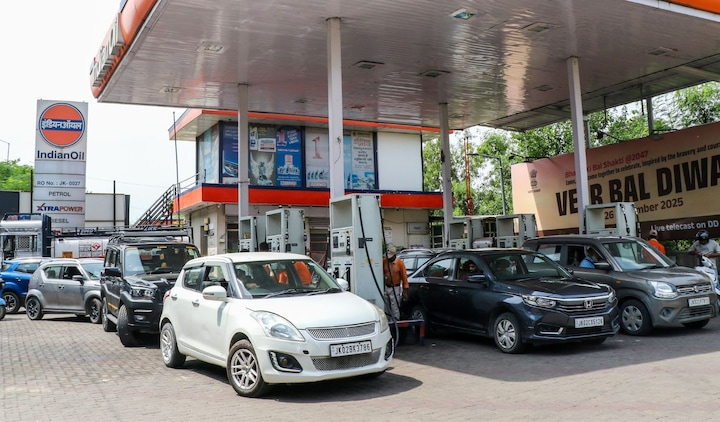
The Ministry of Petroleum and Natural Gas forces large institutional buyers back to commercial bulk pricing as retail pump rates face a steep 5.5% post-freeze hike.
Add businessleague.in as a Preferred Source


The structural guidelines regulating downstream energy distribution across the country have undergone an unexpected tightening. Issuing an emergency gazette notification late Thursday night, the Ministry of Petroleum and Natural Gas officially implemented a comprehensive government fuel sales restriction India directive. The mandate places immediate caps on the volume of motor spirit (petrol) and high-speed diesel (HSD) that can be purchased at regular retail fuel stations nationwide.
The sudden intervention is explicitly designed to dismantle an expanding black-market procurement loop. Over the past month, a significant price gap has opened up between subsidized retail pump rates meant for regular consumers and the commercial bulk pricing tiers assigned to heavy industries.
To stop factory fleets and commercial transport networks from hoarding cheaper retail fuel, the administrative order establishes a strict, non-negotiable 90-day operational lockdown across all public retail pumps.
Also Read | Viral Trump Lookalike Buffalo Rescue: Saved From Eid Sacrifice
The Architecture of the 200-Liter Retail Firewall
The core of the ministry’s enforcement framework relies on a strict daily volume limit assigned to each customer profile. Under the newly activated rules, retail pump dealers are legally barred from dispensing more than 200 liters of high-speed diesel to any single vehicle or individual buyer within a 24-hour window.
Concurrently, the regulatory package places an absolute ban on the unauthorized resale or cross-border transport of retail-sourced diesel.
By utilizing automated fuel management software linked to payment terminals, station operators must track single-vehicle license plates across regional clusters, stopping logistics companies from bypassing the cap by visiting multiple stations sequentially.
Slicing Through the Macroeconomic Pricing Pressures
The domestic regulatory adjustment arrives after a period of intense pressure on corporate margins. While the ongoing conflict in the Middle East disrupted global shipping routes and completely closed the strategic Strait of Hormuz chokepoint, India managed to hold its domestic retail fuel prices steady for an extended 76-day insulation window to protect the public from initial pricing shocks.
| Monitored Fuel Variant | Price Absolute Scale (Before May 15) | Current Retail Cost Floor (June 12) | Total Realized Price Surge | Percentage Price Realignment |
| Motor Spirit (Petrol) | ₹94.72 Per Liter | ₹99.47 Per Liter | +₹4.75 Increase | +5.01% Shift Upward |
| High-Speed Diesel (HSD) | ₹87.62 Per Liter | ₹92.44 Per Liter | +₹4.82 Increase | +5.49% Shift Upward |
Note: The sudden price hikes implemented over the last three weeks reflect a necessary passthrough of rising international crude costs, as state-owned oil marketing companies can no longer completely absorb the high import premiums driven by extended maritime detours.
The volume cap is expected to significantly adjust near-term delivery volumes for India’s major state-run energy companies, including Indian Oil Corporation Ltd (IOCL), Bharat Petroleum Corporation Ltd (BPCL), and Hindustan Petroleum Corporation Ltd (HPCL).
By forcing large institutional buyers—such as private power plants, massive mining operations, and interstate freight carriers—away from retail pumps and back to their authorized commercial captive pumps, the order helps restore healthier profit margins for these oil marketing companies.
Also Read | Viral Trump Lookalike Buffalo Rescue: Saved From Eid Sacrifice
Institutional Fleet Logistics and Market Enforcement
Market analysts indicate that equity portfolios holding downstream oil assets will likely experience increased volatility as the trading week wraps up.
While private fleet operators warn that the sudden restriction could create temporary logistics bottlenecks during the transition back to commercial bulk accounts, government coordinators maintain that safeguarding consumer fuel pools is paramount.
By combining volume caps with pricing adjustments, the state aims to protect regular commuters from artificial local shortages.
This swift regulatory intervention shields the broader economy from external energy shocks, ensuring that vital transport fuel is distributed fairly and transparently while global shipping corridors navigate extended instability.
FAQ Section
What is the primary directive of the latest government fuel sales restriction India mandate?
The directive places a temporary 90-day cap on retail fuel sales to stop commercial entities from exploiting cheaper consumer rates. Under these guidelines, retail stations cannot sell more than 200 liters of high-speed diesel per day to any single vehicle or customer.
Why did a gap open up between retail and commercial bulk fuel pricing?
To protect everyday consumers from rising global energy costs caused by the Strait of Hormuz shipping disruptions, the government kept retail pump prices steady for 76 days. However, because commercial bulk fuel prices adjusted to global trends, a large price gap emerged, prompting commercial fleets to inappropriately source cheaper fuel from public retail stations.
How are major state-owned oil companies affected by these new volume restrictions?
The restrictions directly protect the profit margins of major oil marketing firms like IOCL, BPCL, and HPCL. By cutting off retail hoards and redirecting commercial buyers back to legal wholesale channels, the policy ensures that high-volume commercial sales are executed at correct, unsubsidized corporate pricing tiers.
Also Read | Viral Trump Lookalike Buffalo Rescue: Saved From Eid Sacrifice
End…
Add businessleague.in as a Preferred Source
🙏 Support Independent Journalism
We keep news free for you.
Most readers support with ₹500 ❤️
or scan QR below

Voluntary contribution. No tax benefits.
DISCLAIMER
We have taken all measures to ensure that the information provided in this article and on our social media platform is credible, verified and sourced from other Big media Houses. For any feedback or complaint, reach out to us at businessleaguein@gmail.com