
“Making a Lot of Money with India”: Trump Signals Impending Trade Deal with “Good Friend” PM Modi
The US President targets historic trade deficits while maintaining a highly optimistic outlook for a bilateral treaty, even as the USTR unveils fresh global tariff updates.
Add businessleague.in as a Preferred Source


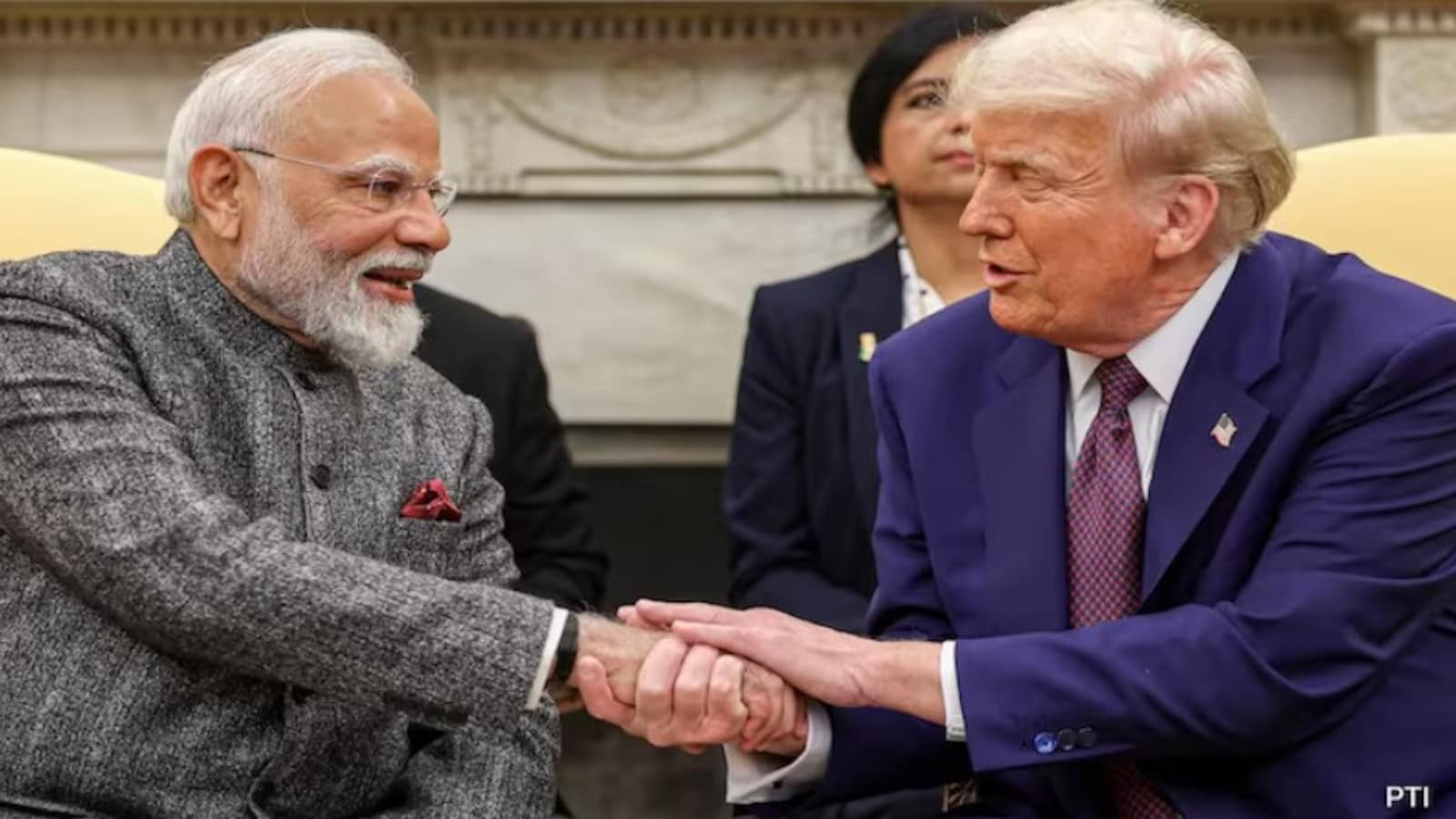
US President Donald Trump expressed strong confidence on Thursday that the United States and India would soon finalize a comprehensive trade agreement. Speaking to reporters at the White House, Trump leaned heavily on his personal rapport with Prime Minister Narendra Modi to frame the upcoming deal, describing the Indian leader as a “good friend” with whom he shares an excellent working relationship.
The President’s optimistic forecast comes amidst a dynamic realignment of the economic relationship between Washington and New Delhi. Trump noted that while India had historically levied steep tariffs on American products without facing reciprocal measures, the balance of trade has steadily shifted in the United States’ favor.
Also Read | Viral Trump Lookalike Buffalo Rescue: Saved From Eid Sacrifice
Balancing Warm Diplomacy with Aggressive Trade Pressure
Trump’s characteristically candid remarks explicitly laid out his perspective on the historical trade imbalance, while validating his administration’s pressure tactics.
“For years, India took advantage of the United States. They charged us tremendous tariffs and paid nothing,” Trump told reporters. “Now it is the exact reverse and we are making a lot of money with India. But we will get to a deal because I like your Prime Minister a lot; he is a good friend of mine, and we get along well.”
The administration’s bilateral optimism is unfolding alongside a sweeping, highly aggressive enforcement campaign by the Office of the United States Trade Representative (USTR). Earlier this week, Washington announced a fresh tier of global penalties, imposing a blanket 10% tariff and a specialized 12.5% duty on selective imports from 60 countries, following investigations into labor supply chains.
The Section 301 Crackdown Matrix
The legal mechanism backing the new dynamic is Section 301 of the Trade Act of 1974, which empowers the executive branch to unilaterally penalize foreign policies that place an unreasonable burden on United States commerce.
| Tariff Penalty Tier | Country Compliance Classification | Key Economies Affected |
| 10% Additional Tariff | Countries with existing bans or active diplomatic pledges to restrict forced labor. | India, Australia, Japan, UK, South Korea, Singapore |
| 12.5% Additional Duty | Economies lacking explicit statutory bans or enforcement frameworks. | China, Russia, Israel, Saudi Arabia, Turkiye |
| Enforcement Citations | Cited for failing to enforce current prohibitions effectively. | European Union, Canada, Pakistan |
The broad USTR list features 54 major trade partners, placing close traditional allies like America, Britain, and Japan alongside strategic competitors like China and Russia.
Also Read | Viral Trump Lookalike Buffalo Rescue: Saved From Eid Sacrifice
A Relief Valve for the Textile Sector
Aware of the immediate supply-chain shock these regulatory corrections could trigger, the USTR has built in structured relief mechanisms to safeguard critical consumer sectors.
The newly published guidelines introduce a textile-specific quota allocation. This mechanism permits a designated, strictly monitored quantity of apparel and textile shipments from certain compliant economies to enter US ports at a heavily reduced tariff rate, shielding retail distributors from rapid wholesale price spikes.
Bilateral trade strategists in Washington and New Delhi are expected to use this loophole to accelerate the broader free trade framework teased by the President. As negotiators look to convert political goodwill into a formal treaty, trade desks on both sides of the globe are watching closely to see how quickly the White House can finalize exemptions for its South Asian partner.
FAQ Section
What did President Trump say about the trade deal with India?
President Trump stated that a trade agreement with India would be finalized soon. While he criticized India’s historical use of high tariffs on American imports, he emphasized that the current trade dynamic favors the US and praised Prime Minister Narendra Modi as a “good friend.”
Why is the US imposing new tariffs on 60 economies, including India?
The Office of the United States Trade Representative (USTR) is applying these tariffs under Section 301 of the Trade Act of 1974. The penalties follow an investigation into global supply chains, targeting economies that have allegedly failed to adequately prohibit or enforce bans on goods produced via forced labor.
How do the new Section 301 tariff tiers work?
Economies that have already banned imports tied to forced labor or pledged to do so under existing trade pacts face a 10% tariff. Countries without those baseline rules face a higher 12.5% duty. The European Union, Canada, and Pakistan were also cited for failing to enforce their existing laws.
Also Read | Viral Trump Lookalike Buffalo Rescue: Saved From Eid Sacrifice
End…
Add businessleague.in as a Preferred Source
🙏 Support Independent Journalism
We keep news free for you.
Most readers support with ₹500 ❤️
or scan QR below

Voluntary contribution. No tax benefits.
DISCLAIMER
We have taken all measures to ensure that the information provided in this article and on our social media platform is credible, verified and sourced from other Big media Houses. For any feedback or complaint, reach out to us at businessleaguein@gmail.com