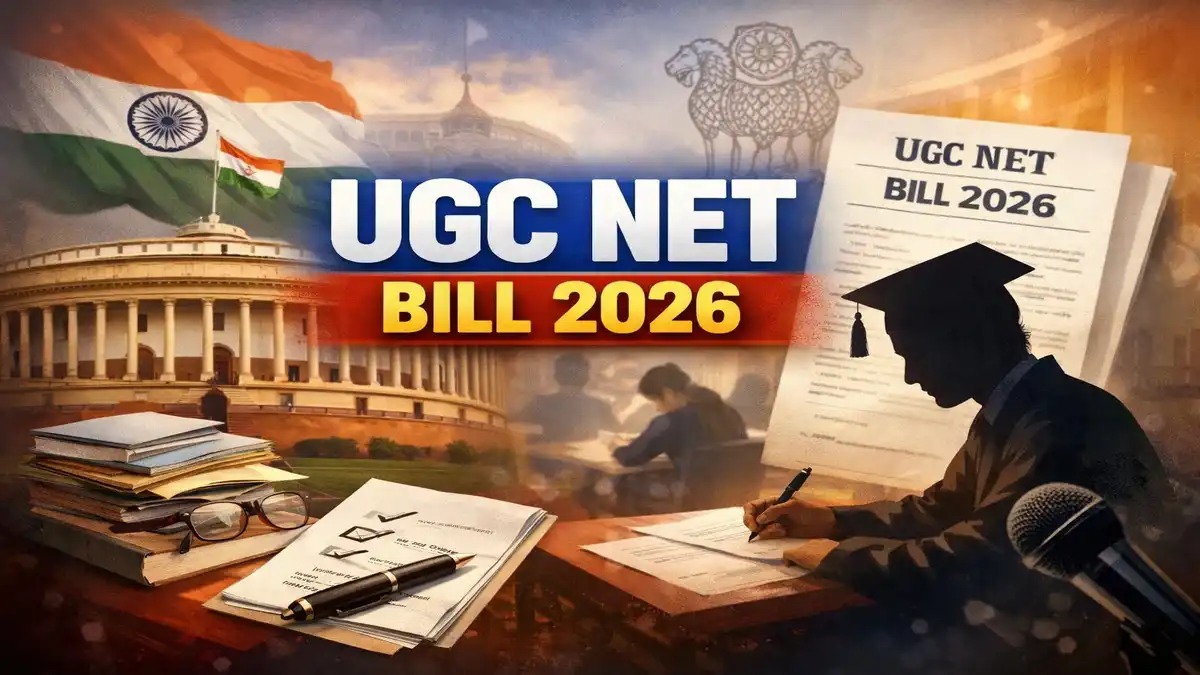
It’s Thursday morning, January 29, 2026, and the Supreme Court just slammed the brakes on the University Grants Commission’s (UGC) latest experiment in campus social engineering. In an “extraordinary” move, the top court stayed the UGC Equity Regulations 2026, effectively calling them regressive and divisive.
Add businessleague.in as a Preferred Source


The thing is, the Court didn’t just stop the rules; they revived the 2012 framework to make sure students aren’t left in a legal vacuum. Or nothing.
Also Read |Tamil Nadu Voter List Purge: 97 Lakh Names Deleted in SIR Phase 1
The “Divisive” Verdict: Field Notes
It’s an ongoing situation where a policy designed to end discrimination has been accused of creating a “hierarchy of victims.” Here’s the ground reality from the courtroom:
-
The Exclusion Clause: The biggest point of contention is Section 3(c). It defines “caste-based discrimination” as something that happens only to SC, ST, and OBC students. The Chief Justice asked a pointed question: If Section 3(e) already defines “discrimination” broadly for everyone, why create a separate clause that excludes the “general category” from protection? Those too.
-
The “Segregated” Hostels: The Bench reacted with visible horror to Section 7(d), which talked about “transparency” in segregating hostels or classrooms. “For God’s sake, don’t do this,” the CJI remarked. The Court is worried we’re heading toward a US-style “separate but equal” system which failed miserably.
-
The Ragging Loophole: Interestingly, the 2026 rules were silent on ragging—a menace that the 2012 rules handled head-on. The Court noted that ignoring ragging is a “regression” in protective law. Let’s be real—most campus friction starts with ragging.
-
The Politics of Resignation: This isn’t just a legal fight. In Uttar Pradesh, over a dozen BJP leaders have reportedly resigned over these rules, calling them “anti-upper caste.” The thing is, the “general category” groups feel singled out and left without a grievance mechanism. And here’s the kicker—even the Solicitor General didn’t put up a fight against the stay. Or nothing.
Also Read |Tamil Nadu Voter List Purge: 97 Lakh Names Deleted in SIR Phase 1
UGC 2026 vs. 2012: What Changes Today?
| Feature | 2026 Regulations (Stayed) | 2012 Regulations (Restored) |
| Protected Groups | Only SC, ST, and OBC (specifically for caste). | All stakeholders (caste, gender, religion, etc.). |
| Hostel Policy | Mentions “transparent segregation.” | Mandates integration. |
| Ragging | Not explicitly covered. | Strict anti-ragging focus. |
| Complaints | Enforceable 3-tier system. | Largely advisory/Equal Opportunity Cells. |
| Misuse Clause | No safeguards against false claims. | Limited, but broader definitions. |
And Here’s the Kicker…
The Court has ordered the Centre to form a committee of eminent jurists to rewrite the rules. They want a language that protects the marginalized without “dividing society.” The thing is, the petition by the mothers of Rohith Vemula and Payal Tadvi is now tagged with this case. It’s an ongoing situation where the court is trying to balance “Social Justice” with “Constitutional Equality.” Those too.
One side comment—the next hearing is on March 19, 2026. Until then, your college has to follow the old 2012 rules. No separate hostels, no exclusionary complaint boxes. It’s an ongoing situation. Or nothing.
Also Read |Tamil Nadu Voter List Purge: 97 Lakh Names Deleted in SIR Phase 1
End…
Add businessleague.in as a Preferred Source
🙏 Support Independent Journalism
We keep news free for you.
Most readers support with ₹500 ❤️
or scan QR below

Voluntary contribution. No tax benefits.
DISCLAIMER
We have taken all measures to ensure that the information provided in this article and on our social media platform is credible, verified and sourced from other Big media Houses. For any feedback or complaint, reach out to us at businessleaguein@gmail.com