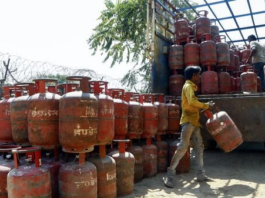
The DPIIT introduces long-awaited Producer Price Indices for manufacturing and services, expanding items to 957 while moving crude petroleum straight into the fuel and power bracket.
Add businessleague.in as a Preferred Source


The statistical infrastructure tracking primary commodity movements and wholesale trade across the country has undergone its most comprehensive structural modernization in over a decade. Releasing data sets on Monday afternoon, June 15, 2026, the Ministry of Commerce & Industry officially launched a revamped wholesale inflation India base year change framework. The updated index series caught market desks by surprise, revealing that raw factory gate inflation surged to an aggressive 9.68% year-on-year (YoY) baseline for May 2026.
The steep upward shift—climbing rapidly from the comparable 8.26% print recorded in April—reflects the severe real-world impact of the ongoing maritime blockades in West Asia.
To ensure domestic data matches global standards, the Office of Economic Adviser under the Department for Promotion of Industry and Internal Trade (DPIIT) has officially retired the aging 2011-12 tracking series.
The retired layout is replaced by a modernized 2022-23 base year network, altering weights to accurately capture the structural changes sweeping through India’s factory floors.
Also Read | Viral Trump Lookalike Buffalo Rescue: Saved From Eid Sacrifice
The Evolution Matrix: Transitioning from WPI to Producer Price Indices
The core purpose of this statistical overhaul extends beyond a basic calendar reset. In line with standard recommendations from the International Monetary Fund (IMF), the ministry is building a path to completely phase out the Wholesale Price Index (WPI), replacing it with more comprehensive Producer Price Indices (PPI).
Because hundreds of commercial logistics networks and infrastructure developers utilize the WPI within their long-term legal price-escalation clauses, the government will release the updated WPI files alongside the new PPI trackers for a fixed five-year transition window.
This overlapping timeline gives businesses ample time to switch their legal contracts over to the PPI standard before the old wholesale index is discontinued for good.
Slicing Through the Broad-Based Component Surges
The newly activated 2022-23 index shows a significant acceleration in prices across all primary tracking divisions for the month of May:
| Major Commodity Group | Old Basket Weights | Revised GVO Weights | April 2026 Inflation | May 2026 Final Inflation | Primary Underlying Resource Catalyst |
| All Commodities Index | 100.00% Scale | 100.00% Scale | 8.26% YoY | 9.68% YoY | Broad-based input spikes driven by energy blocks. |
| Fuel and Power Stack | 13.15% Scale | 14.11% Scale | 24.89% YoY | 30.33% YoY | Crude petroleum shot up 61.51% amid Gulf tensions. |
| Manufactured Products | 64.23% Scale | 63.10% Scale | 6.68% YoY | 7.48% YoY | Surging input costs for basic metals and chemicals. |
| Primary Articles Group | 22.62% Scale | 22.79% Scale | 3.78% YoY | 4.99% YoY | Relocation of crude extraction parameters. |
| Wholesale Food Index | 24.44% Scale | 24.99% Scale | 3.11% YoY | 4.49% YoY | Secondary transport costs hit processed items. |
Note: Under the updated methodology, the total number of monitored market items expands dramatically from 697 to 957 lines, integrating modern energy alternatives like solar, wind, and nuclear electricity directly into the power matrix.
The introduction of the Output PPI (which printed at 9.4% for May) alongside a trial Input PPI for manufacturing gives economists a powerful dual tool to track industrial margins.
By comparing the prices producers pay for raw inputs against the prices they charge at the factory gate, the dual indices explain exactly how input inflation is passed down to finished products.
Concurrently, a new Service Producer Price Index (SPPI) has been introduced to track seven vital service pillars, including telecommunications, banking, insurance, and air passenger transport.
Also Read | Viral Trump Lookalike Buffalo Rescue: Saved From Eid Sacrifice
Reorienting Energy Metrics and Managing Historical Data Continuity
To correct structural flaws in the old layout, the DPIIT has implemented a major structural change in its energy reporting. Crude petroleum and natural gas have been stripped out of the primary articles category and moved directly into the fuel and power group. This relocation creates a single, unified group for all energy items, preventing raw resource spikes from distorting the primary crop index.
Because the expansion of the item basket from 697 to 957 lines alters data disaggregation, the ministry has strongly cautioned analysts against making direct historical comparisons.
To bridge the gap and support ongoing corporate contracts, the government has established official, fixed linking factors based on geometric means.
Multiplying the new index values by these specialized multipliers allows procurement teams to calculate data continuity seamlessly, ensuring historical agreements remain valid.
Real-World Impacts on Corporate Strategies and Interest Rates
While a 9.68% wholesale reading signals a substantial increase in industrial pricing pressure, institutional economists believe the spike will not alter near-term banking strategies.
The modernization of the inflation framework provides businesses with a much clearer view of industry-specific costs.
While the geopolitical energy shock has driven wholesale fuel prices up by 30.33%, recent de-escalation steps in the Gulf offer hope for cooling commodity markets later this summer.
By utilizing the new Input-Output PPI metrics to audit your production channels and applying the official linking factors to update your commercial contracts, you can successfully navigate this structural statistical shift, protecting your business operations and aligning your corporate strategies effectively with global best practices.
FAQ Section
Why did the government change the wholesale inflation base year from 2011-12 to 2022-23?
The base year update was executed to modernize the index so it accurately reflects India’s evolving industrial landscape. Over the last decade, production patterns have shifted significantly; the update expands the item basket from 697 to 957 items, adds modern clean energy sources like wind and solar power, and removes obsolete items to ensure the data aligns with current economic realities.
How do the new WPI linking factors protect existing corporate contracts?
Because many corporate supply agreements use the WPI to calculate automatic price adjustments, changing the index methodology could cause major legal and financial disruptions. To ensure data continuity, the ministry fixed mathematical linking factors (such as 1.53 for All Commodities). Multiplying the new index value by the designated linking factor allows corporate legal teams to compare old and new metrics seamlessly.
What is the primary operational difference between the traditional WPI and the new PPI?
The traditional WPI tracks price adjustments across a mix of wholesale distribution points but is limited strictly to physical goods. The new Producer Price Index (PPI) isolates the price received by the producer at the actual factory gate, eliminating intermediate transport markups. Crucially, the PPI expands coverage to include the services sector, initially tracking seven vital industries like banking and telecommunications.
Also Read | Viral Trump Lookalike Buffalo Rescue: Saved From Eid Sacrifice
End..
Add businessleague.in as a Preferred Source
🙏 Support Independent Journalism
We keep news free for you.
Most readers support with ₹500 ❤️
or scan QR below

Voluntary contribution. No tax benefits.
DISCLAIMER
We have taken all measures to ensure that the information provided in this article and on our social media platform is credible, verified and sourced from other Big media Houses. For any feedback or complaint, reach out to us at businessleaguein@gmail.com