


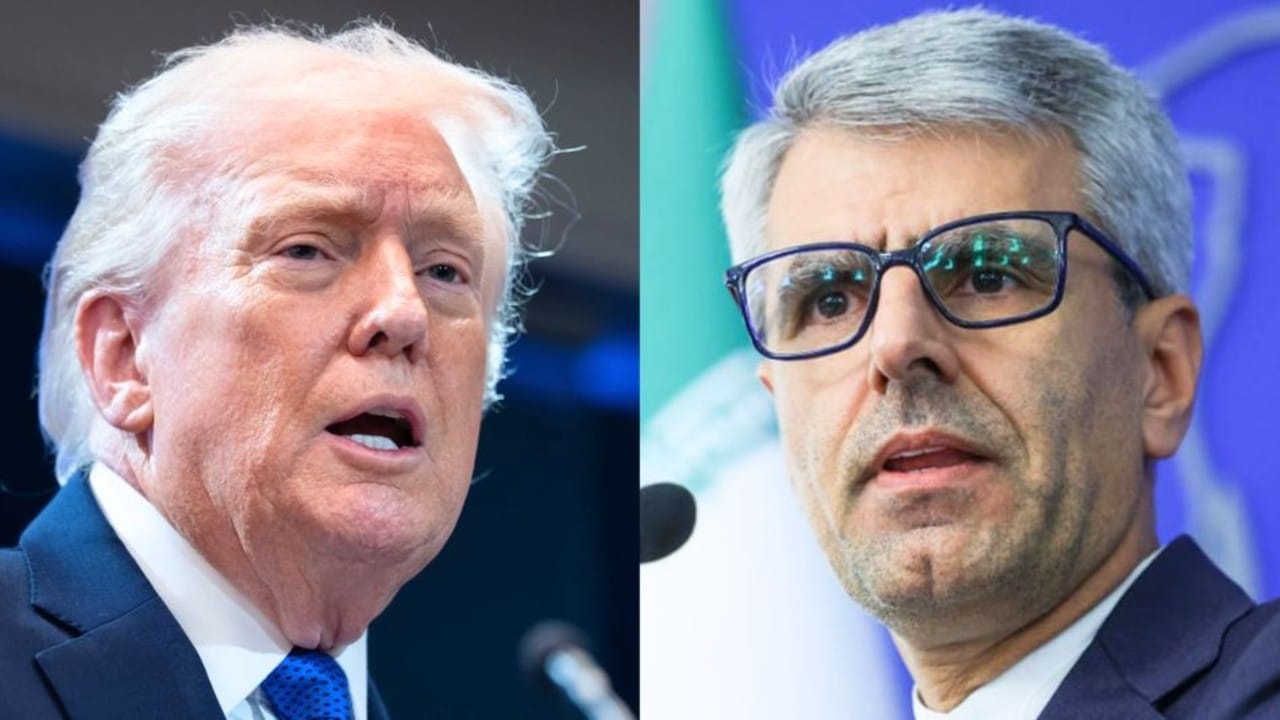
Foreign Ministry spokesperson Esmail Baghaei fiercely condemns lethal American missile strikes on Indian commercial vessels, calling the high-seas interceptions “state piracy” while backchannel mediators struggle to salvage a draft framework.
Add businessleague.in as a Preferred Source


The diplomatic effort to resolve the high-stakes military blockade in West Asia has hit a significant wall of resistance. Reacting to optimistic statements from Washington regarding an immediate end to the conflict, Iranian Foreign Ministry spokesperson Esmail Baghaei issued an official statement via the state-run IRNA news agency. The briefing directly dismissed reports of a completed US Iran maritime war deal, labeling the narrative as unverified speculation.
The sudden diplomatic friction undercuts an announcement made just hours earlier by U.S. President Donald Trump during an Oval Office media briefing. Trump had confidently proclaimed that a “great settlement” to end the maritime war was on the verge of being finalized, suggesting that a formal signing ceremony could take place in Europe as early as this weekend.
However, Tehran’s firm refusal to accept the American terms indicates that key strategic disputes remain unresolved, keeping the critical Strait of Hormuz shipping corridor closed to international energy transport.
Also Read | Viral Trump Lookalike Buffalo Rescue: Saved From Eid Sacrifice
The Oval Office Proclamation vs. Tehran’s Red Lines
The diplomatic disagreement highlights a deep division in how both governments view the current state of backchannel negotiations. Speaking to reporters, President Trump stated that the documents were in “pretty final shape,” emphasizing that the draft agreement would permanently prevent Iran from developing nuclear weapons while immediately lowering global oil prices.
Baghaei countered this narrative by pointing out that while Qatari and Pakistani mediators have been working around the clock to bridge differences, the U.S. military’s ongoing strikes are actively damaging the diplomatic process.
According to the Foreign Ministry, a large portion of the foundational text had been successfully mapped out during face-to-face talks in Islamabad.
Consequently, negotiations stalled because American representatives repeatedly shifted their baseline demands, prompting Iran to re-state that it will not compromise on its core national sovereignty guardrails.
High-Seas Casualties: Condemning “State Piracy” Against Indian Crews
The diplomatic standoff has taken on a heavy humanitarian weight following a series of deadly U.S. missile strikes that disabled merchant ships crewed by Indian nationals.
Over the last 96 hours, precision strikes targeting the MT Marivex, the MT Settebello, and the MT Jalveer have left three Indian seafarers confirmed dead and forced the dramatic evacuation of dozens of survivors from burning hulls.
| Targeted Subcontinental Vessel | Human Casualty Toll | Official Tehran Legal Classification | Direct Impact on Backchannel Mediation |
| Palau-Flagged MT Marivex | 24 Indian Crew Safe | Violation of baseline maritime transit freedoms. | Triggers high-velocity naval alert tracking in Oman. |
| Palau-Flagged MT Settebello | Three Indian Sailors Killed | “Armed robbery and state piracy.” | Forces New Delhi to issue an immediate formal demarche to Washington. |
| Guinea-Bissau MT Jalveer | 20 Indian Crew Evacuated | Unwarranted kinetic force on commercial trade. | Disrupts energy transit insurance baselines worldwide. |
Also Read | Viral Trump Lookalike Buffalo Rescue: Saved From Eid Sacrifice
Tehran used its official platforms to strongly condemn these high-seas actions. In a public message, Baghaei extended deep condolences to the families of the fallen Indian sailors, calling the U.S. naval blockades a clear manifestation of state-sponsored piracy.
By urging the international community to hold Washington accountable for civilian casualties, Iran is attempting to shift diplomatic leverage, framing the U.S. strategy as a threat to neutral trading nations across the global South.
The ongoing conflict continues to place immense strain on the global economy. Because the Strait of Hormuz handles nearly one-fifth of global oil shipments daily, the persistent threat of missile strikes has sent international crude prices climbing past $93 a barrel, driving up shipping costs worldwide.
While Washington is sending Vice President JD Vance to Europe to represent American interests at a potential weekend summit, a real breakthrough remains unlikely until both sides resolve their deep disagreements.
Until the U.S. pauses its high-seas missile strikes and respects Iran’s established red lines, the talk of an imminent peace deal remains an unverified rumor, leaving the world’s most critical energy chokepoint locked in a dangerous state of instability.
FAQ Section
Did the US and Iran officially sign a maritime peace agreement?
No. While U.S. President Donald Trump announced that a settlement was close to being finalized, Iranian Foreign Ministry spokesperson Esmail Baghaei officially labeled those claims as “mere speculation.” Tehran maintains that no final decision has been reached regarding any agreement.
What countries are acting as mediators in these backchannel peace talks?
Qatar and Pakistan are actively serving as the primary diplomatic mediators. They are managing the text exchanges between Washington and Tehran, utilizing neutral venues like Islamabad to host face-to-face draft discussions.
How did Iran react to the civilian casualties aboard the Indian merchant tankers?
Tehran strongly condemned the U.S. naval actions that resulted in the deaths of three Indian seafarers on the MT Settebello. The Iranian Foreign Ministry officially categorized the missile strikes as “armed robbery and state piracy,” urging the international community to hold Washington accountable for attacking neutral commercial vessels.
Also Read | Viral Trump Lookalike Buffalo Rescue: Saved From Eid Sacrifice
End..
Add businessleague.in as a Preferred Source

